



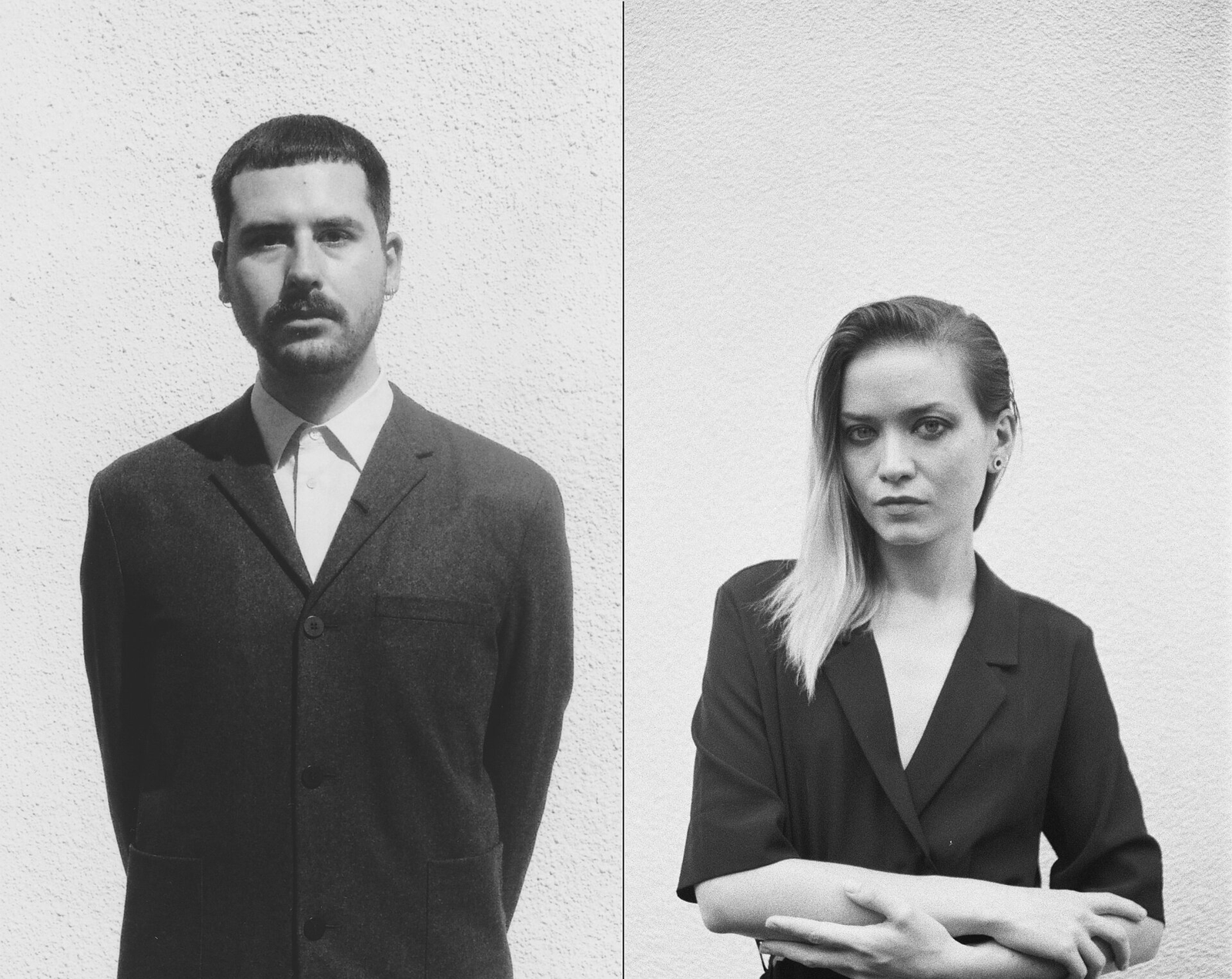
Some bands build their reputation through decades of releases. Others leave an indelible mark with only a handful of songs. Línea Áspera belongs firmly to the latter. With their unique blend of analogue synthesizers, melancholic melodies and minimalist songwriting, Alison Lewis and Ryan Ambridge quickly became one of the defining names of the modern minimal synth and coldwave revival.
Although both musicians spent years focusing on their individual careers, interest in Línea Áspera never faded. If anything, time has only reinforced the band's cult status, with their music continuing to inspire a new generation of artists and listeners alike.
Ahead of their long-awaited first performance in Mexico City as Línea Áspera, Summa Inferno caught up with Alison and Ryan to discuss the band's origins, the chemistry that made everything click from day one, their current projects and why returning to Mexico carries such personal meaning.
Let's go back to the beginning. How did Línea Áspera come together, and what sparked the idea of starting the band?
yan and I met when I was DJing at a bar in Camden, London, around September or October 2011 through our mutual friend Jack Duckworth, also known as Soft Riot. We both shared an interest in analogue synthesizers and wanted to start a band. Within a few months, our shared Dropbox folder evolved into a fully-fledged project.
We played our first show by December that year. At the time there was a small but very close-knit minimal synth scene in London, and our friends immediately embraced what we were doing. I think that support helped everything develop incredibly quickly.
Looking back at those early days, what's one lesson you've carried with you ever since?
Alison: Small decisions—like choosing to write a few songs with someone—can completely change the course of your life and lead you on incredible adventures. If something feels right, don't turn those opportunities down.
Ryan: Being in a synthpop band should be fun. It's simply not worth damaging relationships or creating unnecessary stress over it.

Was there a specific moment when you realized, "This band is becoming something special"?
Ryan: I felt that every time we finished recording something. I remember mixing the very first two songs we'd recorded and being genuinely excited because everything seemed to work immediately.
The same happened when Alison sent me her vocals for "Solar Flare." While mixing it, I couldn't stop listening to the track. It felt like the perfect combination of both our strengths.
Alison: This was actually the first band I'd ever written and recorded music with, so I took a lot of it for granted in the beginning. I was only twenty-two years old and assumed that making music was simply supposed to feel like that. Everything happened so naturally that I never stopped to think we were creating something unusual.
It wasn't until our final show of that first era, at Grauzone Festival in 2013, that it truly hit me. There was a queue stretching outside the venue and up the stairs, and the atmosphere inside the room was absolutely electric.
What does Línea Áspera look like today? How would you describe the band's current mindset?
Alison: Because of our busy schedules and the long hiatus, we've never really had the opportunity to tour the world.
In many ways we're still catching up on that.
Creatively we're mostly focused on our individual projects, but we also don't want to deny people the opportunity to experience these songs live while they still feel meaningful to both us and our audience.
Can you give us a glimpse of what you're currently working on?
Alison: I have a new band with Terence Fixmer, and we'll be releasing an album next year through a legendary independent label.
I'll also continue touring with Zanias, because I invested so much of myself into my latest album, Cataclysm.
Ryan: I'll take the opportunity to recommend the upcoming Modern Apartments album, Light on Water, an instrumental synth record that will soon be released through Dark Entries.
This will be Línea Áspera's first performance in Mexico City. What are your expectations?
Ryan: I've always heard Mexican audiences are amazing, so I'm expecting a really fun show. And, of course, I'm looking forward to eating some incredible food.
Alison: I've actually performed in Mexico City twice before with Zanias. The first time happened during one of the lowest points in my creative life. I was seriously considering giving up music altogether.
But the warmth and energy of the audience at Centro de Salud completely changed that. People were singing so loudly that I could barely hear myself on stage. That experience instantly reignited my passion for music and gave me the motivation to finish recording the first Zanias album.
I've carried a deep sense of gratitude toward my Mexican audience ever since. What excites me the most now is returning with the band that started everything.
Finally, if you could give fans one reason not to miss your Mexico City show this August, what would it be?
Alison: We both have incredibly busy schedules, so this might be your last chance to see us together for quite a while.