


There is a concrete reason why most of the metal documentaries considered canonical today appeared within a very short span, between 2004 and 2010. Before that window, metal barely existed as a subject for serious audiovisual study: what circulated instead were MTV specials cut for advertising, low-budget unauthorized biopics, and the occasional sensationalist report on teenage satanism. What changed the landscape was the combination of three factors that are rarely mentioned together. The first was technological: the digital camera and non-linear editing radically lowered the production cost of a feature-length documentary, allowing directors without studio backing to follow bands for years. The second was generational: the first wave of directors who had grown up listening to Iron Maiden or Slayer as teenagers reached an age at which they had the resources and the craft to direct film, and chose to turn the camera toward their own culture instead of treating it as an outside curiosity. The third, less obvious, was academic: Sam Dunn, the figure who did the most to legitimize the genre as a subject of study, arrived at filmmaking not from the music industry but from anthropology, having written a graduate thesis on Guatemalan refugees before applying that same ethnographic rigor to the metal culture that had shaped him since the age of twelve.
That intersection between academic discipline and fan devotion is the key to understanding why this first generation of documentaries aged so well. These were not promotional products disguised as cinema, nor cheap exploitation about the genre's supposed danger, but works that treated metal with the same methodological seriousness as any other cultural phenomenon worthy of analysis. The consequence was twofold: on one hand, metal audiences finally had material they could identify with without feeling caricatured; on the other, viewers completely outside the scene began approaching these films as an entry point into a world they had previously known only through stereotype. This essay covers ten titles organized by subgenre and era, not by chronological release order, because the internal logic of the metal documentary makes more sense when it follows the genealogical tree of the genre itself than when it follows a film festival calendar.
The foundations: Sam Dunn's ethnography
Metal: A Headbanger's Journey (2005), directed by Sam Dunn alongside Scot McFadyen and Jessica Joy Wise, is the obligatory starting point for any serious survey of the metal documentary, and not because of its age but because it establishes the visual and narrative vocabulary that nearly every subsequent title would inherit in one form or another. Dunn, then thirty-one years old, builds the film as a personal journey: it starts from the question of why a music he has loved since childhood remains condemned and ridiculed by mainstream culture, and sets out to find answers across the United Kingdom, Germany, Norway, Canada, and the United States. The film debuted at the 2005 Toronto International Film Festival and draws on interviews with figures ranging from Alice Cooper and Ronnie James Dio to Tom Araya of Slayer, Bruce Dickinson of Iron Maiden, and journalist Gavin Baddeley, a specialist in occult themes. Its most cited device, the metal family tree that traces the genre's evolution from the NWOBHM through thrash, black, and death metal, went on to become reference material both inside and outside the film itself, and Dunn would later expand on it in the VH1 television series Metal Evolution. What sets this film apart from any television special is its willingness to address uncomfortable subjects, such as the genre's relationship with violence, sexuality, and death, without the condescension typical of mainstream journalism at the time. It can currently be watched on Netflix and is also available on more than twenty rental and purchase platforms across different markets.
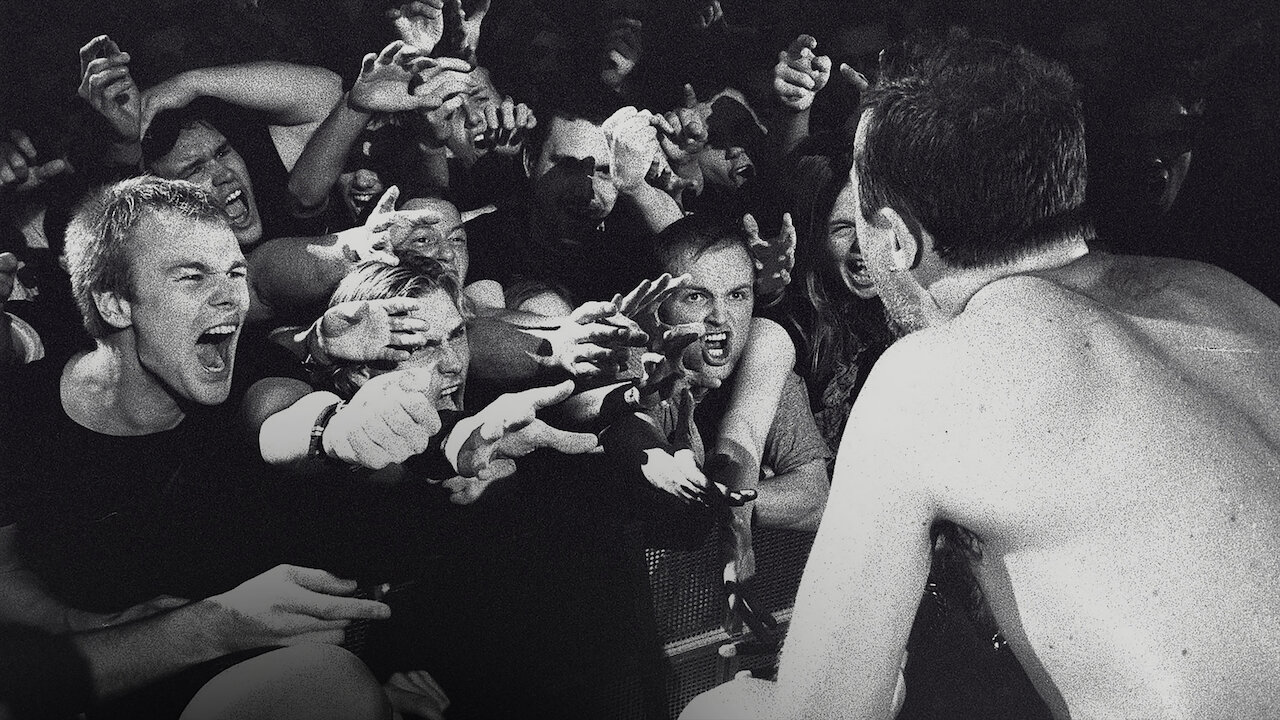
The direct sequel, Global Metal (2007/2008), keeps the same creative pairing of Dunn and McFadyen but shifts the central question: if the first film asked why metal generates rejection in the West, this one asks what happens when the genre travels beyond its traditional borders. Premiered internationally at the Bergen International Film Festival in October 2007 and given a limited theatrical release in June 2008, the film follows Dunn across Asia, South America, and the Middle East, stopping at scenes as disparate as Indonesian death metal, Chinese black metal, and Iranian thrash. The underlying argument, supported by interviews with Max Cavalera of Sepultura and Bruce Dickinson among others, is that these communities are not simply importing a Western cultural product but reinterpreting it as a vehicle of expression within contexts of political conflict, censorship, and accelerated consumerism. For a Spanish-speaking audience interested in the Latin American dimension of metal, this is probably the most relevant documentary on the entire list, even though its treatment of the region amounts to only a fragment within a broader picture. It is available on Prime Video and can also be watched for free, with advertising, on Internet Archive.
From the garage to the arena: Get Thrashed and the oral history of thrash
If Dunn offers the gaze of an anthropologist observing from a certain distance, Get Thrashed: The Story of Thrash Metal (2006), directed by Rick Ernst, adopts the exact opposite register: it is oral history told almost entirely by its protagonists, with no outside narrator mediating the experience. The film reconstructs thrash's rise from garage parties and small clubs in the early eighties to stadiums, with direct testimony from members of Metallica, Slayer, Anthrax, Megadeth, Exodus, Overkill, Testament, Kreator, and Pantera, among many others. One of Ernst's greatest achievements, noted even by reviews that were generally lukewarm about the film, is that it does not confine itself to the dominant narrative of the so-called Big Four, but gives real space to second-tier bands like Hirax and to the European scene represented by Kreator and Sodom, broadening the usual map that tends to reduce thrash to four names from California and New York. The film's most controversial moment also appears here: the claim by Dave Mustaine, former Metallica member and founder of Megadeth, that he essentially taught the rudiments of rhythm guitar to both James Hetfield and Kerry King, a version of events the film itself leaves open to interpretation without fully arbitrating it. Get Thrashed can be watched for free with advertising on Tubi, and is also available for rental or purchase on Prime Video and Apple TV, with Spanish-subtitled versions distributed on platforms specializing in music cinema.
What makes it interesting to place this film alongside Metal: A Headbanger's Journey is that both share a close production year but almost opposite temperaments: where Dunn builds thesis and academic structure, Ernst trusts that archival footage and direct testimony, without excessive interpretive editing, are enough to convey the chaotic, self-destructive energy of a scene defined as much by the speed of its riffs as by the disorder of life on the road. That methodological contrast explains why both films continue to be recommended together: they do not compete with each other, they complement each other.
Horror turned into chronicle: Norwegian black metal
No subgenre has generated as much documentary material as early-nineties Norwegian black metal, and for good reason: few musical scenes combine art, extreme ideology, church arson, and homicide so directly. Until the Light Takes Us (2008), directed by Aaron Aites and Audrey Ewell, is the work that best managed to balance documentary rigor with critical distance from material that lends itself easily to sensationalism. The film, whose title translates the name of Burzum's fourth album, Hvis lyset tar oss, premiered at the AFI Film Festival on October 31, 2008, and had its commercial release in the United States on December 4, 2009, through Variance Films. Its backbone is the interviews with Varg Vikernes, filmed in prison while he was serving a sentence for the murder of Øystein Aarseth, better known as Euronymous, founder of Mayhem and of the record label Deathlike Silence Productions. These are joined by testimony from Gylve Nagell, known as Fenriz, of the band Darkthrone, and from other central figures of the Oslo scene, such as Bård Eithun, drummer of Emperor, who was also convicted of homicide. What distinguishes this film from the more morbid press coverage that circulated throughout the nineties is its interest in understanding the Norwegian social context, a welfare state, liberal in appearance but under strong pressure toward cultural conformity, which ended up generating among these young people a sense of alienation that black metal channeled to an extreme degree. The New York Times review described it as an absorbing documentary that nonetheless arrived a decade too late relative to the scene's most heated moment, a fair observation that does not diminish the value of its historical reconstruction work. It can be watched for free with advertising on Tubi, rented or purchased on Apple TV and Amazon, and in Spain it is available within Filmin's catalog.
It is worth mentioning, if more briefly, Murder Music: A History of Black Metal (2007), directed by David Kenny and written by journalist Malcolm Dome, originally broadcast on the British pay-per-view channel Rockworld TV. Although its production is more modest and its distribution remained largely confined to the British market, it has the merit of gathering interviews with a later generation of Norwegian bands such as Satyricon, Immortal, Dimmu Borgir, and Cradle of Filth, offering a useful counterpoint to the focus on the original Inner Circle that dominates Until the Light Takes Us. Taken together, both films provide a more complete picture of a subgenre that continues to generate academic and journalistic debate nearly three decades after its founding events.
Extreme in the global south: death metal beyond the usual map
Most documentaries about death metal focus, understandably, on Florida and the Swedish Stockholm scene, but the title that best demonstrates the subgenre's truly global reach is Death Metal Angola (2012), directed by Jeremy Xido. The film follows Sonia Ferreira, who runs the Okutiuka orphanage in Huambo, Angola's second-largest city, and her partner Wilker Flores, a death metal guitarist, in their attempt to organize the first national rock concert in the country's history. The backdrop is not a decorative anecdote but the film's actual center: Angola was then carrying nearly four decades of uninterrupted civil war, and at the time of filming Huambo remained a city marked by bombed-out buildings and minefields that had not been fully cleared. What Xido manages to capture, and what specialized critics highlighted almost unanimously, is how death metal functions in this context not as an imported aesthetic pose but as a literal tool for collectively processing war trauma, a reading Rotten Tomatoes summarized by noting that the genre recontextualizes personal and national pain rather than merely exploiting it.
The film premiered at the Dubai International Film Festival on December 13, 2012, and had its commercial theatrical release in the United States in November 2014, earning a solid critical reception, with a 93% approval rating among critics on Rotten Tomatoes. It can be rented or purchased on Apple TV, Google Play, Amazon Prime Video, and Vimeo On Demand.

Placing this film in the death metal section rather than setting it aside in a separate chapter of "geographic curiosities" is a deliberate editorial decision: treating African, Asian, or Latin American metal as an exotic appendix to the real history, supposedly happening only in Florida, Sweden, or the United Kingdom, is precisely the kind of implicit hierarchy that Global Metal, mentioned earlier, set out to dismantle. Death Metal Angola shows that this dismantling is not just a theoretical argument but something borne out by a concrete case, filmed with rigor and without condescension toward its subjects.
The riff as root: doom, stoner, and the forgotten genealogy
Before the labels doom, stoner, or sludge existed as they are used today, there was a musical tradition that traced directly back to Black Sabbath and to psychedelic proto-metal bands like Blue Cheer, and that for much of the eighties and nineties survived almost exclusively in North American underground circuits. Such Hawks Such Hounds (2008), directed by John Srebalus, is the documentary that best reconstructs that marginal genealogy, covering roughly the period from 1970 to 2007 and paying particular attention to bands such as Pentagram, The Obsessed, Kyuss, Sleep, High on Fire, Nebula, and Fatso Jetson. The film's structure favors live archival footage and extensive interviews with musicians such as Scott "Wino" Weinrich, Al Cisneros, Brant Bjork, and Mario Lalli, letting them narrate how a sound that was slow, heavy, and deliberately antithetical to the speed of thrash or the aggression of death metal ended up consolidating its own recognizable identity.
Along with Get Thrashed, it is one of the documentaries on this list most oriented toward pure oral history, with no outside narrator imposing a thesis, which makes it particularly valuable as a reference document for anyone researching the scene. It has no distribution on major commercial streaming platforms, but circulates freely and in good quality on YouTube, including Spanish-subtitled versions, as well as on portals specializing in independent documentary film such as Top Documentary Films.
This is a case where the absence of broad commercial distribution does not reflect the quality of the work but the very nature of the subgenre it portrays: doom and stoner never aspired to the commercial centrality of thrash or nu metal, and their foundational documentary reproduces, almost as a structural echo, that same proud marginality.
Therapy as a last resort: when thrash turns into introspection
Metallica: Some Kind of Monster (2004), directed by Joe Berlinger and Bruce Sinofsky, occupies a particular place within this history because it was not originally conceived as the portrait of a crisis but as a conventional promotional documentary about the process of recording an album. Berlinger and Sinofsky, who had already worked with the band on their 1996 documentary about the West Memphis Three case, Paradise Lost, began filming in 2001 what was meant to be a studio chronicle and ended up capturing, almost by accident, the departure of bassist Jason Newsted, James Hetfield's alcoholism crisis and subsequent stay in rehabilitation, and the hiring of a group therapist, Phil Towle, to keep the band functioning during the recording of St. Anger. The result, which premiered at the Sundance Festival on January 24, 2004, and opened commercially on July 9 of that year, is a remarkably uncomfortable document about the internal dysfunction of one of the biggest bands in metal history, filmed with a level of access no other production of this scale had achieved before or has achieved since.
Spanish-language critical coverage, including the newspaper El País, described the experience of watching a metal band confront a midlife crisis as revealing and, unintentionally, extremely funny, a reading that captures well the film's ambivalent tone, which oscillates between unintentional comedy and genuine drama without fully resolving that tension. It can currently be watched on Netflix and is also available for rental or purchase on Apple TV.
Failure turned into dignity: the traditional scene and the NWOBHM
Anvil! The Story of Anvil (2008), directed by Sacha Gervasi in his directorial debut, occupies a special place within this history because it completely inverts the usual narrative logic of the music documentary, which tends to center on success or its traumatic loss. There is no fall from the top here: Anvil, the Canadian band formed in Toronto by Steve "Lips" Kudlow and Robb Reiner, never came close to selling the millions of records sold by bands they directly influenced, such as Metallica, Slayer, Anthrax, and Guns N' Roses. The film opens by recalling the lineup of the 1984 Super Rock festival in Japan, where Anvil shared the stage with Scorpions, Whitesnake, and Bon Jovi, all bands that would go on to sell records on a massive scale, while Anvil was left in near-total obscurity. Gervasi, who had met the band in 1982 after a concert at the Marquee Club in London, follows them twenty years later, now in their fifties, as they try to sustain a disastrous European tour and record a thirteenth album on almost no budget. What turned this film into a cult phenomenon, grossing nearly a million dollars on a strictly independent circuit, was the testimony of figures such as Lars Ulrich, Slash, Lemmy, and Scott Ian, all openly acknowledging the technical and aesthetic influence Anvil had on them, a contrast that makes the lack of commercial recognition the band suffered throughout its career even more striking. UGO magazine described it as the equivalent, in terms of brutal honesty, of what The Wrestler represented for the world of professional wrestling, and that comparison sums up the documentary's tone well: it is a film about the dignity of continuing to do what you love even when recognition never arrives at the scale expected. It is available on Netflix, on Prime Video, and can also be watched for free with advertising on Plex.
Essential biographies: the voices that defined an era
This journey closes with a pair of biographical documentaries centered on individual figures whose influence extends well beyond the specific subgenre they represent. Lemmy (2010), co-directed by Greg Olliver and Wes Orshoski, portrays the founder, bassist, and vocalist of Motörhead over a shoot that lasted roughly three years, between 2007 and 2009, combining concert footage, everyday routine in Los Angeles, and interviews with figures as diverse as Dave Grohl, Slash, Ozzy Osbourne, Joan Jett, and Alice Cooper. The film, which premiered at the South by Southwest festival in March 2010, does not attempt to make Kilmister a less contradictory figure than he actually was: it addresses head-on his constant consumption of alcohol and amphetamines without either condemning or fully glorifying it, and also takes time to dispel, through Kilmister's own testimony, the recurring accusation of Nazi sympathies stemming from his hobby of collecting World War II military memorabilia. Motörhead occupies a borderline space between punk and metal that the film itself never tries to resolve definitively, and that generic ambiguity is, paradoxically, part of what makes Kilmister such an influential figure for both scenes. It can be rented or purchased on Google Play and Apple TV.
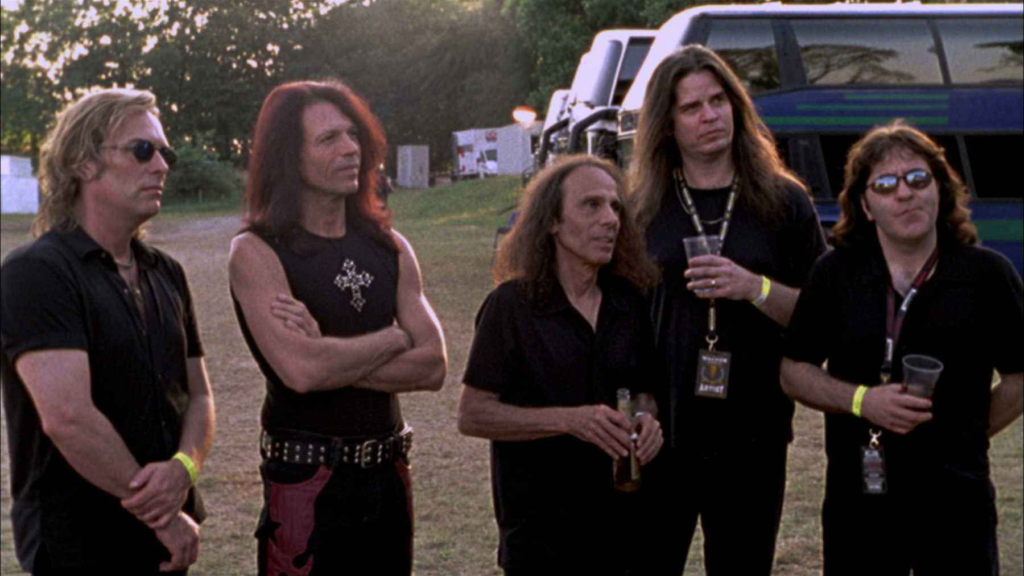
Dio: Dreamers Never Die (2022), directed by Don Argott and Demian Fenton, is the most recent biographical documentary on this list and the first formally authorized by the artist's estate, which gave it access to personal archival material and family photographs previously unseen. The film covers nearly fifty years of Ronnie James Dio's career, from his beginnings as a doo-wop crooner in the 1950s through his time in Elf and Rainbow alongside Ritchie Blackmore, his stint fronting Black Sabbath in place of Ozzy Osbourne, and finally his solo band DIO. It features testimony from Tony Iommi, Geezer Butler, Bill Ward, Vinny Appice, Rob Halford, and Sebastian Bach, among others, and premiered on September 28, 2022, with a special two-day theatrical screening event worldwide before its digital release. What sets this documentary apart from other recent music biopics is its insistence, noted by several critical reviews, that Dio's trajectory deliberately escapes the sex, drugs, and rock and roll cliché that dominates the genre, building instead a narrative centered on perseverance and the ability to reinvent himself professionally multiple times without losing his artistic identity. It can currently be rented or purchased on Prime Video, Apple TV, and Google Play.