


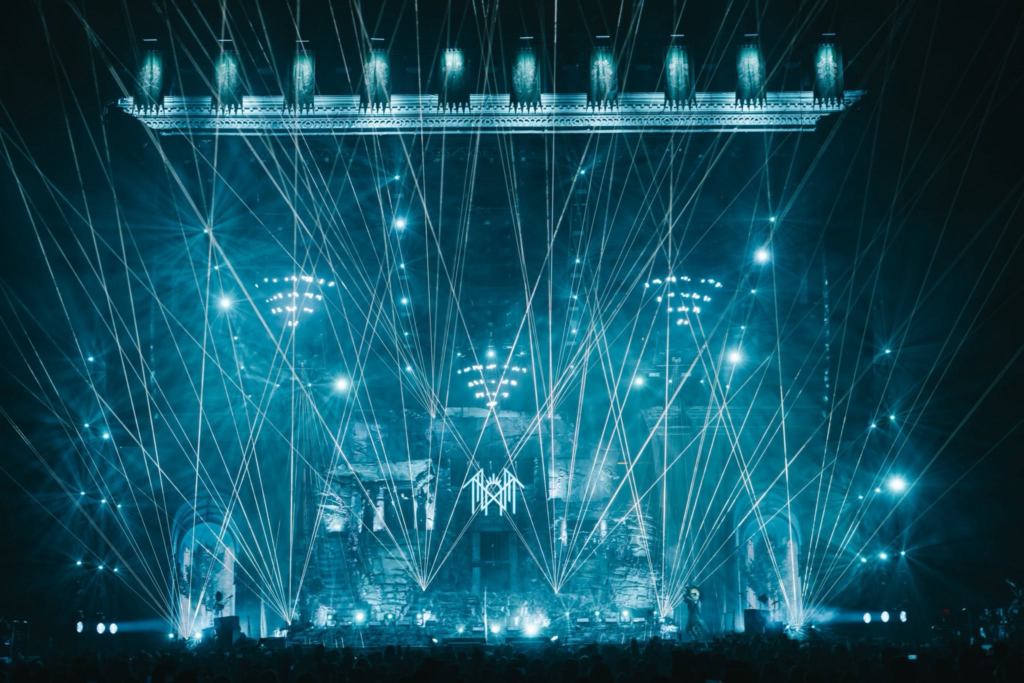
Hay una imagen que resume mejor que cualquier estadística lo que Sleep Token representa para el rock del siglo XXI. Es diciembre de 2023. El Wembley Arena de Londres —doce mil quinientos aforos, el mismo recinto que ha visto actuar a Ozzy Osbourne, a Metallica, a los fantasmas y los monstruos del heavy metal durante décadas— se llena en diez minutos. Los que compraron entradas no saben los nombres de los músicos que van a ver. Saben que llevan máscaras. Saben que no hablan sobre el escenario. Saben que adoran a una deidad sin rostro llamada Sleep. Y eso les parece suficiente.
Que un conjunto así —hermético, inclasificable, construido sobre el culto antes que sobre el carisma convencional— haya llegado a ese punto dice algo sobre la época. Algo sobre cómo escuchamos música ahora. Algo sobre lo que el metal necesitaba sin saber que lo necesitaba.
Antes del primer sueño
Londres, 2016. En algún lugar de la ciudad —el barrio nunca se ha confirmado, la sala de ensayo nunca se ha fotografiado— un músico que adoptará el nombre de Vessel comienza a dar forma a una idea que mezcla lo sacro con lo sensorial. La historia oficial, cuidadosamente construida, dice que Sleep se le apareció en un sueño y le prometió gloria a cambio de devoción. Cada canción sería un token, una ofrenda. El nombre de la banda no viene de la somnolencia sino del dios.
Es tentador despacharlo como mera teatralidad. Pero la lógica mítica de Sleep Token tiene una coherencia interna que la distingue del ornamento vacío. No es un recurso de marketing diseñado en una reunión: es el eje estructural desde el que se articula toda la música, todas las letras, toda la presencia pública —o más bien, la deliberada ausencia de ella.
Vessel es el nombre del cantante y compositor principal de la banda. Cuando se les pregunta sobre su deseo de mantener el anonimato, la respuesta ha sido siempre la misma: “Nuestras identidades son irrelevantes. La música se vende en función de quién está o no en una banda; se empuja, se moldea en algo que no es. Vessel se esfuerza en mantener el foco en Sus ofrendas.”
En septiembre de 2016, el mundo recibe una señal: “Thread the Needle”, el primer single. Apenas hay prensa. Apenas hay redes sociales activas. El disco de debut EP, One, llega en diciembre del mismo año con tres canciones y sus variantes instrumentales en piano. Para quienes lo escuchan entonces —un grupo pequeño, entusiasta, confundido—, no hay ningún marco de referencia inmediato. La voz de Vessel navega entre el metal ambiental y algo que podría llamarse R&B devocional. Los tiempos y los colores no pertenecen a ninguna escena reconocible.
En mayo de 2017, algo cambia. Sleep Token firma con Basick Records y publica su segundo EP, Two, en julio, precedido por los singles “Calcutta” y “Nazareth”. Luke Morton, de Metal Hammer, describe “Calcutta” en la premiere exclusiva de la revista como “una mezcla extraña y única de metal técnico y amplias atmósferas indie”. Es una descripción generosa, pero también algo corta. Lo que Sleep Token estaban haciendo no era fusión de géneros en el sentido convencional —no era el eclecticismo defensivo de quien no sabe elegir—. Era la creación de un lenguaje propio, con su gramática específica.
Ese mismo año, en un gesto que subraya su naturaleza extraña y su sentido del humor oculto bajo capas de solemnidad, la banda publica una versión del “Hey Ya!” de Outkast. La decisión es desconcertante. También es perfecta: una canción sobre la desolación afectiva disfrazada de celebración, reformulada en el lenguaje de un colectivo que adora a un dios del sueño y del olvido. No lo hacen por provocación. Lo hacen porque tiene sentido dentro de su cosmología.
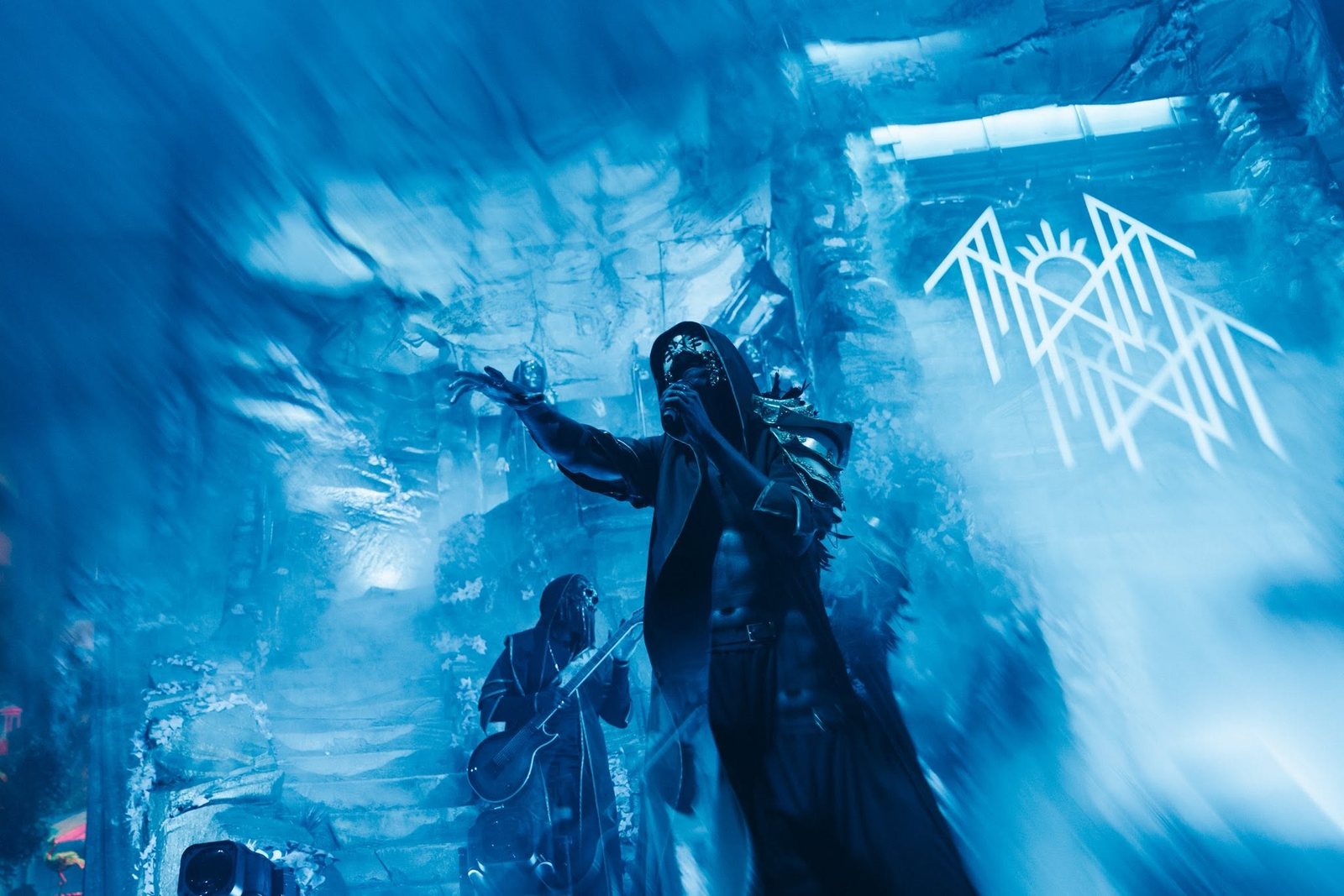
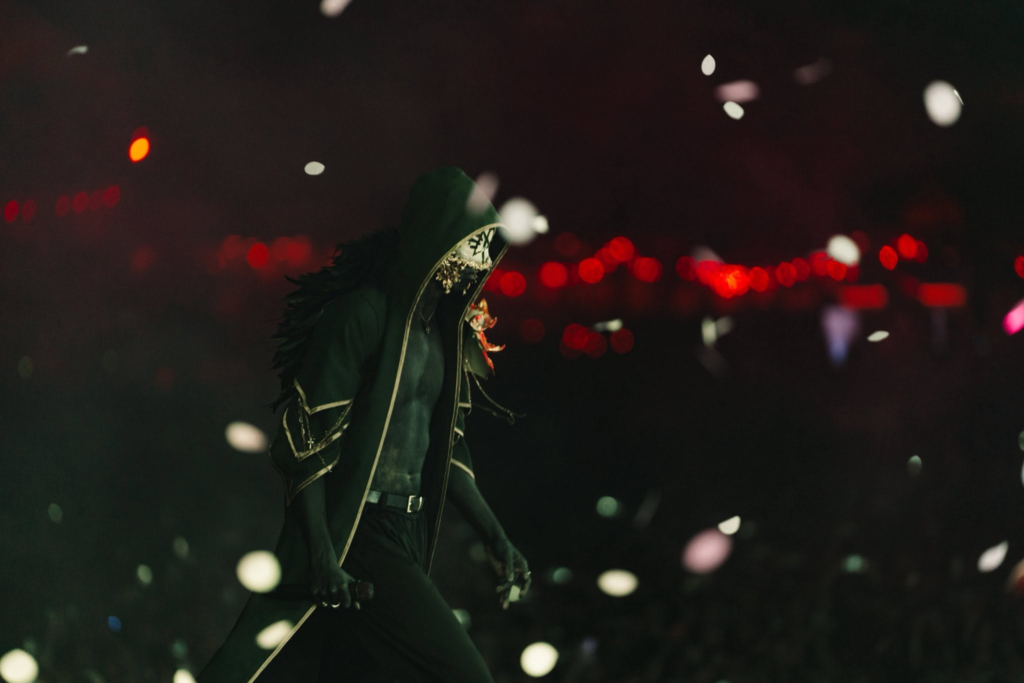
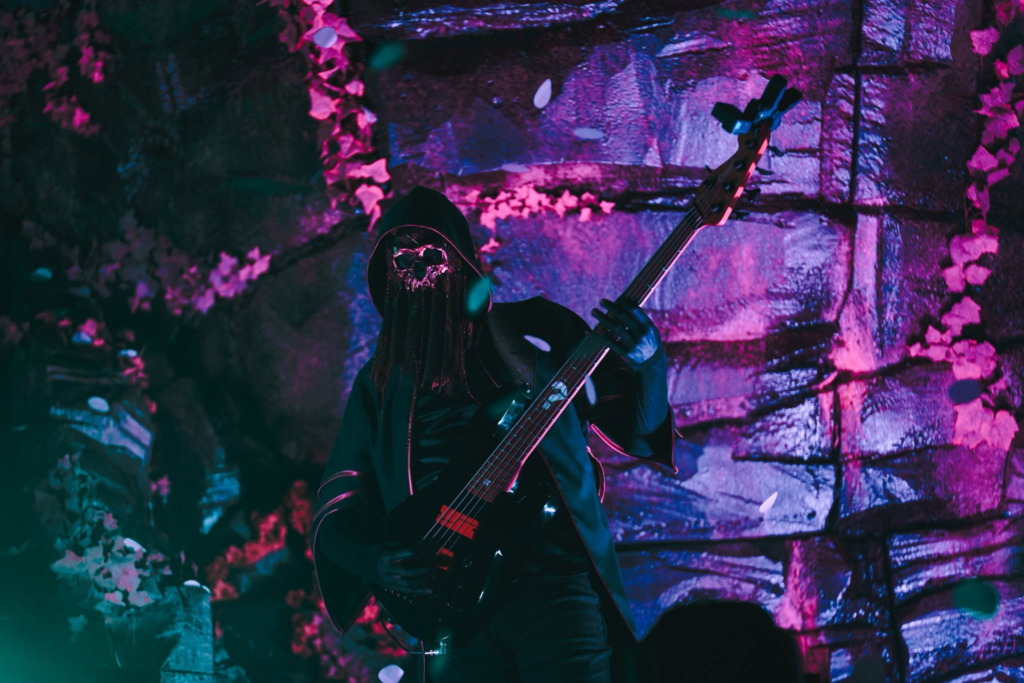
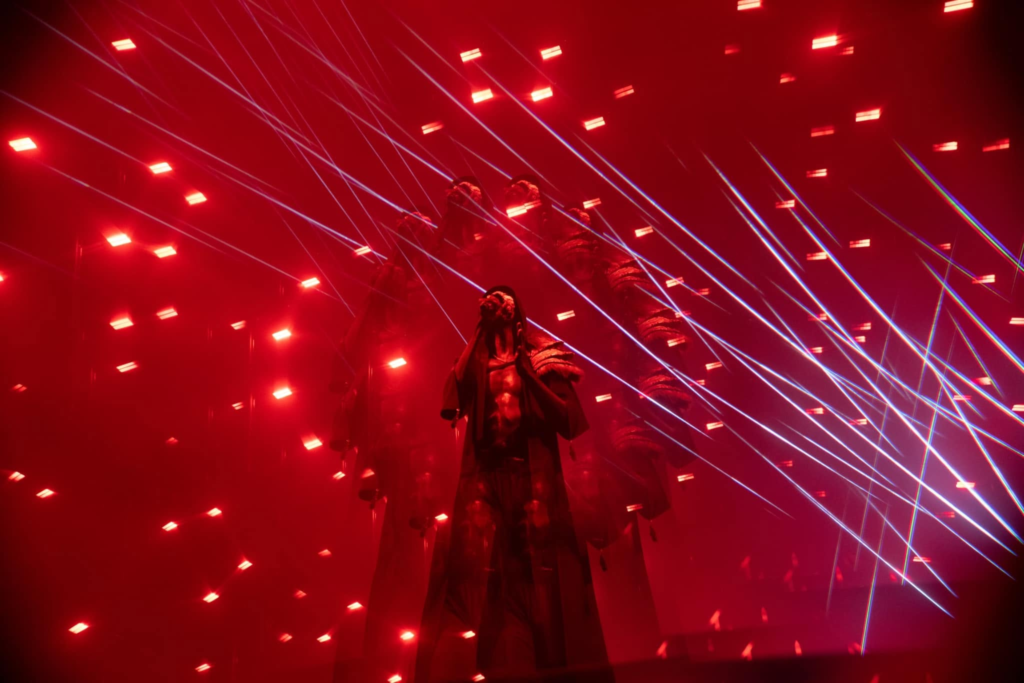
Durante 2017 y 2018, Sleep Token comienza a actuar en vivo. Las actuaciones son pequeñas, en salas de Londres. En 2018 se centran principalmente en las actuaciones en directo y publican dos singles que no forman parte de ningún álbum: “Jaws” y “The Way That You Were”. En ese período también realizan su primer concierto como cabezas de cartel, en octubre de 2018. Quienes asisten describen algo para lo que les cuesta encontrar palabras: figuras encapuchadas, pintadas de negro, que se mueven con una economía gestual calculada, que nunca dicen nada al público entre canción y canción, que construyen un espacio ritual en el interior de un recinto de música en vivo.
La comparación con Ghost emerge pronto, inevitable y también algo inexacta. Ghost vende la teatralidad como producto; la mitología es el envoltorio de canciones de hard rock y pop metal bastante directas. En Sleep Token, la mitología no envuelve la música: la genera. No hay separación entre el concepto y el sonido. Cada acorde, cada cambio de registro vocal, cada silencio forma parte de la ofrenda.
Sundowning: el primer álbum y la arquitectura del universo
Junio de 2019. Sleep Token firma con Spinefarm Records. En noviembre de ese año aparece Sundowning, su debut discográfico como álbum completo. El álbum no entraría en el UK Albums Chart en su primera semana, que registraría ventas de apenas 483 copias. Un inicio modesto por cualquier métrica convencional. Pero los que escuchan Sundowning ese noviembre entienden que están ante algo que no se mide en unidades de primera semana.
El álbum se abre con “The Night Does Not Belong To God”, una declaración de intenciones de casi seis minutos que transita del susurro al rugido con una fluidez que muy pocas bandas dominan. La arquitectura formal de Sundowning establece el patrón que repetirán en sus siguientes discos: doce canciones, con la última actuando como epílogo en lugar de cierre, como si cada álbum fuera un capítulo dentro de una narrativa mayor.
Las influencias que la banda ha admitido son reveladoras: Leprous, Agent Fresco, Bon Iver, Meshuggah y Failure. Es una lista que puede parecer incoherente hasta que suena Sundowning y la incoherencia se resuelve en un sistema propio. Meshuggah aporta el esqueleto rítmico de los momentos más pesados; Bon Iver, la capacidad de construir catarsis a partir de la textura y el espacio; Agent Fresco, el modelo de una banda que puede ser radical sin renunciar a la accesibilidad emocional.
El productor de Sundowning es George Lever, quien había trabajado con Loathe, Monuments y Holding Absence —todos ellos grupos del espectro post-hardcore/metal alternativo británico que compartían esa tensión entre la densidad pesada y el espacio melódico. Lever entiende que el sonido de Sleep Token necesita tanto claridad como oscuridad: que los momentos suaves no deben sonar débiles ni los pesados deben sonar toscos.
Sundowning termina con “Calcutta”, la canción que llegó antes que el álbum y que ahora encuentra su contexto definitivo. Y después, en 2020, en plena pandemia, Spinefarm publica una edición deluxe titulada The Room Below, que añade cuatro arreglos para piano de canciones del álbum original. El gesto es coherente: Sleep Token siempre han cultivado la dualidad entre lo monumental y lo íntimo.
Septiembre de 2021. El segundo álbum llega. This Place Will Become Your Tomb marca sus primeras apariciones en las listas del Reino Unido. El disco debutó en el número 39 con 2.048 ventas en primera semana. Un salto respecto a Sundowning, aunque todavía en los márgenes del mainstream. Pero algo está cambiando.
El álbum es más oscuro, más contenido que su predecesor. Si Sundowning tenía la urgencia de quien ha estado guardando silencio durante años, This Place Will Become Your Tomb tiene la paciencia de quien sabe que el tiempo trabaja a su favor. Los singles previos al lanzamiento —”Alkaline”, “The Love You Want”, “Fall for Me”— muestran una banda que ha afinado su lenguaje sin haberlo traicionado.
“Alkaline” es, en este contexto, una pieza notable: una canción de amor y devoción que podría haberse escrito para Sleep o para una persona, cuya ambigüedad no es un defecto sino el punto central. Las letras de Vessel siempre operan en este doble registro: lo que parece adoración religiosa puede ser deseo carnal; lo que parece deseo carnal puede ser una plegaria. La distinción no importa, o más bien, importa precisamente porque no se puede resolver.
En ese período, la comunidad de fanáticos —que se llaman a sí mismos “worshippers”, adoradores— crece de manera orgánica y silenciosa. No hay grandes campañas. No hay entrevistas en radio. La banda sigue sin hablar públicamente más allá de la única entrevista que concedieron a Metal Hammer en 2017. El culto se construye a base de escucha y de interpretación, de la búsqueda de conexiones entre canciones, de teorías sobre la naturaleza de Sleep y sobre la identidad de los músicos bajo las máscaras.
El detonador: enero de 2023
Hay momentos en la historia del rock que funcionan como divisorias. Antes y después. Para Sleep Token, ese momento llega el 5 de enero de 2023.
Sin aviso previo —o con el mínimo aviso previo posible en la era de las redes sociales—, la banda publica “Chokehold”. Comienza de manera ominosa con un zumbido raspante y rechinante, Vessel canta de manera declarativa: “When we were made / It was no accident / We were tangled up like branches in a flood.” El suave trino de un piano entra, la tensión se construye y entonces uno de los riffs más dramáticos que la banda haya grabado se derrumba sobre la canción.
“Chokehold” llegó a oídos de voces inesperadas. El cantante de Lorna Shore, Will Ramos, cubrió la canción y después analizó la técnica vocal de Vessel con un panel de expertos en el canal de YouTube The Charismatic Voice. Fue la primera señal de que algo había cambiado: una canción de metal alternativo de nicho siendo diseccionada como objeto de estudio vocal en un formato de divulgación masiva.
Al día siguiente, 6 de enero, llega “The Summoning”. Si “Chokehold” empezó un fuego, esta nueva canción le echó gasolina. Una obra maestra de casi siete minutos, “The Summoning” llevó el enfoque de mezcolanza de géneros de Sleep Token a nuevos extremos, abarcando la distancia entre la salvajería cercana al death metal y el funk sensual.
La rápida sucesión de lanzamientos llevó a un aumento veloz de popularidad para la banda, que pasó de tener reportadamente “menos de 300.000 oyentes mensuales en Spotify a principios de enero” a tener más de 1,58 millones a finales del mes. Más de un millón de oyentes nuevos en un solo mes. Sin gira. Sin apariciones en televisión. Sin entrevistas. Solo cuatro canciones lanzadas en la primera quincena del mes.
“The Summoning” se convirtió en viral en TikTok, y aquí vale detenerse porque el fenómeno es sociológicamente interesante. TikTok había sido, hasta ese momento, un vector de difusión fundamentalmente hostil para el metal progresivo: plataforma del clip de tres segundos, del audio fragmentado, de la atención en tránsito. Pero “The Summoning” demostraba que incluso en ese ecosistema, una idea musical suficientemente poderosa puede imponerse sobre la lógica del formato. La gente no escuchaba fragmentos: escuchaba la canción entera y luego la volvía a escuchar.
Take Me Back to Eden se publicó en Spinefarm Records el 19 de mayo de 2023. Es el primer álbum producido por Carl Bown en lugar de George Lever. Aunque las primeras reseñas fueron mixtas, el álbum acabó recibiendo numerosos galardones y apareciendo en varias listas de lo mejor de 2023.
El álbum debutó en el número 3 en el Reino Unido, el número 5 en Alemania y el número 16 en el Billboard 200 de Estados Unidos. Se convirtió en un éxito comercial y fue el álbum de metal más escuchado en Spotify en 2023.
Los números son impresionantes. Pero lo que hace a Take Me Back to Eden un disco singular no es la métrica sino la ambición. Al igual que los lanzamientos anteriores de Sleep Token, Take Me Back to Eden no sigue un único plano sonoro. En cambio, las letras emocionalmente intensas se envuelven en un paisaje sonoro único que mezcla innumerables géneros. Junto al metal alternativo y el metal progresivo, el álbum incorpora influencias del funk, el blues, el R&B, el pop y la electrónica.
El resultado es un disco que desafía la categorización de maneras que no son caprichosas sino estructurales. “The Summoning” puede ir del death metal al funk porque ambos registros están al servicio de la misma tensión emocional: el deseo como algo simultáneamente sagrado y carnal, la entrega como algo que puede destruir y también salvar. La promiscuidad genérica de Sleep Token no es indecisión: es precisión.
El álbum se concibió como el cierre de una trilogía. La estructura de los tres primeros discos responde a un patrón deliberado: doce canciones, con la última funcionando como epílogo. Take Me Back to Eden cierra con “Euclid”, una canción que retoma y resume el dolor explorado a lo largo del álbum. Temáticamente, se centra en dejar ir una experiencia o situación increíblemente dolorosa y simboliza una forma de renacimiento: “The night belongs to you / This bough has broken through / I must be someone new”. Al hacerlo, no solo concluye el propio álbum, sino la trilogía completa.
Take Me Back to Eden se publicó en Spinefarm Records el 19 de mayo de 2023. Es el primer álbum producido por Carl Bown en lugar de George Lever. Aunque las primeras reseñas fueron mixtas, el álbum acabó recibiendo numerosos galardones y apareciendo en varias listas de lo mejor de 2023.
Ningún análisis de Sleep Token está completo sin hablar de su comunidad de fans, porque la relación entre la banda y sus “worshippers” es una de las más inusuales y generativas del rock contemporáneo.
En la mayoría de los fandoms de bandas de metal, la devoción se articula en torno a la persona del artista: el frontman carismático, la vida pública, el acceso a los detalles privados. Sleep Token eliminó esa posibilidad por completo desde el principio. Los miembros de la banda han adoptado pseudónimos. Solo se ha concedido una entrevista desde sus inicios. No hay declaraciones políticas. No hay presencia en medios. No hay anécdotas de backstage filtradas. Solo música y mitología.
Lo que eso genera no es distancia sino lo contrario: una comunidad que llena el vacío de información con interpretación. Los foros, los subreddits, los servidores de Discord dedicados a Sleep Token son lugares donde la gente analiza letras con la minuciosidad de filólogos, donde se mapean las conexiones entre álbumes, donde se especula sobre el significado de cada símbolo en el arte de portada. Es una forma de participación que la banda ha fomentado activamente, no a través de declaraciones sino a través del diseño: cada disco ofrece suficientes capas de significado como para mantener la conversación abierta durante años.
La cobertura de portada del arte de Take Me Back to Eden es un ejemplo perfecto. El personaje que representa la penúltima canción, “Take Me Back to Eden”, no tiene cara pero lleva alas de ángel y una guadaña. Los elementos yuxtapuestos de un ángel y la Parca evocan temas de muerte, adoración e inmortalidad —todos los temas que emergen al final de la historia del álbum. La imagen generó meses de debate sobre qué significaba para el futuro de la banda. Algunos temían que señalaba el fin del grupo. Otros especulaban sobre una reinvención similar a la manera en que Slipknot cambia sus máscaras con cada ciclo de álbum, o cómo Ghost “mata” versiones de Papa Emeritus para dar paso a un sucesor.
RCA Records y la conquista del mainstream
Febrero de 2024. Sleep Token firma con RCA Records, el sello histórico de Elvis Presley, David Bowie, Pink Floyd, Bruce Springsteen. El movimiento no pasa desapercibido. Una banda que nunca ha concedido más de dos entrevistas en su existencia, cuyos miembros no tienen nombre público, cuya música mezcla el death metal con el R&B y el funk, siendo fichada por uno de los sellos más grandes del mundo.
Tom Bonutto, el ejecutivo del sello, habló sobre el álbum llamándolo una obra maestra: “Creo que el tercer álbum de la banda, Take Me Back to Eden, es un absoluto trabajo de arte. Realmente lo creo. Creo que es una pieza increíble de trabajo.”
El salto a RCA cambia el presupuesto pero, significativamente, no cambia el enfoque. Sleep Token no llegó a la reunión de firma con RCA prometiendo hacer la música más accesible o moderando su estética. Llegaron como llegaron a Basick y a Spinefarm: con la certeza de que el proyecto no admite compromisos.
Even in Arcadia, el cuarto álbum de Sleep Token, llega al mundo a través de RCA Records. La semana de su lanzamiento, el 16 de mayo, Even in Arcadia entró directamente al número 1 del Official Albums Chart, el primer álbum número 1 de Sleep Token en el Reino Unido.
Pero los números de ese lado del Atlántico eran solo el principio. Even in Arcadia debutó en el número 1 del Billboard 200, convirtiéndose no solo en su primer puesto líder en ese ránking, sino también en su primer top-10 en Estados Unidos. El álbum acumuló el equivalente a 127.000 copias vendidas, combinando cifras de streaming y ventas físicas. 73.500 de esas son ventas de formato físico, y de esas, 47.000 fueron en vinilo. En el plano digital, según Billboard, el disco acumuló la semana de streaming más grande de la historia para un álbum de hard rock.
Sleep Token se convirtieron así en el primer grupo de heavy metal en debutar en el número 1 del Billboard 200 desde Def Leppard en 1992. Treinta y tres años. Dos generaciones. Un grupo anónimo de Londres con máscaras y una deidad ficticia rompiendo un récord que había resistido más de tres décadas.
El ciclo de lanzamiento de Even in Arcadia fue también un ejercicio de marketing participativo que mereció atención por sí mismo. El 19 de febrero de 2025, la banda publicó un vídeo en TikTok dirigiendo a la gente a una web que anunciaba nueva música. El sitio mostraba la inscripción de Shugborough, que está asociada con la pintura “Et in Arcadia ego” (“Los pastores de Arcadia”), una pista al título del próximo álbum. El sitio también permitía a los usuarios elegir una “casa” —inicialmente asignada por correo electrónico— pudiendo elegir entre la Casa Veridian o The Feathered Host.
La campaña funcionó porque era congruente con la filosofía de la banda: invitar a la participación sin revelar nada sobre las personas que había detrás. Los fans no seguían a un músico; seguían una narrativa. Y cuando el 13 de marzo se publicó el single “Emergence” y se anunció el álbum, en una semana el single entró en el Billboard Hot 100 después de acumular más de 9,9 millones de reproducciones en Estados Unidos.
La recepción crítica fue, como suele ocurrir con Sleep Token, polarizada. Even in Arcadia salió con críticas mixtas tanto de la prensa metal como de publicaciones generalistas, con observadores o bien maravillados o bien confundidos por su fusión de metal, pop, rap, R&B y otros géneros. El presentador de televisión británico Richard Osman se reveló entre los detractores de la banda, mientras que la estrella del country Hardy se convirtió en un defensor improbable del cuarteto. Mientras tanto, “Caramel” fue nombrada la mejor canción de 2025 por The New York Times.
El misterio sostenible: Ghost, Slipknot y la lógica del anonimato
Toda conversación sobre Sleep Token eventualmente llega aquí, a la pregunta del anonimato. ¿Por qué funciona? ¿Por qué no ha colapsado como artificio?
El grupo ha sido comparado con Ghost, Slipknot y Gwar, aunque Vessel ha rechazado estas comparaciones. El frontman de Slipknot, Corey Taylor, ha elogiado la imagen y el arte de la banda, comparando su enfoque con el que Slipknot adoptó en los primeros días de la banda.
Las comparaciones tienen sentido superficial pero fallan en lo sustancial. Slipknot usa las máscaras como amplificador de una identidad que, en última instancia, es muy pública: Corey Taylor hace entrevistas, publica libros, opina sobre política. Ghost es un proyecto autoral de Tobias Forge, un hombre cuya identidad es públicamente conocida desde hace años. En ambos casos, el anonimato es parcial, teatral, una licencia creativa que coexiste con la presencia pública del artista.
En Sleep Token el anonimato es total y estructural. La banda nunca ha reconocido los nombres reales que circulan sobre sus miembros. Nunca han confirmado el número exacto de componentes. Nunca han explicado cómo se formaron más allá de la mitología del sueño. La ausencia no es un gap de información que se irá llenando: es la condición constitutiva del proyecto.
Y eso tiene una consecuencia curiosa: hace que la música cargue con todo el peso de la identidad. Cuando no sabes el nombre del cantante ni dónde creció ni qué piensa sobre la política, lo único que tienes es lo que canta y cómo lo canta. La opacidad no debilita la conexión emocional; la intensifica, porque no hay nada más que se interponga entre la canción y el oyente.
El sonido y la arquitectura tras Sleep Token
Hablar del sonido de Sleep Token exige honestidad sobre su rareza. No es la rareza performativa de quien acumula influencias para parecer sofisticado. Es la rareza de un sistema musical que tiene sus propias leyes de gravedad.
En 2023, II citó la música electrónica británica, el drum and bass, Matt McDonaugh de Mudvayne, Joey Jordison de Slipknot, Derek Roddy de Nile, Hate Eternal y Malevolent Creation, y Eric Moore, baterista de gira para Bobby Brown y Suicidal Tendencies, como sus principales influencias. Los comentaristas también han señalado a Deftones, Cult of Luna, Explosions in the Sky y Ólafur Arnalds como posibles influencias.
La batería de II es, en este contexto, uno de los elementos más notables de la propuesta. No es un baterista que “toca metal”: es un músico que usa el metal como uno de sus vocabularios disponibles, junto al gospel, el drum and bass y el jazz. Sus patrones rítmicos en canciones como “The Summoning” o “Chokehold” no siguen la lógica del groove de metal pesado, que tiende a la linealidad y la potencia directa. Siguen una lógica más compleja, más sincopada, que da a las canciones esa sensación de que pueden ir en cualquier dirección en cualquier momento.
Y sobre eso flota la voz de Vessel, que es, probablemente, la razón principal por la que tanta gente que nunca había escuchado metal ha llegado a Sleep Token. Vessel tiene un rango vocal que abarca desde el susurro casi inaudible hasta el grito desgarrado, y lo que distingue su técnica no es solo el rango sino la naturalidad con la que habita cada extremo: no hay sensación de esfuerzo, no hay transiciones que parezcan trucos. La intimidad de los momentos suaves y la brutalidad de los momentos pesados emergen de la misma fuente emocional.
El éxito de Sleep Token no ocurre en el vacío. Ocurre en un momento en que el rock y el metal están procesando, de maneras diversas e impredecibles, décadas de rigidez genérica. La generación que creció con Spotify no desarrolló la misma lealtad de tribu musical que sus predecesores: escucha heavy metal y R&B y pop electrónico en la misma sesión, sin sentir contradicción. Sleep Token llega a esa generación de manera natural porque hace lo mismo, porque su música nunca decidió cuál era su género y esa indecisión resultó ser exactamente lo que ese público necesitaba.
Hay también algo significativo en el timing de su ascenso. En 2022 y 2023, cuando la banda explota, el discurso dominante sobre el metal era el de la fragmentación: demasiados subgéneros, demasiada especialización, poca capacidad de cruzar al mainstream. Sleep Token desmiente ese diagnóstico sin contradecirlo directamente. No hacen metal más accesible en el sentido de metal simplificado: hacen un metal que es radicalmente sí mismo y que, por esa razón, llega a gente que nunca había prestado atención al género.
El álbum Even in Arcadia convirtió a Sleep Token en el primer grupo de heavy metal en debutar en el número 1 del Billboard 200 desde Def Leppard en 1992, a pesar de que algunos críticos —entre ellos el editor de música de The Guardian— lo consideraron uno de los peores discos del año. Esa tensión, entre el rechazo crítico de una parte de la prensa y la recepción masiva del público, define perfectamente el lugar que Sleep Token ocupa: demasiado populares para ser credenciales underground, demasiado extraños para ser convencionales.
El sueño continúa…
En noviembre de 2025, Sleep Token recibió dos nominaciones a los Grammy: “Emergence” para Mejor Interpretación de Metal y “Caramel” para Mejor Canción de Rock. En diciembre de 2025, Even in Arcadia fue galardonado como Álbum del Año tanto por los Revolver Awards como por los Nocturnal Awards.
Nueve años después de que “Thread the Needle” apareciera sin fanfarria en el mundo, Sleep Token ha llegado al número uno en Estados Unidos y el Reino Unido simultáneamente, ha batido récords de streaming que resistían desde hace décadas, ha llenado Wembley en diez minutos y ha ganado premios en los dos extremos del espectro de la música pesada, desde los Heavy Music Awards hasta los Grammy.
Lo han hecho sin revelar sus nombres. Sin hacer entrevistas. Sin explicar quiénes son.
Hay algo en eso que va más allá del éxito comercial. Es una demostración de que la música, cuando es suficientemente poderosa y suficientemente honesta con su propia lógica interna, puede prescindir de todo lo que la industria considera indispensable. No necesita una cara. No necesita un relato personal de superación. No necesita accesibilidad genérica ni posicionamiento de mercado deliberado.
Necesita, solamente, que cada canción sea una ofrenda real.
El dios que prometió a Vessel gloria y magnificencia ha cumplido su parte del trato. Si ha sido a cambio de algo, solo los que llevan las máscaras lo saben.