
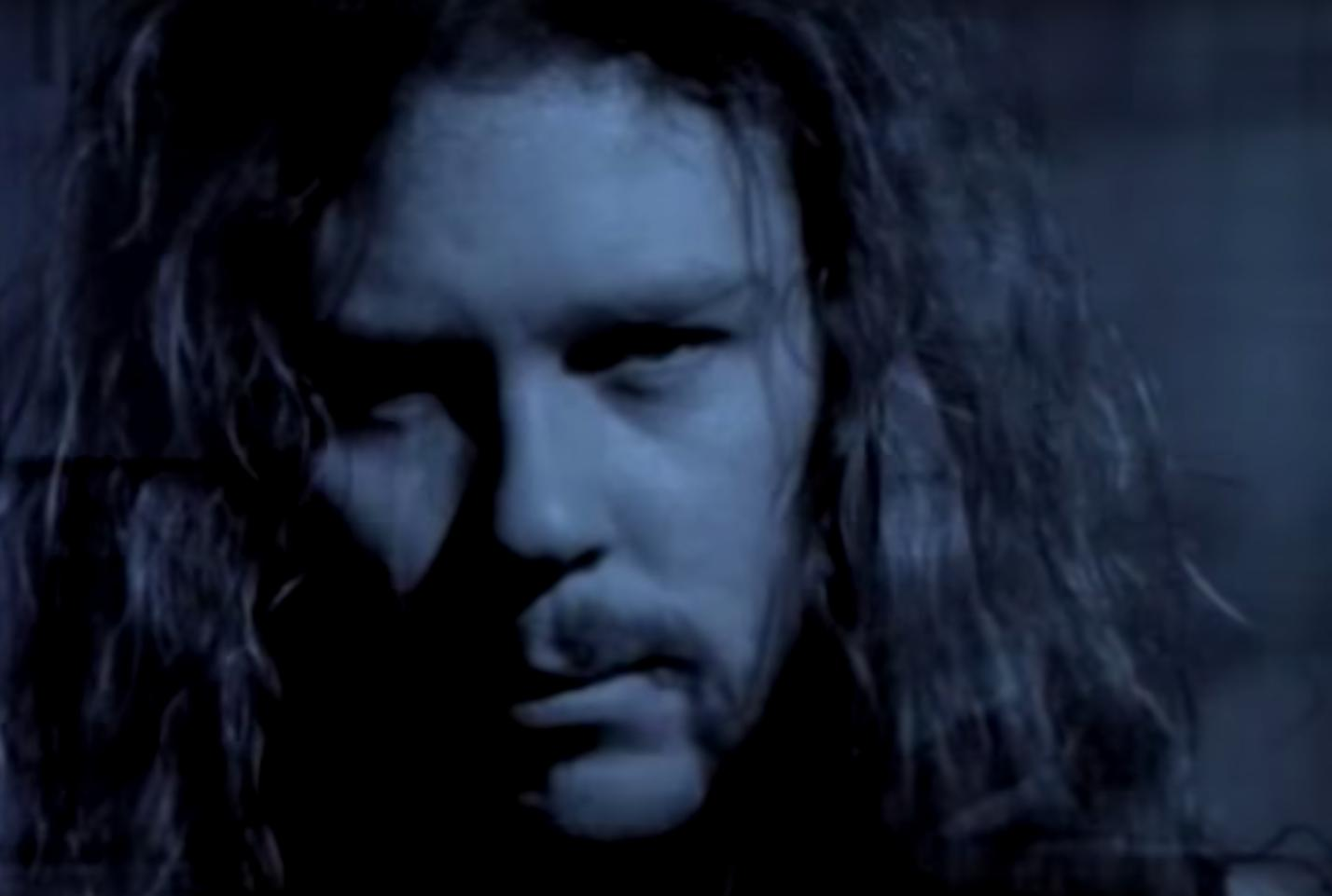
Las Vegas, Saturday, October 10
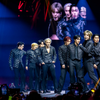
Some sentences sound harmless until you put a date on them. On Saturday, October 10, 2026, just days into Life Burns Faster, the 24-night Sphere residency in Las Vegas that runs through March 2027, James Hetfield paused between songs to thank the crowd. He reminded them that, locals aside, everyone had traveled, spent money and set aside time to be there. Up to that point it was stadium-star etiquette. Then he added that Metallica wasn't there, like some other "entertainers," to influence anyone with their nonsense, that the point was to forget about everything outside for a while, and that "Metallica's agenda is love, energy and heavy music." The Sphere shook, the clips spread all weekend, and the line got boiled down to a one-sentence headline: Metallica won't talk politics.
It's worth being precise about what happened, because the headline and the quote aren't quite the same thing. Hetfield never said the word "politics" and didn't name a single colleague. The context did the translating: a season in which artists as different as Macklemore, Zach Bryan and Jason Aldean have made news for what they say, sing or post about American politics, each from a different shore. Hetfield's line landed in the middle of that conversation and the press did the rest. What nobody can say is that he improvised it. Trace his interviews and you find the same idea repeated with near-military discipline for more than three decades, always with the same structure: artists shouldn't use fame to preach, politics divides, music unites.
That's the rhetoric. The catalog is something else. For a band that doesn't talk politics, Metallica has sung about nuclear annihilation, the death penalty, soldiers used as cannon fodder, millionaire televangelists, blacklists, censorship, a justice system sold to the highest bidder and a planet poisoned by its inhabitants. It has testified before the U.S. Senate, watched its most famous song play in military prisons and in the White House, funded education programs in all fifty states and faced petitions to pull it from a festival over its singer's hobbies. The interesting question isn't whether Metallica is political. It's how it has managed to be political for forty years without almost anyone accusing it of campaigning.
The Hetfield doctrine, in five dates
Before getting to the records, it's worth looking at how its singer's position has evolved, because its consistency is almost as striking as the riffs. In 1991, talking about "Don't Tread on Me," Hetfield explained that the song surprised people who saw them as an anti-war band, and clarified that they were just writing songs without taking sides. In 2008, when the video for "The Day That Never Comes" showed American soldiers in a desert anyone would associate with Iraq, he said he wasn't keen on Metallica plugging into a current war in a way that could be read as a political statement, and complained about celebrities who soapbox opinions people take as more valid just because they come from someone famous. In 2016, promoting Hardwired… to Self-Destruct, he said the band stays away from politics and religion because political views don't connect people the way music does. In April 2017, before Lollapalooza Chile, journalist Claudio Vergara of La Tercera asked him about Donald Trump; he said his opinion stayed with him, that he hated talking politics because it separates people, and that if he declared love or hatred for the president someone would stop listening to his music, which he found silly.
And in 2026, in Las Vegas, the shortest and loudest version of the same idea. What he said at the Sphere is, give or take a word, what he said in 2008 about celebrities preaching from a soapbox. The tone changed, now with profanity and an ovation, but not the content. The doctrine has a clear logic and Hetfield has explained it plainly: Metallica has fans of every conceivable ideology in dozens of countries, and its singer doesn't want anyone to stop listening to "Master of Puppets" over what he thinks of a president. What the doctrine has never said is that the songs shouldn't talk about power. That distinction explains almost everything that follows.
1983–1984: the bomb, the electric chair and the bell
Kill 'Em All is, at heart, a record about being a metalhead: leather, speed, tribal loyalty and the urge to break things. Songs like "Whiplash," "Metal Militia" and "Seek & Destroy" are about the scene itself, the noise and the belonging. Even so, "No Remorse" slips in, a look at war from inside the head of someone who no longer feels anything when he kills, still without the critical edge that would come later but with the seed already planted. It's just a warning of what was coming.
The real shift arrives in July 1984 with Ride the Lightning. Remember the climate: Ronald Reagan's first term, "evil empire" rhetoric, missiles deployed in Europe and nuclear fear so widespread that a TV movie, The Day After, broadcast in November 1983, became a national event in the United States. "Fight Fire with Fire" opens on an almost Renaissance acoustic guitar and within five minutes describes the end of the world by missile exchange, capped by an explosion. The title track climbs inside the head of a condemned man waiting for the electric chair, in a country that had reinstated capital punishment just eight years earlier, after the 1976 Supreme Court ruling. There's no explicit abolitionist plea, but there is something more uncomfortable: the point of view of the man about to die.
"For Whom the Bell Tolls" borrows its name from Hemingway's Spanish Civil War novel and turns a battle scene into a hammer blow of distorted bass and bells, with Cliff Burton sounding as if the bass were artillery. Even "Creeping Death," which plays like a biblical epic in thrash form, tells the plagues of Egypt from the side of the enslaved people awaiting liberation, with a chorus thousands have shouted for four decades without thinking much about the fact that they're singing from the perspective of the oppressed. At barely twenty-one, Hetfield had already found his method: don't comment on the news, step into the shoes of whoever is suffering it.
1986: puppets and disposable heroes
Master of Puppets is usually remembered for its title track, about addiction as a puppeteer pulling the strings, and that reading is correct. But the image of control, of someone moving others from above, runs through the whole record. "Disposable Heroes" is the story of a young soldier sent to the front by people who will never set foot there, told with a rage that still sounds uncomfortable, especially in a country that had come out of Vietnam a few years earlier with a scarred generation. "Leper Messiah" goes after the televangelist business, that industry of broadcast faith, donations and private jets that drew millions of viewers in 1980s America and would begin to crumble into scandal the year after the album's release.
Don Brautigam's cover completes the idea: a field of identical white crosses, like a military cemetery, with strings descending from giant hands. None of these songs asks the listener to vote for anyone. All of them, however, point fairly clearly at who's pulling the strings and who gets the bill. It's politics in the oldest sense of the word: a question about who's in charge.
1988: …and justice for all (who can afford it)
If any album single-handedly dismantles the idea of an apolitical Metallica, it's …And Justice for All, released September 7, 1988. The title comes from the last words of the Pledge of Allegiance that American children recite at school, and the cover turns it into irony: blind Justice cracked, bound with ropes, her scales overflowing with cash. Lars Ulrich has called that writing period "our CNN years": he and Hetfield watching the news for subjects, reading about the McCarthy-era blacklists and coming out with a title, "The Shortest Straw," about witch hunts, suspicion as a sentence and lives ruined by a file.
The rest of the record follows the same line. "Eye of the Beholder" deals with free expression and control over what can be thought and said, at a time when heavy music was still carrying the weight of the 1985 Senate hearings pushed by the Parents Music Resource Center, which put metal in the dock and gave birth to the famous parental advisory sticker. "Blackened" opens the album with the image of an Earth destroyed by those who live on it, all fire, death and a winter that sounds nuclear. "Dyers Eve" closes with a scream at parents who censored their child's every thought, the domestic version of the same theme: authority deciding what you're allowed to be.
And then there's "One." The song is based on Johnny Got His Gun, Dalton Trumbo's 1939 anti-war novel about a World War I soldier who survives without arms, legs or a face, blind and deaf, trapped inside his own mind. Trumbo was one of the "Hollywood Ten," jailed and blacklisted for refusing to testify before the House Un-American Activities Committee. Metallica, which had refused to make music videos until then, broke that rule for "One" and did it its own way: a black-and-white clip over seven minutes long, intercut with scenes from the film Trumbo himself directed in 1971 from his novel. When the royalties for using that footage got too expensive, the band solved the problem by buying the rights to the film. In other words, on the same album where they sang about blacklists, they built their biggest anti-war anthem on the work of one of the most persecuted writers on those lists, and ended up owning his movie.
The coda has its own accidental humor. At the first Grammy for Best Hard Rock/Metal Performance, in 1989, the award went to Jethro Tull, in one of the most talked-about decisions in the history of those awards. The following year, "One" won the first Grammy for Best Metal Performance. The song about a mutilated soldier was also the band's first single to crack the Billboard top 40.
1991: the snake, Moscow and the pendulum
The Black Album turned Metallica into a global phenomenon and also took politics down a different road. In the lower corner of the cover sits a coiled snake, nearly invisible on the black background, the same one from the Gadsden flag, the American Revolution banner bearing the motto "Don't Tread on Me." The song of that name opens by quoting the melody of "America" from West Side Story and sounds like a patriotic march, with a mid-tempo that feels like boots on pavement. Hetfield explained at the time that it was a reaction, a pendulum swing away from the anti-establishment tone of …And Justice for All: after an entire album pointing at his country's cracks, he wanted to write a song of national pride. And it was in that context that he said the song had baffled people who thought they were anti-war, insisting they weren't standing politically on any side.
The snake, by the way, got a second life the band didn't control. In the late 2000s the Gadsden flag became a Tea Party emblem and has carried a partisan weight ever since that it didn't have in 1991. The song didn't change a single note, but the symbol that inspired it changed meaning around it. It's one of the most curious features of Metallica's relationship with politics: often it isn't the band carrying its songs into the public arena, but others picking them up and using them for purposes the band never announced.
On the same record, "The God That Failed" settles accounts with the faith of his mother, a Christian Scientist who died of cancer when he was a teenager without accepting medical treatment. It isn't a song about government, but it is about an institution's authority over a body, and it was probably the most personal and harshest lyric Hetfield had written up to then.
That same year brought the most political concert in Metallica's history, and there wasn't a single speech. On September 28, 1991, barely a month after the failed August coup against Gorbachev, Monsters of Rock landed at Moscow's Tushino airfield with AC/DC, Pantera, The Black Crowes, local band E.S.T. and Metallica. Admission was free, and attendance figures vary so widely depending on who's counting that they range from hundreds of thousands to over a million. Weeks earlier there had been tanks in the city's streets; that afternoon there was a crowd singing along to "Enter Sandman" in a country where Western rock had spent decades between censorship and grudging tolerance. Three months later, on December 26, the Soviet Union ceased to exist. Nobody needed to explain from the stage what it meant.
2000–2012: Lars goes to Washington (and later makes peace)
On April 13, 2000, Metallica sued Napster for copyright infringement and racketeering, after discovering that an unfinished version of "I Disappear," meant for the Mission: Impossible 2 soundtrack, was playing on the radio before its release. On July 11, Lars Ulrich sat before the U.S. Senate Judiciary Committee, then chaired by Republican Orrin Hatch, to argue that artists, not a tech company, should decide what happens to their music. The band delivered a list of more than 335,000 users sharing its songs, the case was settled out of court in 2001, and Ulrich's public image took years to recover. Parodies, cartoons and boos made him the favorite villain of a generation discovering free music.
The story had an epilogue that tends to be forgotten. On December 6, 2012, Ulrich took the stage at a Spotify press conference in New York alongside Sean Parker, Napster co-founder and by then an investor in the platform, to announce that Metallica's entire catalog was coming to streaming. There he admitted he wished he had handled the conflict differently and explained that the fight was never about money but about control. He said it with an advantage he didn't have in 2000: that same year the band had regained ownership of all its masters and founded its own label, Blackened Recordings. Whoever was right in the Napster war, few things are as institutionally political as walking into the Capitol to ask lawmakers to weigh your view on how an entire industry should work, and then spending a decade building the economic independence to never depend on anyone again.
2003–2019: "Enter Sandman," from Guantánamo to the White House
The band that wrote "One" watched its most famous song end up in the hands of U.S. interrogators in Iraq, Afghanistan and Guantánamo. In 2008, the British human rights group Reprieve put it on a list of the songs most often used to subject detainees to extreme-volume music, alongside AC/DC, Drowning Pool, Eminem and even the Barney the dinosaur song. According to reports, it was part of the interrogations of Mohammed al-Qahtani, identified as the "20th hijacker" of September 11.
Reactions within the band were never uniform, and that's the revealing part. In 2008 Hetfield told German TV network 3SAT that part of him was proud they had chosen Metallica. In 2009, on Rachel Maddow's show, Ulrich said the band didn't advocate or condone the practice and joked that he could name thirty Norwegian death metal bands that would make Metallica sound like Simon & Garfunkel. In 2013, when a former Navy SEAL claimed in Esquire that the band had asked the military to stop using its music, Metallica issued a statement clarifying that it had never commented to the military either way and that the debate over interrogation techniques belonged to politicians, the military and pundits. In 2017, speaking to Thrasher, Hetfield said he was honored his music had helped keep the country safe, and agreed with Kerry King that Slayer would have been more effective.
And in May 2019 the song came full circle in the most surreal way possible: Donald Trump entered a White House ceremony to "Enter Sandman," because that day he was awarding the Presidential Medal of Freedom to Mariano Rivera, the Panamanian Yankees closer who for years walked to the mound to that riff. A song written about a child's nightmares traveled, in two decades, through baseball stadiums, military cells and the main hall of the presidential residence. Metallica chose none of those stages. Nor did it publicly reject them.
2008: the video that didn't want to be political
Within those years there's an episode that sums up the tension better than any other. For "The Day That Never Comes," the first single from Death Magnetic, the band hired Thomas Vinterberg, the Danish director who co-founded the Dogme 95 movement. The result was an eight-minute short shot in the California desert: a convoy of American soldiers, an explosion, a wounded comrade, a man in a robe next to a broken-down car and the tension of deciding whether he's a threat or a victim. In 2008, with the Iraq war in its fifth year, it was impossible to watch without thinking of the news.
Hetfield, however, insisted the video was about forgiveness and resentment, about not passing on to others the harm someone did to you, and Ulrich explained that the lyric grew out of a father-son relationship. It was in that context that Hetfield admitted he wasn't keen on the band connecting visually with a current war and that Metallica had never done anything like it. It's the perfect example of the method: an intimate song, a director with his own vision, an inevitably political image and a band that accepts the result while refusing to sign off on the obvious reading.
2014: Glastallica, bears and rifles
If anyone doubts that Metallica knows how to answer politics without speeches, look at Glastonbury 2014. That year they became the first metal band to headline the British festival in its 44-year history, and the news didn't sit well with part of its usual crowd. On top of the genre controversy came another: Hetfield, an avowed hunter and National Rifle Association member, had agreed to narrate The Hunt, a History Channel series about hunting Kodiak brown bears in Alaska. A petition was launched to remove the band from the bill over its supposed support of big-game hunting, which its organizers called incompatible with the festival's spirit.
Metallica's response was a piece of top-tier political humor. First, they sold a T-shirt reading "Glastallica: Peace, Love & Metal" on the front and, on the back, quotes from the musicians and outlets that had criticized their booking. Then they opened their set with a short film directed by Julien Temple showing a traditional British fox hunt, an activity that in England carries its own class and legal baggage, in which four armed bears end up shooting the hunters. When the masks come off, the bears turn out to be Hetfield, Ulrich, Hammett and Trujillo. They didn't say a word about hunting, animals or British politics. They didn't need to.
2016–2017: four musicians, several positions
When Hardwired… to Self-Destruct came out in November 2016, Hetfield described it as a cynical look at humanity: a species that has existed for a millisecond in the history of the universe and thinks it can control the world, global warming and everything else. Songs like "Spit Out the Bone" explore dependence on technology and the idea of humanity replaced by machines, while "ManUNkind" and "Am I Savage?" circle the violence that seems factory-installed in the species. Ulrich told Q that he'd love to pitch it as the soundtrack to America's political moment, but the title track wasn't born as an anthem for the fall of 2016, though he wasn't going to tell anyone how to read it.
That same year, however, Ulrich had already let his views show. He remarked that he paid taxes in the U.S. without being able to vote, since he keeps his Danish citizenship, and that he would consider moving back to Denmark if Trump won. In January 2017, after the inauguration, Kirk Hammett posted a string of tweets comparing the "America First" speech to 1940s Germany, criticizing the new administration's stance on climate change and urging people to defend democracy and reject the "American carnage" of the inaugural address. Months later, in Brazil, he said it seemed highly unlikely Trump would win a second term.
For Mexican fans, the closest chapter came in March 2017, during the band's three nights in Mexico City. Paola Rojas of Las Estrellas asked Ulrich about the border wall, and he answered bluntly: "I don't think the world needs any walls." He added that, as a Dane being asked for his opinion, he didn't see any wall as necessary, and that Metallica travels the planet trying to bring together people of different backgrounds through music. A few weeks later came Hetfield's interview in Chile, his opinion kept under lock and key. Same year, same tour, same band: a drummer who says what he thinks, a guitarist tweeting against the president and a hunting, NRA-member singer who refuses to weigh in. Robert Trujillo, the only member with Mexican roots, has stayed out of that terrain in public. Four ways of being in the world, and none of them strictly neutral.
Politics without a placard: the foundation
In 2017 the band created All Within My Hands, a foundation named after a song from St. Anger, whose stated goal is to invest in the communities that have supported Metallica, with a focus on workforce education and fighting hunger. Its flagship project, the Metallica Scholars Initiative, launched in 2019 with the American Association of Community Colleges and a million dollars spread across ten schools, to support students training in technical trades. By 2025 it was in seventy-five colleges, had received more than $13.5 million and the band had commissioned the University of Southern California's school of public policy to measure its impact on graduates' earnings. Trujillo summed it up by saying the country needs millions of skilled tradespeople.
There's nothing partisan in that, and that's exactly what makes it interesting. Funding technical education, feeding communities and choosing whom to help is doing public policy from outside government, with your own money and without endorsing any candidate. It's the kind of politics Hetfield does seem comfortable with: the kind measured in scholarships, not statements.
On March 3, 2022, days after the Russian invasion, that same foundation donated $100,000 to World Central Kitchen, chef José Andrés' organization, to help the Ukrainian population. In April it added another $500,000 to feed refugees, with a goal of raising a million in two months through auctions, raffles and a shirt designed for the cause. It was a humanitarian act, but also a clear choice about whom to help in a war between two countries where Metallica has played and has fans.
2023: the inward turn
The following year, 72 Seasons did the opposite of …And Justice for All. Released April 14, 2023, the album revolves around the first eighteen years of life, those seventy-two seasons in which, as Hetfield put it, our true or false selves are formed from what we were told we were. The cover, a burnt black crib surrounded by broken toys, makes that clear. "Screaming Suicide" names without euphemism a subject long discussed in whispers; "Lux Æterna" is a sprint in the spirit of the New Wave of British Heavy Metal; "Too Far Gone?" asks whether there's still a way back.
It's an exploration of childhood, of the wounds we carry and how to break free of them, probably the most introspective record of their career and the least interested in what's happening out there. Hetfield arrived at it in a period marked by another stint in rehab, the end of his marriage and a public life shaped by his own addictions, and it shows. That it arrived just before the Sphere remark makes sense: the band that watched CNN to write in 1988 now writes by looking in the mirror.
Back to the Sphere
What Hetfield said on October 10 contains a word more interesting than "nonsense" or "influence": agenda. By declaring that Metallica's agenda is love, energy and heavy music, he described fairly precisely the line the band has drawn for four decades. Put everything above in order and three ways of doing politics emerge, all of which Metallica practices without fully admitting it. The first is in the songs: war, punishment, censorship, organized religion, bought justice, almost always told from the victim's side and never from the rally stage. The second is in the actions: testifying before the Senate, reclaiming the masters, funding scholarships, feeding refugees, answering a petition with a short film about armed bears. The third is in the silences: letting "Enter Sandman" play in Guantánamo and the White House, allowing the Gadsden snake to change owners, accepting Vinterberg's video without signing off on its reading.
What they've almost never done is tell the audience whom to vote for or turn the stage into a partisan podium. There's a difference between writing about power and campaigning, and Metallica has spent forty years living right on that border, with Ulrich and Hammett crossing it now and then in interviews and Hetfield refusing to take a step to the other side, even if his life offstage, between rifles, bears and the NRA, says plenty on its own. You can debate whether that border exists or is a comfortable way of not losing audience. What you can't debate is that they've defended it with a consistency few bands their size have sustained.
There are still twenty-odd nights of Life Burns Faster to go, with the promise of no repeated songs between each weekend's Thursday and Saturday. If on one of them, under the largest LED screen in the world, "One" kicks in, the crowd will hear seven and a half minutes about a mutilated soldier, written from the novel of a man jailed for his ideas, from a film that now belongs to the band. Hetfield won't need to say a word between songs. He never has.