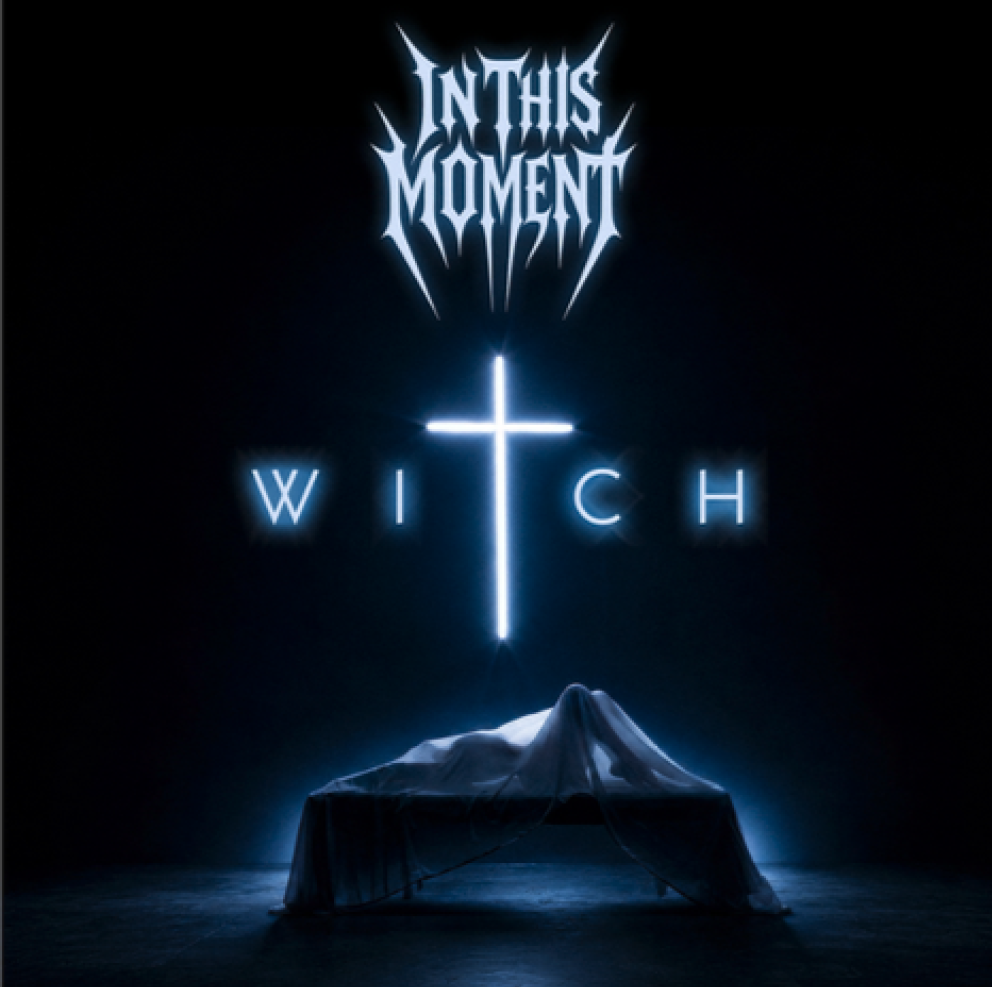
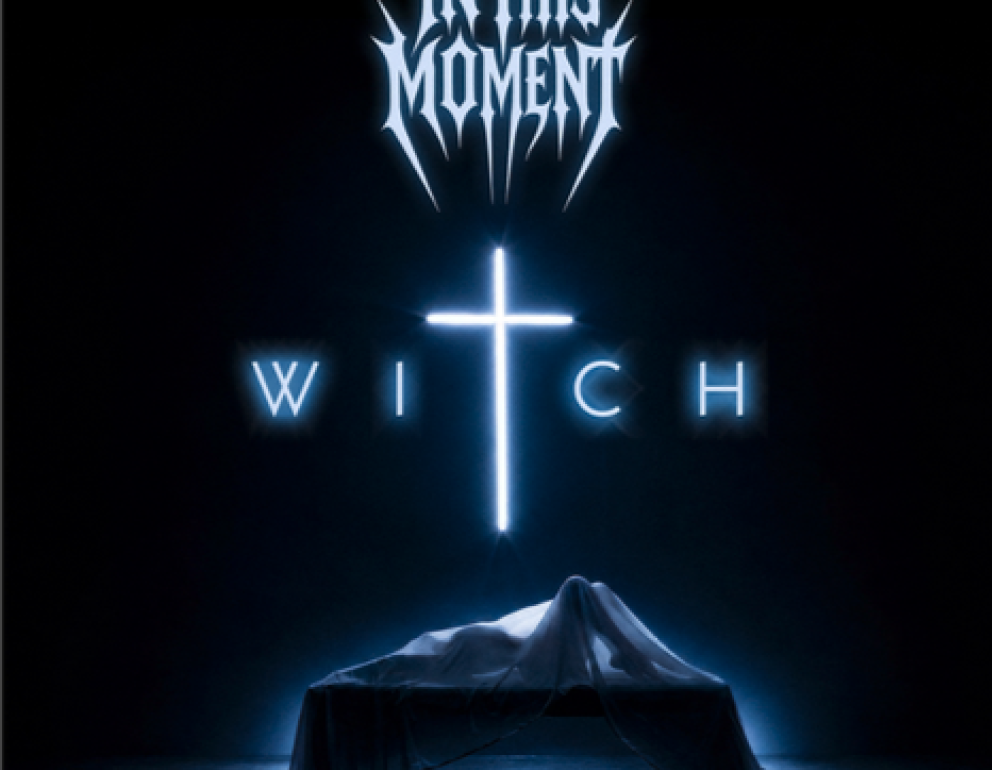
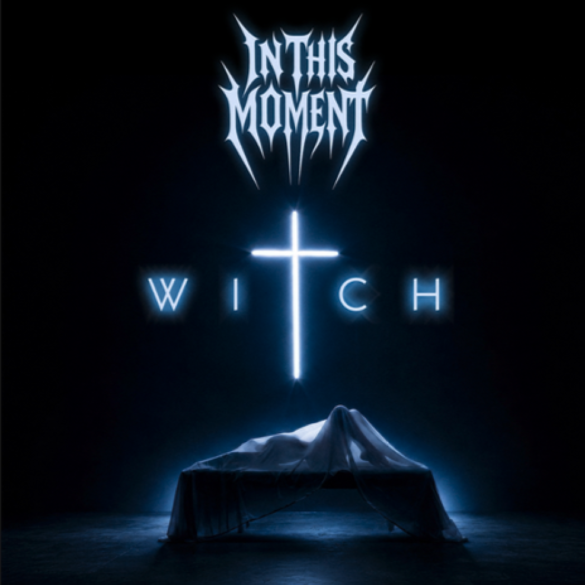
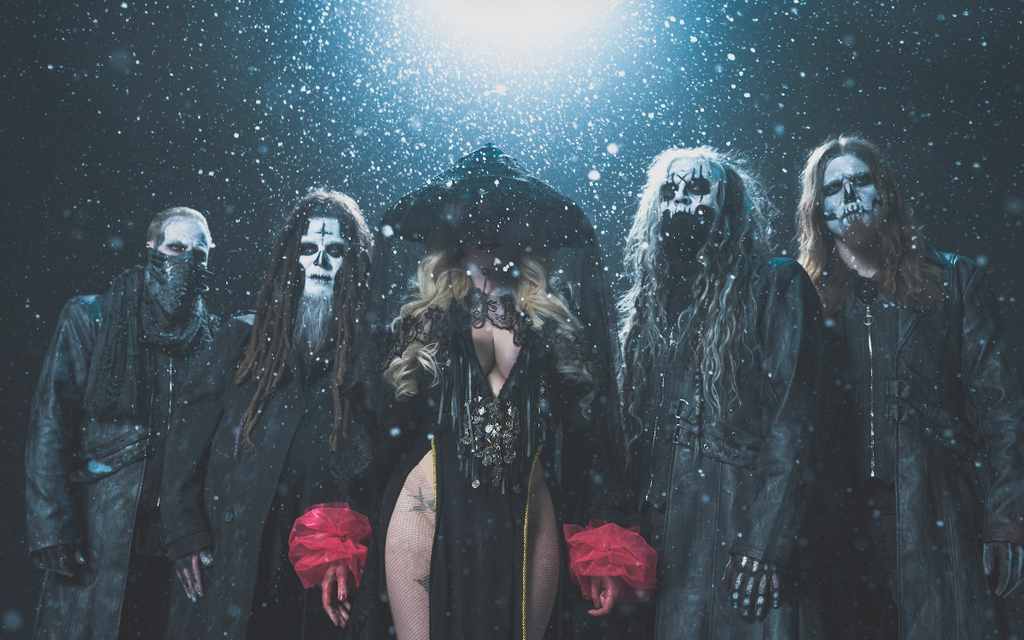
It took In This Moment several years to discover that the band could become far more interesting once it stopped behaving like a conventional metal act. The change did not happen simply because Maria Brink began singing differently or because the guitars surrendered some territory to electronics, but because a mythology gradually formed around the music in which sexuality, religion, trauma, power, vulnerability and theatricality could coexist, eventually reaching a point where the visual dimension no longer felt like an accessory. By the time Black Widow, Ritual and later Mother arrived, that transformation had turned Brink into a figure difficult to separate from the altars, veils, crowns, crosses and ceremonies surrounding her songs. From that perspective, calling the ninth album Witch feels like the natural consequence of an artistic persona that had been moving toward that word for a very long time.
The difficulty is that an idea can fit an artist perfectly and still arrive too late to feel revelatory. Brink approaches the witch through inner transformation, persecution and the possibility of turning pain into power, themes with an obvious connection to her trajectory but also ones that have belonged to In This Moment’s emotional vocabulary for quite some time. Witch therefore begins with a potentially enormous concept while carrying the responsibility of finding something new inside an identity the band has explored for more than a decade, and much of the album’s tension comes precisely from hearing it attempt to move forward without abandoning the tools that brought it here.
During its strongest moments, that familiarity works in its favor. “Shame” uses recognizable devices without rushing to display them, allowing Brink to gradually increase the intensity while the instrumentation builds tension that takes long enough to resolve. That patience considerably changes the effect of the guitars when they finally gain weight and allows the theatrical dimension to emerge as a consequence of what is happening inside the song. “Crawl” accomplishes something similar from a more physical position, integrating electronics into the rhythmic movement rather than simply using them as an atmospheric layer. In both cases, there is still a sense of a band working around a composition and responding to it, a quality Witch loses whenever the production begins determining too clearly where each emotion is supposed to appear.
That control is one of the album’s defining limitations. In This Moment has spent years pursuing a monumental sound and reaches a scale here that will probably work formidably once these songs are incorporated into the live spectacle, but the recording rarely allows that magnitude to disappear completely. The drums carry a carefully uniform impact, the guitars occupy perfectly defined spaces and the synthesizers maintain a dark atmosphere even when the composition might benefit from emptiness. Brink remains very close to the front of the mix while an architecture designed to amplify every shift in her register rises around her, causing the transition between intimacy and explosion to repeat often enough that the ear begins recognizing the mechanism before the song has completed its journey.
The overproduction does not hurt Witch because it sounds modern, nor would there be much sense in asking In This Moment to artificially return to the rawness of its early years. The issue lies in how many decisions seem to have been made in advance to guarantee impact. A vulnerable vocal is usually surrounded by space and texture; additional layers arrive as the tension increases; when catharsis appears, guitars, drums and vocals expand together. The device remains effective because Brink has enough interpretive ability to sell it, but repetition reduces the emotional distinction between songs that are ostensibly pursuing different states. Witch contains considerable sonic variety and, paradoxically, a sense of uniformity that comes less from the genres being used than from the way they are organized.
“Father” provides an opportunity to hear what happens when that machinery retreats far enough. Brink retains her dramatic instinct, although the performance carries a fragility that does not constantly appear to be waiting for the moment when it can become strength. The song breathes around that vulnerability and achieves an intensity that several much heavier sections of the album pursue through volume and density. The effect also demonstrates how much Brink has developed as a vocalist since In This Moment’s earliest records: her current ability to sustain a song through breath, texture and subtle changes in intensity makes it unnecessary for every emotion to culminate in a large vocal display.
That individual evolution makes an issue Witch never completely resolves as a band album more apparent. Chris Howorth, Randy Weitzel, Travis Johnson and Kent Diimmel are present and execute what the songs require with enormous precision, but the instrumentation rarely seems to argue with Brink, redirect her or introduce tension she does not control. In a group historically built around such a dominant frontwoman, the imbalance is understandable, although the current production amplifies it until some arrangements function more as scenery for the voice than as a conversation between musicians. Whenever the guitars recover some abrasion or the rhythm section acquires greater autonomy, as happens during parts of “Crawl,” the sound immediately gains a dimension that other passages lose underneath so much organization.
The middle portion of the sequence is particularly affected by that tendency. “Into The Dark,” “Father” and “Without Me There’s No You” address different emotions and contain individual details, but they share an inclination toward restrained tempos, dense atmospheres and developments that gradually lead toward an increase in intensity. Brink’s performance prevents them from completely blending together, although hearing the album from beginning to end reveals a structural monotony that is less apparent when the songs are consumed individually. The problem is not that In This Moment has written several slower pieces, but that the record too frequently uses similar devices to express vulnerability, darkness and subsequent release.
The collaborations change the temperature without completely resolving that situation. Rory Rodriguez introduces a different melodic sensitivity to “I Want To Believe,” while “Heretic” uses Kim Dracula to bring in a considerably more nervous and contemporary energy. The latter provides a timely interruption to some of the accumulated solemnity and will probably have an especially effective life outside the album, although its combination of metal, electronics, rap and theatricality is so conscious of the current language of alternative metal that it occasionally feels constructed around those elements rather than around a particularly memorable idea. Kim Dracula’s personality supplies much of the unpredictability, reinforcing the impression that Witch discovers some of its clearest contrasts when an outside presence enters the room.
The presence of three covers within eleven songs raises a more significant issue because it directly affects the identity of the album. “Wrapped Around Your Finger,” “Another Brick In The Wall” and “Something I Can Never Have” belong to artists whose influence or sensibility can be integrated into In This Moment’s universe without much difficulty, and Brink possesses enough personality to avoid simple imitation. The Police reinterpretation works particularly well when the original is slowed down and the obsession in the lyric is allowed to acquire a more sinister quality, while the aesthetic proximity to Nine Inch Nails makes “Something I Can Never Have” feel natural for a singer accustomed to operating along the border between vulnerability and industrial music.
Considered individually, those choices are easy to defend; within Witch, allowing them to occupy almost a third of the album changes the discussion. A record presented around transformation, identity and the reclamation of power ultimately devotes a considerable amount of space to words and structures inherited from other songwriters, precisely when its concept seemed to demand a deeper exploration of Brink’s own voice. The contradiction becomes clearest at the end because “Something I Can Never Have” delivers a convincing and emotionally appropriate performance while also providing the resolution to a supposedly personal journey through a Trent Reznor composition. The cover works musically while leaving open the question of how much more interesting it might have been to hear Brink take her own idea of Witch toward a conclusion written from within.
“Another Brick In The Wall” exposes another limitation of this approach. In This Moment considerably transforms the surface through electronics, thicker guitars and a sense of drama unmistakably belonging to its own language, but underneath that treatment Pink Floyd’s conceptual architecture remains dominant. The reinterpretation changes the atmosphere more deeply than it changes the meaning and ultimately resembles a strong demonstration of how a familiar song might sound inside In This Moment’s universe, an entertaining exercise on its own but less valuable within an album that needed to use every available space to develop its own thesis.
That thesis is precisely where Witch could have been considerably more ambitious. The history of the witch contains an uncomfortable mixture of misogyny, religious persecution, social control, superstition, desire, folklore, sexuality, spirituality and violence, providing enough material to construct something substantially more complex than a metaphor for personal transformation. Brink also has an artistic trajectory ideally suited to confronting those contradictions because much of her work has involved reclaiming symbols traditionally used to judge, control or punish women. The album, however, concentrates primarily on the idea of turning suffering into strength, a legitimate and coherent reading that remains too close to conversations In This Moment has already developed elsewhere.
The conceptual familiarity ultimately connects with the musical one. Both the production and the lyrics frequently attempt to guide conflict toward a recognizable resolution, reducing some of the discomfort an album called Witch could have embraced. It would have been interesting to hear songs where Brink did not immediately locate power inside pain, where contradictions remained unresolved or where the instrumentation accompanied that uncertainty through less predictable structures. The band possesses enough experience to abandon the safety of the huge chorus, the perfectly positioned crescendo or the production that turns every crack into spectacle for a few minutes, but rarely takes advantage of that freedom.
The consequence is a professional, recognizable album capable of producing very good moments that rarely creates the impression of opening a new phase. Maria Brink sings better than she did when In This Moment first discovered its modern language, the band has more resources at its disposal and the production can create a scale its earlier records did not even attempt to reach, but technical growth is not always accompanied by an equivalent evolution in songwriting. At times the opposite happens, with the increasingly elaborate environment making the familiar structure underneath even easier to recognize.
Listening to Witch without immediately imagining the live spectacle helps expose that distinction. Few contemporary bands have integrated visuals into their identity as effectively as In This Moment, and several of these songs will almost certainly acquire another dimension among lighting, costumes and scenery. An album still needs to preserve its tension when all of that disappears, and here the moments that survive most convincingly are precisely those where the music depends less on the magnitude of the visual universe: the patience of “Shame,” the industrial friction of “Crawl” and the vulnerability of “Father” contain enough ideas to exist without requiring the listener to mentally complete the stage around them.
In This Moment does not need to abandon the theatricality that made it recognizable or return to an earlier version of itself; it could become considerably more interesting by using the confidence accumulated over all these years to allow that identity to deform. Fewer layers at selected moments, greater autonomy for the instrumentation, songs that do not always need to arrive at an enormous resolution and lyrics willing to remain inside uncomfortable contradictions could restore some unpredictability to a band that already knows perfectly well how to sound like In This Moment.
Maria Brink moves through the record with a presence that remains difficult to replicate, the strongest songs find convincing ways of updating familiar devices and the album maintains a coherent atmosphere even when the sequence loses momentum. Its limitations become apparent precisely because there is a much more interesting band behind that security, one capable of using its imagery to explore less comfortable territory and of trusting its musicians enough to let the sound exist without being perfectly protected at every moment.
Witch confirms the extent to which In This Moment has mastered its own language while also revealing the price of knowing it too well. The concept offered an extraordinary opportunity to introduce contradiction, dirt and risk into an identity that has grown progressively more controlled over the years. The album finds glimpses of that possibility and builds a solid work around them, but remains too close to the safety of its own mythology to become one of the band’s essential chapters.