



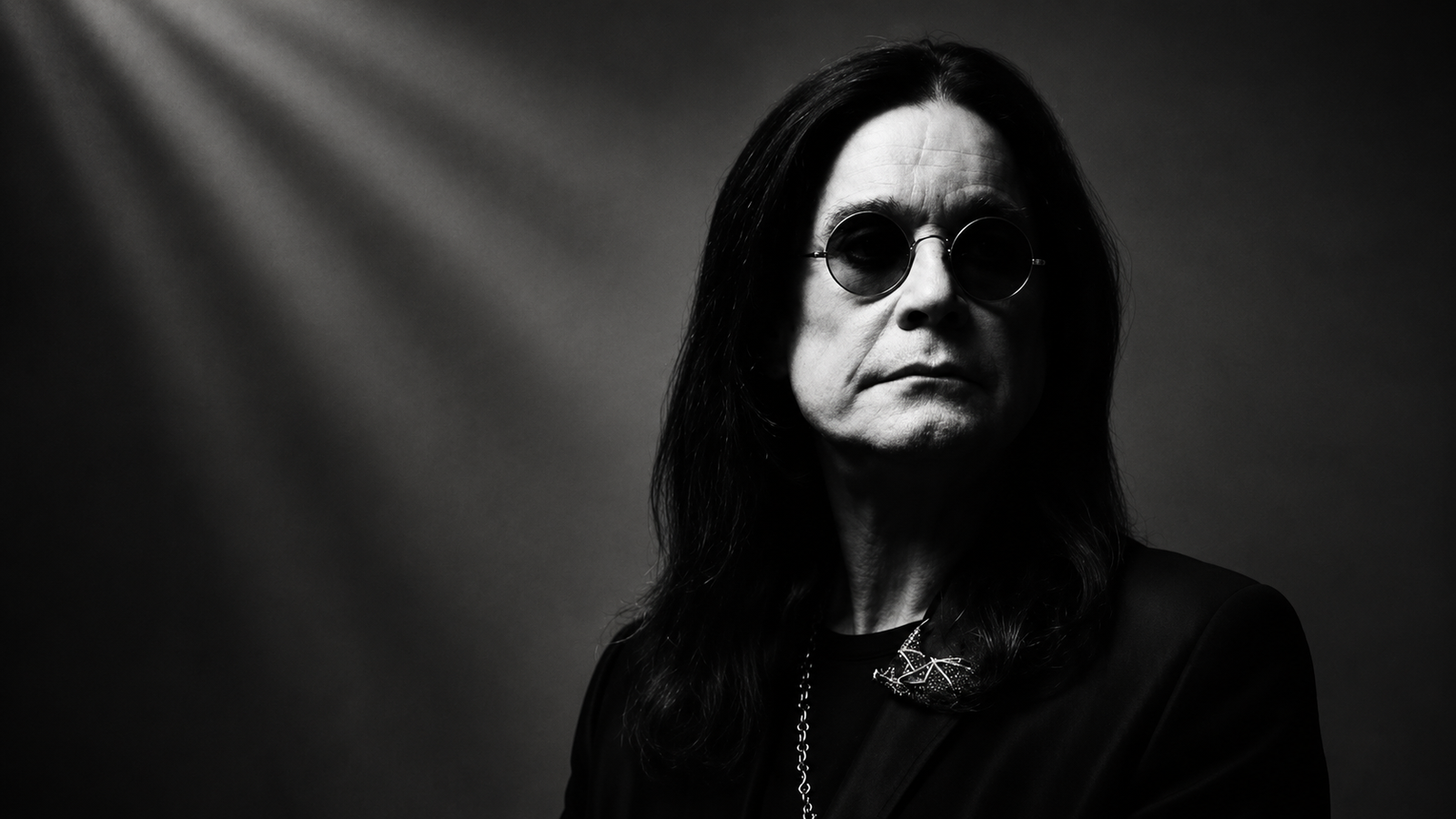
John Michael Osbourne was born on December 3, 1948, at the Marston Green maternity hospital on the outskirts of Birmingham, but his childhood unfolded entirely in Aston, an industrial district north of the city, crossed by chimneys, railway lines, and the constant noise of the factories that sustained Britain's postwar economy. The Osbourne family lived at 14 Lodge Road, a two-room house shared by the parents and their six children: three girls, Jean, Iris, and Gillian, older than John, and two younger boys, Paul and Tony. His father, John Thomas "Jack" Osbourne, worked night shifts as a toolmaker at the local General Electric plant; his mother, Lillian, worked day shifts at an auto parts factory. This was not a comfortable childhood even by the modest standards of the mid-century English working class; it was a childhood of overcrowding, of constant material deprivation, and of a daily life in which manual labor appeared to be the only possible horizon.
That humble geography is not an anecdotal detail or a biographical ornament that can be separated from the work that followed. Birmingham in the fifties and sixties was a city built literally from metal: foundries, machine shops, assembly lines, a soundscape dominated by the relentless hammering of heavy industry. Geezer Butler, who years later would join Osbourne in founding Black Sabbath, explained in a 2017 interview that the band had no interest in writing cheerful pop songs because their surroundings gave them no reason for cheerfulness; the industrial, oppressive sound they eventually forged was not a calculated aesthetic pose but an almost literal translation of the sonic and emotional landscape in which they had grown up. That detail explains, better than any subsequent musicological analysis, why heavy metal was born precisely there and nowhere else: four teenagers from a working-class neighborhood turned the noise of the factories surrounding them into a musical language of their own.
At school, Osbourne suffered from undiagnosed dyslexia that turned every school day into an exercise in humiliation and frustration; teachers considered him a slow student, his classmates mocked him, and the atmosphere compounded an isolation that deepened when, according to his 2010 autobiography "I Am Ozzy," he was sexually abused at age eleven by an older teenager from the neighborhood. He spoke of severe depressive episodes during adolescence and of more than one suicide attempt, details he revealed publicly decades later, once he was an established figure who could afford to speak of his own fragility without endangering the image he had built. He left school at fifteen, an age at which most young people in his environment abandoned formal education to enter the labor market immediately, and moved through a string of jobs that today read almost like a catalogue of industrial England at the time: construction laborer, plumber's apprentice, toolmaker's apprentice, horn-tuner at an automobile factory, and, in a period he recalled repeatedly as one of the most brutal of his early life, slaughterhouse worker, an experience he described in later interviews as one that left a direct imprint on the dark imagery he would later exploit in his music.
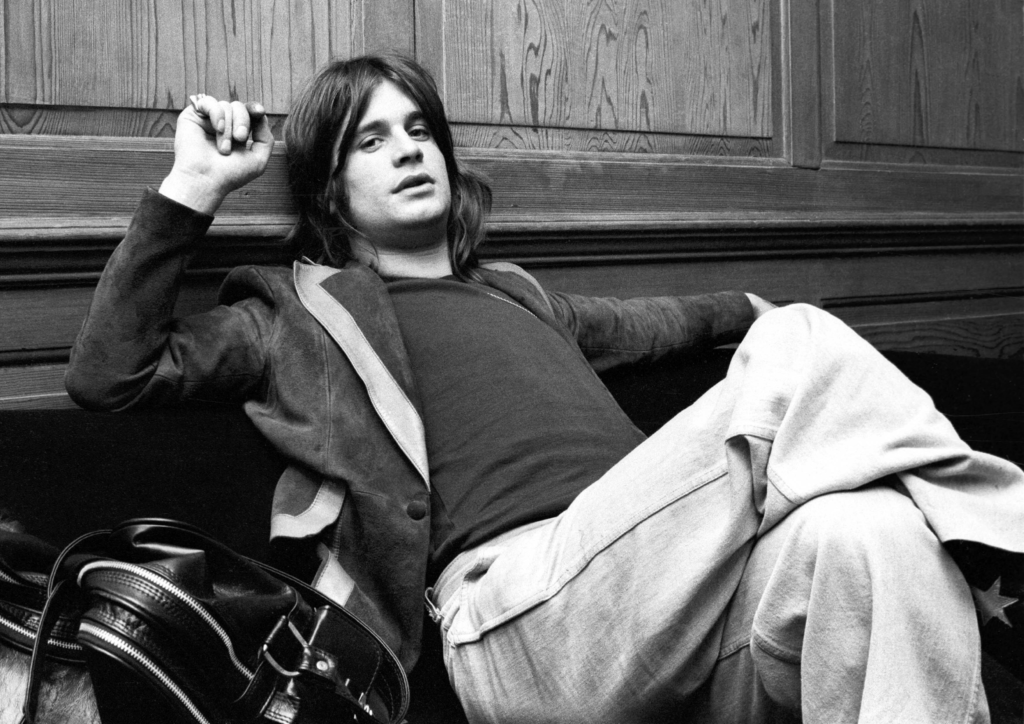
At seventeen he was convicted of stealing from a clothing store; unable to pay the fine, he found that his father, in a disciplinary gesture Osbourne would recall with ambivalence for the rest of his life, refused to cover it in order to "teach him a lesson." The result was a six-week sentence at Winson Green Prison, in Birmingham itself. Far from becoming the start of a criminal trajectory, that episode functioned as a turning point: upon release, Osbourne was clear that his life would not unfold between factories and police stations. The catalyst for that resolve had arrived a couple of years earlier, when he first heard "She Loves You" by The Beatles on the radio; he described that listening experience as an instant revelation, the moment he decided, without any concrete plan yet, that he would devote his life to music, whatever the cost.
In 1968 he answered an advertisement posted at a local music shop by Tony Iommi and Bill Ward, who were looking for a singer for a new project after the dissolution of their previous band, Mythology. Osbourne and Geezer Butler, who knew each other from the neighborhood and had briefly played together in a group called Rare Breed, joined the effort. The quartet rehearsed first under the name Polka Tulk Blues Band, then as Earth, until the coincidence with another act using that same name forced them to look for a distinct identity. The definitive inspiration came from an unexpected source: across the street from the venue where they rehearsed, a cinema was screening the Italian horror film "La maschera del demonio," known in English-speaking markets as "Black Sabbath." Geezer Butler, an enthusiast of occult literature and authors such as Dennis Wheatley, suggested the name, and the other three felt it captured exactly the dark tone they wanted their music to convey. None of the four, laborers in their early twenties with no formal musical training and no ambitions beyond playing the pubs of Birmingham, could have suspected that this name would end up retroactively christening an entire musical genre.
Before that consolidation, the band spent much of 1968 and 1969 playing the pub and club circuit of Birmingham and the north of England, a demanding circuit that required groups to complete several sets a night, often in front of indifferent or hostile crowds, and that functioned as a school of onstage endurance well before any commercial recognition arrived. That stretch of hard road, generally minimized in accounts that focus on the later success, proved decisive in allowing the four musicians to sharpen a sound of their own, one set apart from the blues rock and psychedelic rock then dominating the British charts, embodied by groups such as Cream or the early Fleetwood Mac. While those bands explored virtuosic improvisation and a sensibility more closely tied to the optimistic counterculture of the late sixties, Black Sabbath moved toward a terrain of greater density and slowness, built on repetitive structures and a sustained atmosphere of menace that reflected the everyday experience of its members far more faithfully than any psychedelic fantasy of liberation ever could.
Black Sabbath's self-titled debut album was recorded in a single day in the studio, on a budget that barely exceeded six hundred pounds, at Regent Sound Studios in London, and was released on Friday, February 13, 1970, a date the band itself would later exploit as part of its own mythology. The album used the tritone interval, traditionally banned in classical music for its historical association with the demonic, as the central device of its title track, building an atmosphere of constant threat that nothing in earlier rock had attempted with such density. The specialized critics of the day, most of them steeped in progressive rock and blues, greeted the record with disdain and hostility; nonetheless, it reached number eight on the British charts and stayed among the top sellers for several months, revealing from the very first moment a gap between the verdict of the specialized press and the response of the public, a gap that would accompany the band—and Osbourne in particular—for much of his career. Months later came "Paranoid," the second studio album, which included pieces such as "Iron Man" and "War Pigs" and which would finish establishing the sonic vocabulary of heavy metal: heavy, down-tuned riffs, a direct result of an industrial accident that had severed the fingertips of two fingers on Tony Iommi's right hand at his last job before devoting himself entirely to music; lyrics that alternated occult imagery with explicit social criticism of the Vietnam War and the political class that sustained it; and a voice, Osbourne's, that brought a nasal, high-pitched, piercing timbre deliberately at odds with the grave solemnity of Iommi's riffs, generating a sonic tension that would become the band's defining signature.
Ideology, philosophy, and the construction of an authenticity that was never staged
It is tempting, and at the same time inaccurate, to describe Ozzy Osbourne as an ideologue in the traditional sense of the term; he never articulated a coherent system of thought nor claimed to speak for any defined political doctrine. His philosophy, if it can be called that, was built empirically, out of the direct experience of poverty, manual labor, and social exclusion, and expressed itself less through programmatic statements than through a sustained attitude toward life over more than fifty years: a systematic refusal to pretend to be something other than what he was. That refusal, which in almost any other public figure might look like a calculated marketing strategy, was in Osbourne's case genuinely involuntary; he lacked the social filter needed to disguise his contradictions, his fears, or his excesses, and that lack, far from harming him, ended up being the foundation of a connection with the public that no political discourse could have matched.
The social criticism present in Black Sabbath's lyrics, especially those written by Geezer Butler, was articulated from a very specific class position: that of four young men who had grown up watching their parents exhaust themselves on night shifts for insufficient wages, who had witnessed the conscription of neighbors and acquaintances into a war in Southeast Asia they neither understood nor endorsed, and who saw with clarity the distance between those who made decisions and those who paid the consequences. "War Pigs," released in 1970, describes the "war pigs" who plan massacres from offices far removed from the front while sending others to die, a denunciation that required no theoretical sophistication because it stemmed from a direct, unmediated observation of how power actually operated. That kind of lyric, combined with the occult aesthetic the band cultivated from its first record onward—pentagrams, references to Lucifer, Gothic imagery drawn from horror literature and authors such as H. P. Lovecraft—generated years of confusion, deliberately fed by a sensationalist press that tried to present Black Sabbath as an organized satanic cult. The reality was considerably less dramatic: none of the four members held an active satanic faith, and Osbourne himself would repeatedly joke about how absurd it was that he was credited with genuine demonic power when, in his own words in later interviews, he could barely manage to organize his own daily life.
That apparent contradiction—an imagery associated with absolute evil, sustained by a person who in private showed himself to be insecure, generous with his collaborators, and given to self-deprecating humor—constitutes perhaps the most interesting core of his public persona. Osbourne understood, perhaps without ever consciously setting out to, that terror and comedy share the same root: both depend on exaggeration and on breaking conventional social expectations. Throughout his career he cultivated, simultaneously, the role of the "Prince of Darkness"—a nickname that would end up almost entirely replacing his given name in the popular imagination—and that of a man profoundly clumsy in his domestic life, unable to operate a remote control or understand how a mobile phone worked, a contrast that the reality show "The Osbournes" would exploit masterfully between 2002 and 2005. That duality was not a publicity strategy designed by a communications team; it was, according to most of his biographers and close collaborators, a fairly faithful reflection of who he actually was: someone who had built a terrifying stage mask without ever abandoning the vulnerability and lack of pretension of the kid from Aston who never learned to fake sophistication.
Addiction occupied a central place in his biography and, indirectly, in his philosophy of life. Osbourne consumed alcohol and drugs continuously for much of his adult life, with episodes of overdose, hospitalizations, and erratic behavior widely documented by the press and by himself in later interviews, in which he never tried to sugarcoat or justify that history. Unlike other rock figures who romanticized substance use as part of a supposed spiritual or creative quest, Osbourne tended to describe his own excesses with an almost clinical frankness, acknowledging the damage caused to his family and to himself without building any heroic narrative around the matter in the process. That honesty without excessive drama—recounting what happened without either hiding it or glorifying it—became, over the decades, one of the traits his fans valued most about him: the sense that, even in his worst moments, he never tried to sell them a false version of himself.
His relationship with the working class he came from was likewise never articulated as an explicit political statement of the kind other musicians of his generation did adopt. Osbourne never declared himself a socialist nor built a systematic discourse around economic inequality; his identification with popular sectors operated in a different register, more affective than ideological, rooted in the shared memory of precarity and in an instinctive rejection of any form of aristocratic or intellectual pretension. He never dropped his thick Birmingham accent despite decades of living in the United States and rubbing shoulders with the entertainment elite; he never faked a cultural refinement he neither possessed nor cared to feign; and in interviews given throughout his entire career he insisted, in various forms of the same idea, that he remained, at bottom, "just John Osbourne, a working-class kid from Aston who one day said goodbye to the factory to go and have a good time," a phrase he used almost verbatim as the title of his autobiography and which sums up with precision his own self-perception: not that of an artistic genius consciously aware of revolutionizing a genre, but that of someone who found in music an escape route from a destiny that seemed sealed in advance by his social origin.
Solo reinvention: from being fired by Black Sabbath to building an empire of spectacle
Tensions within Black Sabbath, fueled by excessive substance use, creative friction with Tony Iommi, and the natural wear of a decade of uninterrupted touring, came to a head in 1979 with Osbourne's expulsion from the group he himself had helped found. The last record of that original era, "Never Say Die!," released in 1978, already showed clear wear in the relationship between the members, and Osbourne's departure occurred in terms his former bandmates publicly described as a consequence of behavior they considered destructive and unsustainable within a band that needed discipline to keep functioning professionally. Osbourne, for his part, spent the months following his expulsion in a state of severe personal deterioration, holed up in a hotel room on Sunset Boulevard, devoted almost exclusively to drinking, with no concrete plans or clear professional prospects.
It is worth noting that the definitive break of 1979 was not the first fracture between Osbourne and his bandmates: he had already left the group briefly in 1977, exhausted by its internal dynamics, and was temporarily replaced by Dave Walker, former singer of Fleetwood Mac, before his own bandmates asked him to return to complete "Never Say Die!." That precedent reveals that the 1979 rupture was not an isolated event but the culmination of a tension that had been building for years, fed both by drug use and by artistic differences between an Iommi increasingly interested in exploring progressive variations of the band's original sound, and an Osbourne who preferred to keep the more direct formula that had made them famous.
Tragedy interrupted that collaboration abruptly: on March 19, 1982, Randy Rhoads died in a plane crash in Leesburg, Florida, when the pilot of a small aircraft in which he was traveling, without authorization or sufficient experience, attempted reckless maneuvers over the tour bus. Osbourne would describe that loss as one of the most devastating of his life, and the guitarist, whose career had been limited to just two studio albums, would be posthumously inducted into the Rock and Roll Hall of Fame in 2021, with Tom Morello of Rage Against the Machine delivering the induction speech, in which he described Rhoads as a figure of immense influence despite a small catalogue, comparing him to Robert Johnson in the world of blues.
It was precisely during the "Diary of a Madman" tour that the episode occurred which would go on to become the most repeated anecdote of his entire public biography: during a concert in Des Moines, Iowa, in January 1982, an audience member threw onto the stage what Osbourne took to be a rubber bat; upon picking it up and biting it in front of the crowd, he discovered it was a real animal, requiring emergency treatment for possible rabies exposure. Osbourne himself would later admit, with the self-deprecating humor that characterized much of his public statements, that the episode would end up defining his epitaph in the collective imagination, above any concrete musical achievement, and indeed "the man who bit the head off a bat" became a label that followed him for the rest of his life, feeding both his legend as a transgressive figure and the censorship campaigns and protests from conservative groups seeking to link his music to violent or satanic behavior, including lawsuits from families who attributed young people's suicides to listening to his songs—lawsuits that never succeeded in court but that fed years of media controversy around his figure.
Those controversies were not confined to isolated incidents; throughout the 1980s, Osbourne became one of the recurring targets of the Parents Music Resource Center and similar advocacy groups that campaigned for warning labels on records they considered dangerous for younger listeners, a movement that gained national attention in the United States through congressional hearings in which musicians were asked to defend the content of their lyrics before lawmakers. Osbourne's music, along with that of acts such as Judas Priest, was repeatedly cited in that debate as an example of the supposed risks posed by heavy metal, even though no court ever found a causal link between his lyrics and the tragic outcomes attributed to them by grieving families. That sustained public scrutiny, rather than diminishing his commercial standing, tended to reinforce his outsider credibility among an audience that saw in those campaigns further proof of the establishment's hostility toward a genre born, quite literally, from the margins of British industrial society.
Sharon Arden and Osbourne married in 1982, and she took over the definitive management of his career, becoming one of the most influential and, by many industry accounts, most feared figures in the music business for her direct, no-compromise negotiating style. Under her direction, Osbourne built a solo career that included thirteen studio albums, the first seven of which achieved multi-platinum certification in the United States, a figure that reflects an unusual level of commercial consistency for an artist publicly associated with constant controversy and scandal. After Rhoads's death, Osbourne rebuilt his band on several occasions without losing commercial momentum: "Bark at the Moon" in 1983, with Jake E. Lee on guitar, and later a series of albums throughout the nineties and 2000s featuring Zakk Wylde as a steady collaborator, a guitarist who would become one of the figures most closely associated with his later solo sound, on records such as "No More Tears" in 1991, which included the single "Mama, I'm Coming Home," co-written with Motörhead bassist Lemmy Kilmister, and which became one of the most recognizable ballads in his entire discography outside strictly metal circles. That ability to renew his instrumental lineup without losing vocal identity or artistic credibility, sustained over more than four decades of solo career, is itself a relevant data point for understanding why he managed to remain commercially relevant in an industry that tends to punish artists who fail to adapt to generational shifts in the audience.
After Rhoads’s death, Osbourne rebuilt his band several times without losing commercial momentum. Bark at the Moon arrived in 1983 with Jake E. Lee on guitar, followed by a succession of albums during the 1990s and 2000s featuring Zakk Wylde as a regular collaborator. Wylde would become one of the musicians most closely associated with Osbourne’s later solo sound. That period included No More Tears in 1991, featuring the single “Mama, I’m Coming Home,” co-written with Motörhead bassist Lemmy Kilmister. The song became one of the most recognizable ballads in Osbourne’s catalog beyond the strictly metal audience. His ability to repeatedly renew his instrumental lineup without losing his vocal identity or artistic credibility, sustained across more than four decades as a solo artist, is itself an important factor in understanding why he remained commercially relevant in an industry that often punishes artists who fail to adapt to generational changes in their audience.
The phase that ultimately projected Osbourne beyond the specifically metal audience began in 2002 with the premiere of The Osbournes on MTV. The reality series documented the family’s everyday domestic life and became a massive cultural phenomenon, drawing record audiences for the network and transforming Osbourne—until then feared and demonized by conservative sectors of American society—into an endearing and comedic figure for millions of viewers who had never listened to a Black Sabbath album. The show depicted an Osbourne unable to operate basic household devices, disoriented by technology, deeply affectionate toward his children Kelly and Jack despite the family tensions common to any household, and possessed of an involuntary comic timing that radically contrasted with the “Prince of Darkness” image he had cultivated for three decades. That contrast proved decisive in reshaping his public persona. He ceased to be exclusively the icon feared by parents and religious groups and became a familiar presence in American entertainment, without abandoning his original musical identity. It was an exercise in reinvention that few artists of his generation managed to sustain with comparable naturalness.
Impact and legacy: the mark of a working-class background on global culture
Measuring Ozzy Osbourne’s impact requires distinguishing, at least provisionally, between his legacy as a co-founder of Black Sabbath—and, by extension, as one of the people directly responsible for the invention of heavy metal as a distinct musical genre—and his legacy as an individual media figure who transcended the boundaries of that genre and entered popular culture as an archetype recognizable even to audiences completely removed from heavy rock. On the first level, the critical and historical consensus is practically unanimous. Despite the initial contempt of specialist critics, Black Sabbath’s debut album is now considered the formal point of origin of heavy metal. Its influence extends directly or indirectly to virtually every subgenre that developed from the 1980s onward, from thrash and doom metal to stoner rock, grunge, and much of heavy-rooted alternative rock. Bands including Metallica, Pantera, Soundgarden, and Nirvana acknowledged on different occasions the direct debt their own sounds owed to the down-tuned riffs and oppressive atmosphere that Tony Iommi and his bandmates created in 1970. That genealogy makes Osbourne, as the original voice of that formula, a foundational link in the history of popular music over the past half-century—not merely within metal as a specialized niche.

The institutional recognition of that influence became visible in 2006, when Black Sabbath was inducted into the Rock and Roll Hall of Fame, with Lars Ulrich and James Hetfield of Metallica leading the ceremony. The gesture symbolically represented an entire generation of musicians paying tribute to the band that had made their own musical language possible. That belated recognition—36 years after the release of the first album—also reflects the historical distance between the established critics’ initial contempt and the subsequent acknowledgment of heavy metal as one of the most influential and commercially enduring currents in contemporary music. Throughout that process, Osbourne—first as the singer of the original band and later as an enormously successful solo artist—served as the most recognizable face of the entire cultural movement.
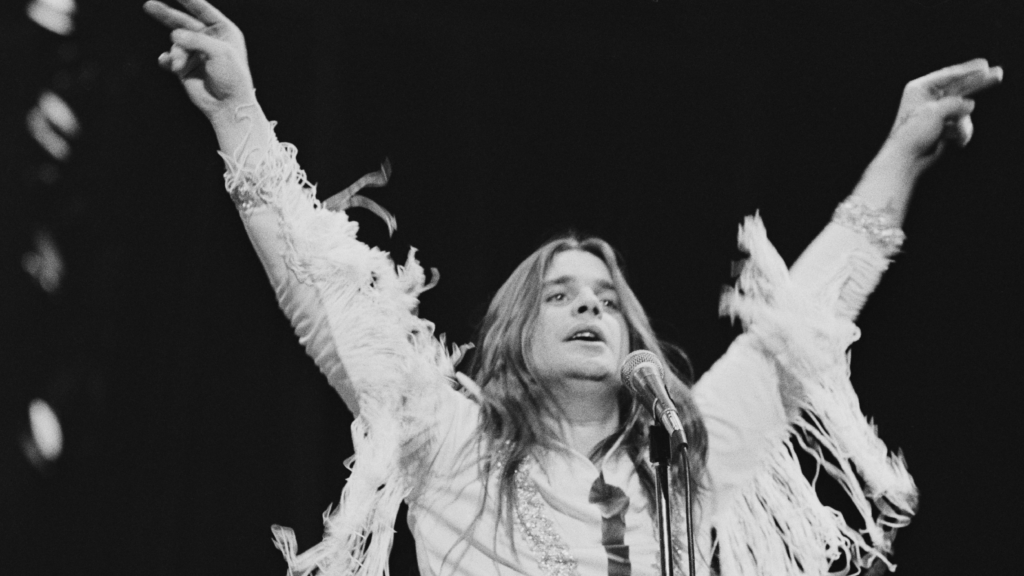
Beyond music itself, Osbourne’s presence in global popular culture reached dimensions few heavy rock artists have ever achieved. His appearance at Live Aid in 1985, briefly reunited with his original Black Sabbath bandmates to perform three songs on the Philadelphia stage as part of the transatlantic benefit concert that brought together more than seventy artists to raise funds to fight famine in Ethiopia, placed him—if only for a moment—within the same symbolic arena that defined mainstream rock’s social conscience at the time. The phenomenon of The Osbournes also opened a path that the television industry would systematically exploit throughout the following decade. The reality-show format centered on the domestic lives of celebrities, now ubiquitous across television and streaming platforms, found one of its most commercially successful and extensively studied precedents in that program. His voice also became familiar to generations that would never listen to an entire Black Sabbath record, thanks to regular appearances in advertising, animation, video games, and internet culture. His image—the round tinted glasses popularly known as teashades, which he adopted during his final years with Black Sabbath, the long hair, and the unmistakable nasal voice—became a visual icon reproduced on T-shirts, in memes, and in cultural references circulating entirely outside any specific knowledge of his discography.
Before his definitive institutional recognition, Osbourne took part in one further chapter of reinvention within Black Sabbath itself. In 2011, the reunion of the original lineup was announced—although Bill Ward would gradually withdraw because of contractual disagreements—to work on a new studio album, the first with Osbourne in 35 years. The result, simply titled 13 and produced by Rick Rubin, was released in 2013. It debuted at number one in both the United Kingdom and the United States and earned the band a Grammy Award, demonstrating that public interest in the group’s original formula remained intact more than four decades after its debut. The album served as a prelude to The End Tour, Black Sabbath’s farewell tour, which began in 2016 and concluded on February 4, 2017, with a final concert in Birmingham. It formally closed almost five decades as an active band, although, as would be demonstrated eight years later, it was not the last time Osbourne would share a stage with his original bandmates.
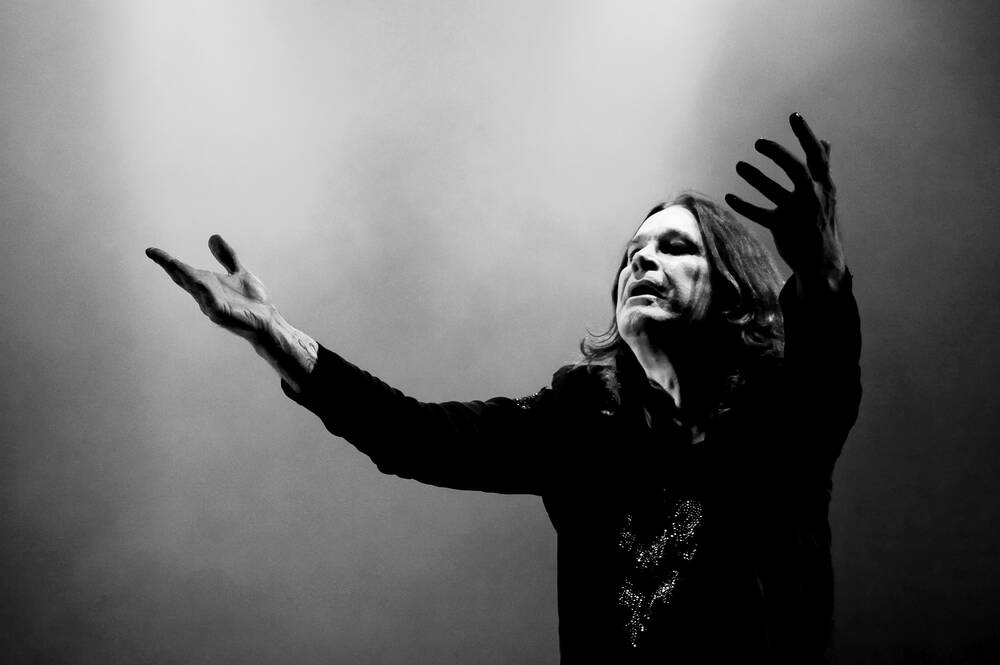
Osbourne’s impact in Latin America, particularly within the Spanish-speaking metal scene, deserves specific mention. Since the 1980s, the region developed an especially fervent following for both Black Sabbath and his solo career. His tours filled stadiums in countries including Mexico, Argentina, Chile, and Brazil, while generations of Latin American musicians explicitly cited hearing Paranoid or “Crazy Train” as the foundational moment of their own musical vocation. Argentine musicians such as Claudio “Tano” Marciello and Marcelo “Corvata” Corvalán, prominent figures in their local metal scene, described in interviews following Osbourne’s death how his voice had acted as a guiding light for an entire generation of bands attempting to make their way in scenes far removed from the English-speaking commercial circuits. Their testimony demonstrates that his influence was not limited to the central markets of the music industry, but reached communities of musicians and fans around the world with comparable intensity.
The philanthropic and charitable dimension of his career, although discussed less frequently in conventional accounts of his life, constitutes another relevant component of his legacy. In addition to Live Aid, he regularly participated in fundraising initiatives related to medical causes. Ozzfest, in particular, served for years as a platform that provided visibility and financial support to dozens of emerging bands that would otherwise have faced enormous difficulties reaching mass audiences. It operated as a form of structural mentorship for new generations of metal musicians—something Sharon Osbourne publicly described as a personal priority for Ozzy, who insisted that the festival should function as a discovery platform rather than exclusively as a commercial vehicle for already established artists. That commitment to generational renewal within the scene, sustained for more than two decades, helps explain why his death prompted collective mourning far beyond his own generation of fans, reaching young musicians who never saw him at his peak onstage but who grew up within a musical ecosystem he had helped to build.
The final farewell: Back to the Beginning and a death that closed a nearly six-decade circle
The final years of Ozzy Osbourne’s life were marked by progressive physical decline, which he documented publicly with the same lack of inhibition that had characterized his entire media career. In 2019, he announced that he had Parkinson’s disease. The diagnosis was compounded by the aftereffects of a fall that same year, which aggravated previous spinal injuries resulting from decades of physical excess onstage and a 2003 quad-bike accident that had already seriously impaired his mobility. The combination forced him to undergo multiple spinal surgeries and kept him away from the stage for an extended period, creating constant uncertainty among his followers about whether he would ever perform live again. Osbourne himself contributed to that uncertainty through contradictory statements over the years, alternating between hope for a return and an explicit acknowledgment of his physical limitations.
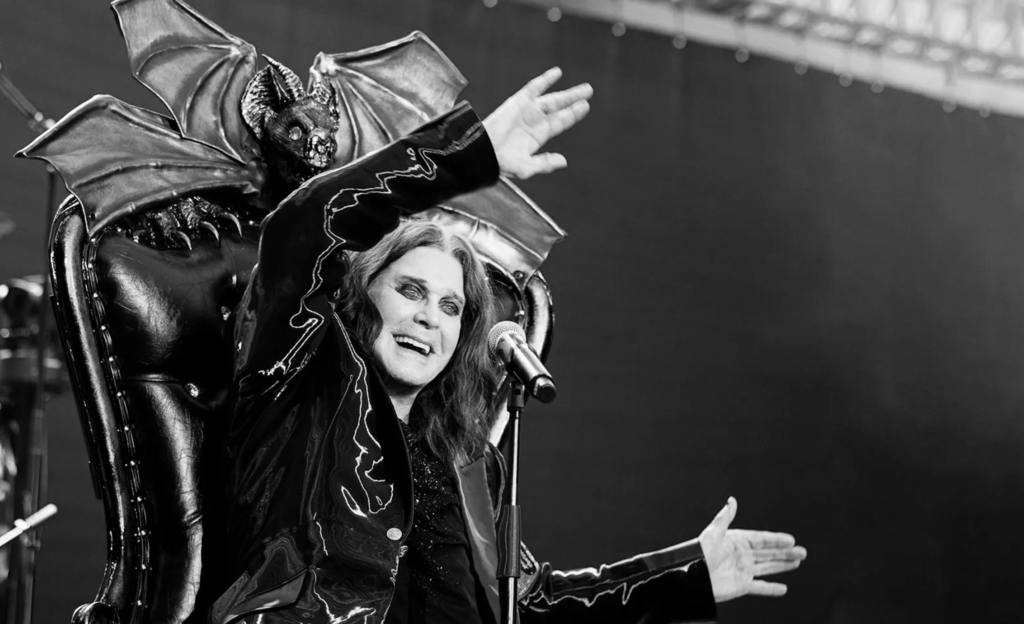
On July 5, 2025, against every reasonable medical expectation, Osbourne fulfilled what had become one of the most eagerly awaited promises in heavy rock. He appeared at Villa Park in Birmingham, his hometown, for the Back to the Beginning concert, a monumental event that brought together dozens of major figures from metal and hard rock—including Metallica, Slayer, Tool, Pantera, and Guns N’ Roses—to honor him while he was still alive and witness the first reunion in eighteen years of Black Sabbath’s original lineup, alongside Tony Iommi, Geezer Butler, and Bill Ward. Seated on a black throne built specifically to allow him to perform despite his limited mobility, Osbourne played a brief set that included both solo songs and Black Sabbath classics. He addressed the audience with words that summarized the meaning of the evening better than any retrospective analysis could. He thanked those in attendance for standing by him throughout six years of convalescence and, with the visible emotion of someone who knew he was saying goodbye, expressed his gratitude to the audience that had supported him throughout an entire artistic lifetime. The event was publicly described as his definitive farewell to the stage, and that is precisely what it became: his final live performance.
Seventeen days after that night in Birmingham, on July 22, 2025, the Osbourne family confirmed his death in a statement saying that he had died surrounded by his loved ones, “with more sadness than mere words can convey,” and requesting respect for the family’s privacy. He was 76 years old. The death certificate, later filed at a London registry office by his daughter Aimee Osbourne and reviewed by outlets including The New York Times, established the official cause as an out-of-hospital cardiac arrest resulting from an acute myocardial infarction, with coronary artery disease and Parkinson’s disease with autonomic dysfunction listed as associated factors that had worsened his cardiovascular condition. The official document brought clinical precision to the speculation that had circulated in the days after his death, confirming that he had died from a combination of factors accumulated over years of declining health, rather than from an isolated or wholly unexpected event without a medical history.
The public response to his death reached a scale rarely seen for a figure from heavy rock. Thousands of fans spontaneously gathered in Birmingham over the following days to leave flowers and messages at the bridge dedicated to Black Sabbath in the city center. The funeral procession later traveled through the central streets toward that same bridge, accompanied by a local brass ensemble in a gesture combining formal mourning with the musical and industrial identity of the city where he had grown up. Six weeks after his death, the 2025 MTV Video Music Awards included a special tribute in which Steven Tyler and Joe Perry of Aerosmith, Nuno Bettencourt of Extreme, and YUNGBLUD performed a medley of his best-known songs. The performance demonstrated the reach of his influence across generations of musicians whose work extended far beyond the boundaries of the genre he had helped establish.
One year after his death, in July 2026, Birmingham formally established the first Ozzy Day, an annual event dedicated to commemorating his life and his connection with the city’s cultural identity. The celebration received support from local business organizations and included the presence of Ozzy the Bull, the mechanical bull used during the 2022 Commonwealth Games and renamed in his honor the following year. The gesture confirms the extent to which Osbourne ultimately became part of the official symbolic identity of the city that formed him. The coherence of that biographical ending—being born into an industrial, working-class Birmingham; creating, in that same city and alongside three neighbors from similar social backgrounds, the musical genre that would define his entire life; and returning there to say goodbye to the public seventeen days before his death—is not the product of a retrospective narrative or a story embellished by journalistic nostalgia. It is simply what happened, documented through official certificates, concert records, and verifiable family statements. That coherence largely explains why his death created an almost novelistic sense of closure among those who had followed his career for decades. Few artists reach the end of their personal story on precisely the same stage and within the same community that gave rise to it. Ozzy Osbourne sold more than one hundred million records throughout his career, combining his years with Black Sabbath and his solo work—a figure that alone would justify his place in the history of popular music. But the fact that best summarizes his legacy is not commercial; it is biographical. A son of Aston factory workers, without formal musical training, financial resources, or industry connections, managed to make the entire world speak, for almost six decades, in the sonic language that he and three friends from his neighborhood invented almost out of necessity, in a city that had offered them factories as their only apparent destiny.