



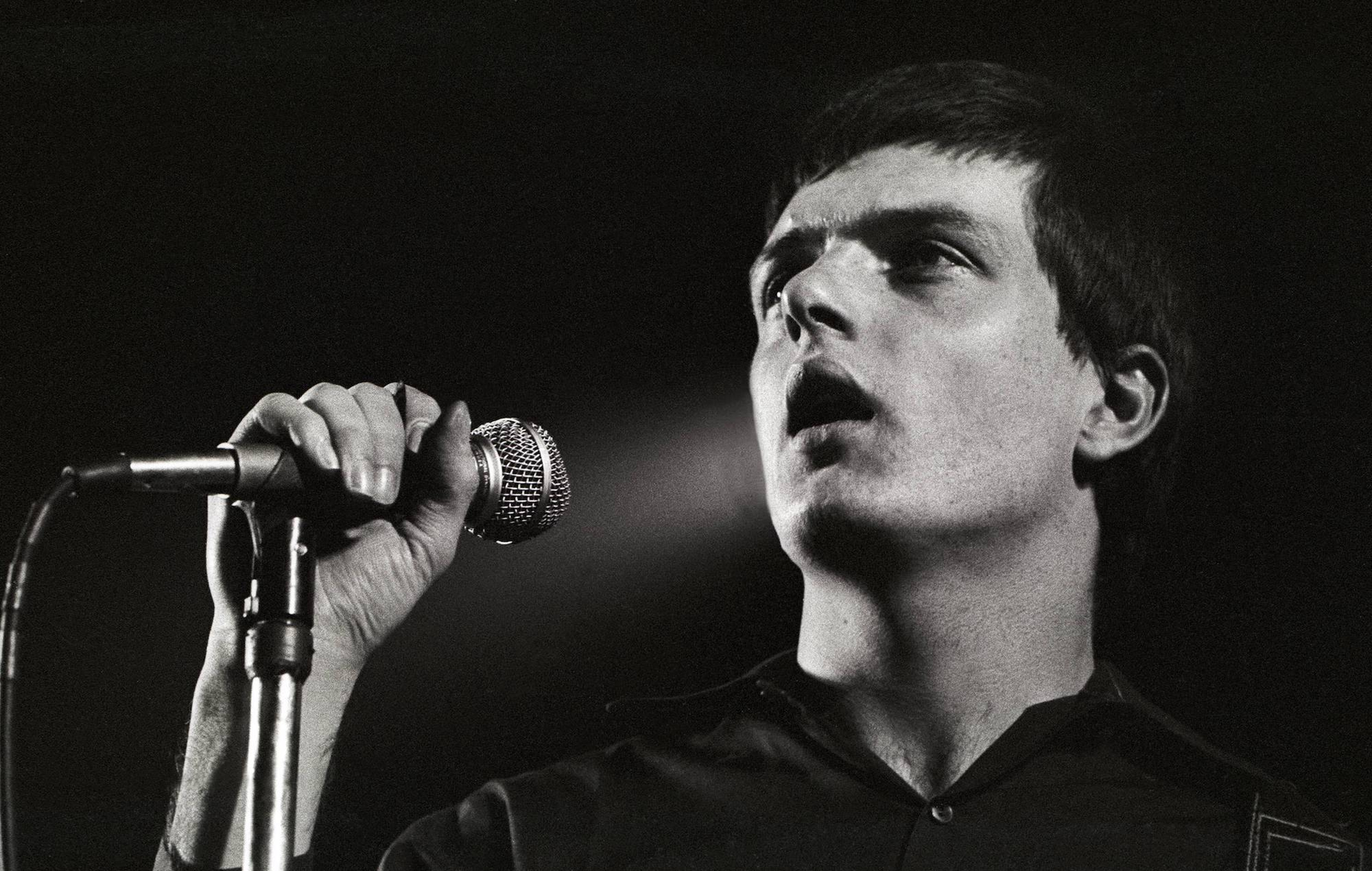
There are artists whose deaths completely consume the person who existed before the myth. That happened to Ian Curtis almost immediately. The image of the pale young man singing beneath dim lights while moving as if his body were failing in front of the audience became frozen forever inside music history. Then came the shirts, the black-and-white photographs, the endless lists about “the most tragic musicians of all time,” the films, the aestheticization of melancholy, and that almost morbid tendency pop culture has to transform someone else’s suffering into iconography. But before becoming a symbol, Ian Curtis was simply a 23-year-old man who was profoundly tired. Physically tired. Emotionally tired. Tired of living inside a mind that always seemed to move faster than he could control. Tired of carrying a disease that slowly took authority away from his own body. Tired of trying to respond to everyone’s expectations while internally collapsing in ways that even the people closest to him could never fully understand.
Listening to Joy Division today still feels strange because the songs preserve an uncomfortable sense of intimacy. Some albums age and become classics; others stay alive because they still sound dangerously honest. Unknown Pleasures and Closer belong to that second category. It does not matter how many decades have passed or how many generations discovered the band after Curtis died: his voice still carries the feeling of someone trying to explain himself while slowly sinking. There is no distance between the man and what he sings. That may be the reason so many people continue returning to those records during periods of anxiety, emptiness or emotional exhaustion. Joy Division never sounded like a band observing sadness from the outside. They sounded like people trapped inside it.
Ian was born on July 15, 1956, in Stretford, although he spent most of his life in Macclesfield, an English town shaped by the same industrial grayness that would later bleed directly into Joy Division’s music. Northern England during the sixties and seventies was filled with factories, smoke, rising unemployment and a growing emotional fatigue that slowly consumed an entire generation. It was not only economic crisis; there was something psychologically heavy about those places. A collective resignation. Many bands that emerged from that environment reflected it in one way or another, but with Joy Division it felt even more personal, as if the city itself existed inside the songs.
Ian was an obsessive reader. He was drawn to poetry, philosophy and writers who explored alienation from uncomfortable emotional places. He read Ballard, Burroughs, Dostoevsky. He listened to Bowie, Lou Reed and Iggy Pop. There was an emotional sensitivity in him that felt unusual for the environment where he grew up. People who knew him before Joy Division remember someone intelligent, quiet and unexpectedly funny, someone whose strange humor would suddenly appear in otherwise ordinary conversations. They also remember a person capable of disappearing emotionally without leaving the room. Sometimes he seemed completely present; other times he looked impossibly far away even while sitting directly in front of you.
Punk exploded in England like an emotional detonation for thousands of young people who felt the future they had been promised no longer existed. The famous Sex Pistols concert in Manchester in 1976 became a breaking point for much of the British music scene. Future members of The Smiths, Buzzcocks, The Fall and eventually Joy Division were there that night. What mattered was not only the aggression of the sound or the torn-up aesthetic of punk. What mattered was the realization that anyone could create something meaningful without belonging to the traditional structures of the music industry. Ian understood that immediately.
When he started playing with Bernard Sumner, Peter Hook and Stephen Morris, the chemistry already felt unusual. Even during the band’s early Warsaw era, before officially becoming Joy Division, there was a tension in their music that separated them from most British punk groups. While many bands focused on speed and direct confrontation, Joy Division seemed interested in something slower and more psychological. Their songs left room for anxiety to breathe. Peter Hook’s bass sounded melodic and ghostlike at the same time. Stephen Morris played drums with a cold mechanical precision that almost felt industrial. Bernard Sumner’s guitars floated between distant textures. Above everything else was Ian Curtis’s voice: deep, exhausted and emotionally exposed.
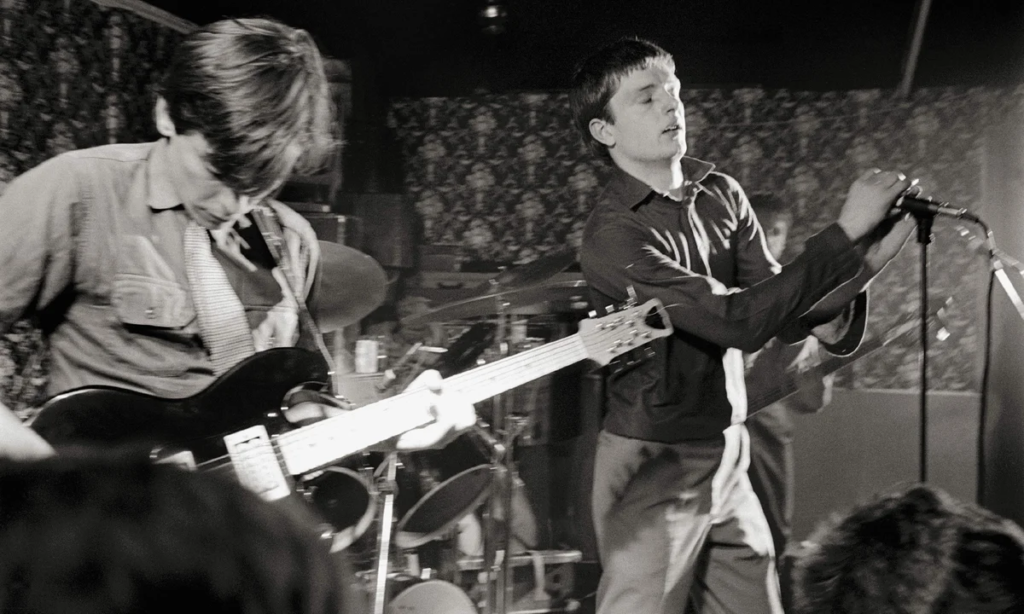
Even before the band became internationally known, there was something unsettling about their live performances. Curtis did not move like other singers. His body seemed to enter strange physical states while he performed. Those violent and repetitive spasms eventually became one of the most recognizable images associated with Joy Division, although many people did not understand what was really happening behind them. Ian suffered from epilepsy, a disease that slowly destroyed both his physical and psychological stability just as the band started gaining momentum. He lived with the constant fear of collapsing at any moment. The medication left him drained. He barely slept. Touring made everything worse. There were concerts where he would completely fall apart after leaving the stage.
Over time, audiences started looking at those movements as if they were part of some hypnotic artistic ritual. That was probably the moment when one of the greatest tragedies surrounding Ian Curtis began: the point where suffering became confused with aesthetics.
“She’s Lost Control” was written after Curtis met an epileptic woman while working at an employment office. She later died because of the illness. The song feels driven entirely by fear. There are no elegant metaphors trying to soften the reality of the situation. There is panic, helplessness and the terror of watching the body stop obeying the mind. Listening to it today while knowing Curtis himself was already living with the same condition makes the song feel haunted by inevitability.
As Joy Division grew, Curtis’s personal life began to fracture. He was married to Deborah Curtis and they had a young daughter named Natalie. From the outside there was still some appearance of domestic stability, but internally everything was becoming unbearable. The pressure surrounding the band increased. Touring intensified. His health worsened. Emotionally he seemed more lost with every passing month. His relationship with Annik Honoré added even more guilt and confusion to an already fragile situation. Ian appeared incapable of organizing his emotional life. There were moments where he tried to be a responsible husband and father, and others where he seemed to disappear entirely into himself.
The difficult thing about writing honestly about Ian Curtis is avoiding simplistic explanations. For years many people reduced everything to the romantic image of “the tortured artist.” Reality was probably far more chaotic and far less poetic. Depression rarely follows narrative logic. It does not necessarily respond to love, success or external validation. In Ian’s case, everything appeared fused together in brutal ways: physical illness, emotional exhaustion, artistic pressure, guilt, anxiety and a growing inability to carry the weight of his own mind.
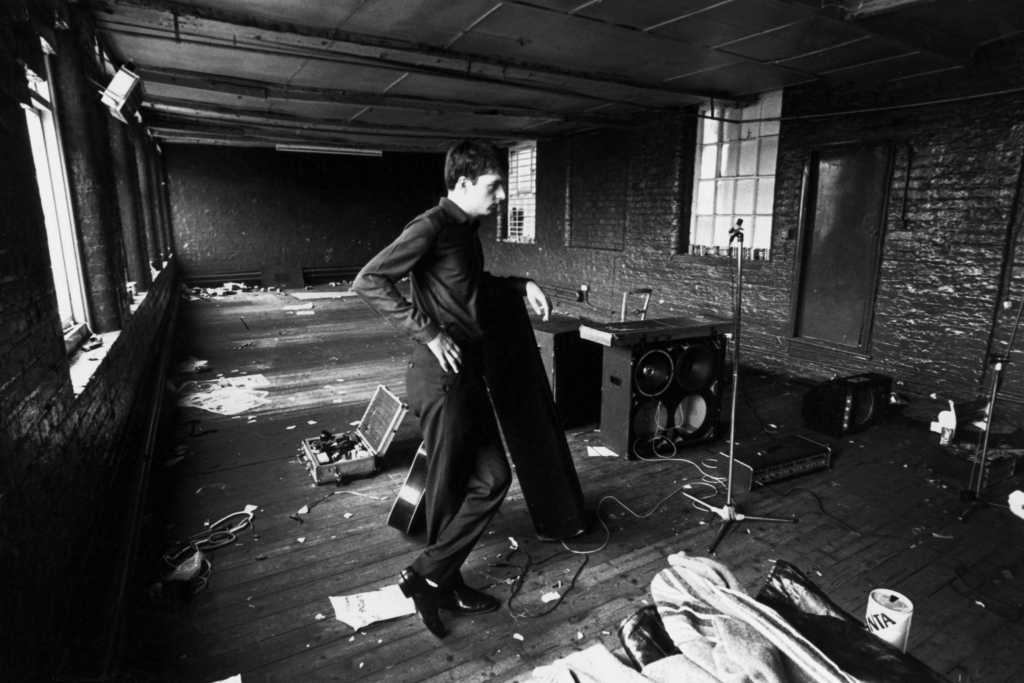
That became painfully visible during the recording of Closer. Some albums sound inspired. Closer sounds like a band standing beside someone who is slowly fading away in front of the microphone. The lyrics are difficult to hear because they feel written from a place where almost no emotional energy remained. “Isolation,” “Heart and Soul,” “Twenty Four Hours,” “The Eternal,” “Decades.” Every song carries the feeling of someone watching the connection between himself and the world slowly disappear.
That may be what makes Joy Division so unbearable at their best moments. Curtis never sounds like someone trying to convince you that he is suffering. He sounds like someone too exhausted to hide it anymore.People close to him during the final months of his life remember increasingly alarming changes. There had already been suicide attempts, severe depressive episodes, constant epileptic seizures and moments where he appeared emotionally overwhelmed beyond recovery. Joy Division was preparing for its first American tour. International attention around the band continued growing rapidly. From the outside it looked like the beginning of something enormous. Inside Ian Curtis, everything was moving in the opposite direction.
Quienes convivieron con Ian durante los últimos meses de su vida recuerdan cambios cada vez más preocupantes. Había intentos de suicidio previos, episodios depresivos severos, ataques epilépticos constantes y momentos donde parecía completamente rebasado emocionalmente. Joy Division estaba a punto de viajar a Estados Unidos por primera vez. La banda comenzaba a recibir atención internacional enorme. Desde afuera parecía el inicio de algo gigantesco. Pero dentro de Ian todo avanzaba en dirección contraria.
During the early hours of May 18, 1980, he died by suicide inside his home in Macclesfield. He was 23 years old.
For years pop culture tried turning that moment into some kind of poetic ending. But when you truly revisit the story, poetry is not what remains. What remains is sadness. Deeply human sadness. The feeling that someone could not survive the weight of what he felt.
After his death, Joy Division became frozen in time. Bernard Sumner, Peter Hook and Stephen Morris eventually formed New Order, transforming grief into another kind of music, but Ian Curtis’s emotional shadow never truly disappeared. It could not. Joy Division had already left something too deep inside too many people.
As the years passed, Ian Curtis slowly became a universal symbol of emotional alienation. Musicians, writers, filmmakers and entire generations found something painfully recognizable in him. Bands like Interpol, Nine Inch Nails, The Cure, Editors, Placebo and Fontaines D.C. inherited parts of the emotional vocabulary Joy Division helped create. Even outside post-punk, the way modern music speaks about anxiety, isolation and emotional collapse owes an enormous debt to songs written by a young Englishman who barely made it to 23.
But perhaps the real reason Ian Curtis still matters has little to do with influence alone. It has to do with honesty. With the brutally human way he documented feelings millions of people experience but rarely know how to articulate. Listening to Joy Division still feels like hearing someone who was never trying to sound profound or construct a dark persona. He was simply trying to understand why living felt so difficult.
And maybe that is why his voice still hurts to hear.