


Before the sold-out stadiums, before the metal towers rose above the former Foro Sol, and before a column of fire could be seen from different parts of Mexico City, the relationship between Rammstein and Latin America began in a far more intimate way. For an important part of its Latin American audience, the band did not arrive through a carefully designed campaign or a simple explanation. It arrived in the way many musical obsessions arrived before digital platforms placed any discography within a few movements of the thumb: through a music video seen late at night, a borrowed record, a copy burned by a friend, a difficult-to-find magazine, or a song whose meaning was not completely clear but whose force was impossible to ignore. The first encounter with “Du Hast” could happen without understanding a single phrase in German and still leave an immediate feeling of recognition. There was something in that combination of dry guitars, electronics, repetition, and a deep voice that seemed to strike every word against a metal surface. It sounded foreign, but never inaccessible.
Rammstein has always seemed to come from a very specific place: a Germany shaped by division, reunification, historical memory, and a musical tradition capable of finding beauty within tension, discipline, and industrial noise. The band never attempted to hide that origin in order to become more comfortable for international audiences. It did not change languages when it began filling venues outside Europe, it did not turn its lyrics into generic products, and it never softened an aesthetic that could feel uncomfortable, provocative, or even disorienting for those expecting a more conventional relationship with rock music. Yet something happened in Mexico and Latin America that cannot be understood through marketing alone: thousands of people embraced that distance as part of the appeal and began relating to the band through a mixture of curiosity, fascination, and belonging.
Over the years, listening to Rammstein stopped feeling like consuming a foreign product. Its songs became part of daily commutes, gatherings, parties, bars, road trips, and conversations between friends trying to translate verses with far more limited tools than those available today. For a generation that discovered the band around the turn of the century, albums such as Sehnsucht, Mutter, Reise, Reise, and Rosenrot were not merely musical releases. They functioned as stages within a personal relationship. Every new record expanded a universe that already possessed its own codes, images, and shared moments. For those who arrived later through YouTube, festivals, streaming platforms, or the spectacle of the stadium tour, the experience was different, but the feeling of entering a community with an existing memory remained intact.
Mexico eventually occupied an especially profound place within that history, although reducing the Latin American relationship solely to the Mexican case would be unfair. Argentina, Brazil, Chile, and Colombia also built meaningful connections with the band, often through rare visits that acquired even greater value precisely because they could take years to happen again. Yet the relationship accumulated a singular continuity in Mexico: the first appearance as KISS guests in 1999, the returns that followed, the Puerto Vallarta concerts, the Hell & Heaven festival, the three Foro Sol nights in 2022, and a series of public gestures that ultimately revealed something more important than any number. Rammstein stopped behaving like a band that simply included the country on an international route. It began relating to Mexico as a place it returned to with a familiarity that would be difficult to manufacture artificially.
A German Band That Did Not Need to Translate Itself to Be Understood
The history of Rammstein in Latin America becomes even more meaningful when one remembers that the band reached a global scale without abandoning German as its primary language. For decades, much of the international music industry assumed that English was the nearly mandatory route for crossing borders. Bands from other countries could preserve certain cultural traits, but many eventually adapted their language in order to enter global circuits more easily. Rammstein chose another path. Till Lindemann’s voice never apologized for its language or attempted to become a neutral version of itself. German remained at the center of the proposal and ended up functioning not as a barrier, but as one of its greatest strengths.
In Latin America, that choice produced a particular form of closeness. Much of the audience did not fully understand the lyrics during the first encounters, but learned to recognize the emotional weight of the words before knowing their exact translation. Cadence mattered as much as meaning. Consonants marked the rhythm, repetition turned entire phrases into slogans, and Lindemann’s tone made it possible to sense when a song spoke through menace, irony, desire, sadness, or an ambiguity that resisted easy resolution. Singing “Du hast mich,” “Ich will,” “Sonne,” or “Links zwo, drei, vier” in front of a stage did not require fluency in German grammar. It required living with those songs long enough to recognize them as one’s own.
For many Latin American fans, Rammstein also became an unexpected entrance into another language and another culture. Not necessarily through academic study, but through persistent curiosity: searching for translations, comparing interpretations, understanding double meanings, discovering references, and realizing that the lyrics could rarely be reduced to a literal reading. At a time when information circulated far less easily, that process formed part of the connection. Listening to the band required investigation, questions, mistakes, and repeated returns to the same songs. Linguistic distance did not weaken the relationship. It made it more intense.
Heavy music has always had a particular ability to build communities around what does not easily fit within the center of popular culture. Rammstein took that dynamic to another scale. Its international success confirmed that a band could defend a clearly defined local identity while still connecting with people living thousands of miles away. In Mexico, Argentina, Brazil, Chile, and Colombia, audiences did not need the group to stop being German in order to feel close to it. The connection emerged precisely because Rammstein never attempted to become anything else.
1999: The First Encounter With México
Rammstein’s first arrival in Latin America took place in 1999, when the band joined KISS for part of the Psycho Circus tour. The route passed through Buenos Aires, Porto Alegre, São Paulo, and Mexico City. In Mexico, the group also performed in Guadalajara before appearing at Foro Sol as a guest of one of the most important stadium-rock bands in history. At that time, Rammstein was not yet the stage monster capable of moving enormous productions between continents. Sehnsucht had already placed its name within the international conversation and “Du Hast” had begun opening doors, but the relationship with Latin American audiences was only beginning to take shape.
It is easy to observe that visit from the present and turn it into an inevitable prologue. Yet nothing in 1999 guaranteed that a German band with dark songs, uncomfortable theatricality, and a language rarely heard within the international rock market would build such a profound relationship with Mexico. Rammstein stepped onto the Foro Sol stage before an audience that had primarily purchased tickets to see KISS. The contrast between the groups was obvious. KISS represented an American tradition of spectacle, makeup, anthems, and immediately recognizable characters. Rammstein offered something less welcoming, more rigid, and more difficult to classify: a sense of industrial machinery, an almost military physical discipline, riffs moving forward with brutal simplicity, and a vocalist who seemed to declaim from an emotional zone far closer to menace than seduction.
That appearance planted a seed. Not everyone inside the venue automatically became a fan, but many discovered a band unlike anything they had seen onstage before. Rammstein did not need the headlining slot to become unforgettable. The fire had not yet reached the monumental scale of later tours, but it already functioned as a natural extension of the music. The theatricality did not feel like an accessory placed over the songs. It was part of the band’s identity from the beginning.
Two decades later, the same venue would host three full concerts by the band in front of a cumulative audience of nearly 194,000 people. The comparison should not be reduced to a numerical competition between different moments, but it carries obvious emotional value. In 1999, Rammstein performed on a borrowed stage. In 2022, it returned to Foro Sol as a band capable of transforming that space into a temporary city built around its own codes. Between those extremes lies a story of patience, persistence, and accumulated affection that explains its impact far better than any isolated statistic.
Mutter: Rammstein stopped being a surprise and became an international monster
If “Du Hast” opened the door, Mutter finished building the house. Released in 2001, Rammstein’s third album expanded the band’s relationship with Latin American audiences because it demonstrated that a much deeper universe existed behind the initial impact. “Sonne,” “Ich Will,” “Links 2 3 4,” “Feuer Frei!,” “Mein Herz brennt,” and “Mutter” itself offered different shades without breaking the group’s identity. There were songs capable of setting a venue on fire, but also a strange, almost solemn melancholy that revealed a fragility hidden behind the hardness.
Rammstein has never functioned solely as an aggressive or spectacular band. A significant part of its permanence comes from the tension between machinery and emotion, between stage discipline and a sensitivity that appears unexpectedly within songs that initially seem impenetrable. “Mutter” speaks from a loneliness that transcends any literal translation. “Mein Herz brennt” turned childhood fear into a dark and deeply recognizable image. “Sonne” acquired an almost ceremonial dimension. Latin American audiences found something in those songs that did not depend on sharing the band’s German context: a way of dramatizing intense emotions without reducing them to a simple explanation.
Music heard during adolescence rarely remains merely music. It becomes mixed with friendships, first losses, discoveries, family changes, daily commutes, and the feeling of constructing an identity of one’s own. In that sense, Rammstein accompanied a Latin American generation that found within metal and alternative rock a way to inhabit the world with greater intensity. The band could appear geographically distant, yet its songs became associated with profoundly local memories.
The relationship was also strengthened by its visual universe. Rammstein’s videos did not function as simple promotional material. They were pieces capable of generating conversations by themselves, with images that could feel uncomfortable, fascinating, or impossible to forget. Before the immediate circulation of any content, obtaining a DVD such as Lichtspielhaus, finding a live recording, or exchanging files had a particular value. The experience required searching and patience. That effort helped construct a less superficial relationship with the band.
Latin America Learned to Wait for Rammstein
Rammstein’s visits to the region never had the regularity of its European tours. That logistical distance created a different dynamic. In Europe, the band could return more frequently and move between countries through relatively short journeys. In Latin America, every visit required a complex operation: enormous distances, equipment transportation, permits, appropriate venues, and a production that could not easily be adapted without losing an essential part of its identity. The scarcity of concerts did not weaken the relationship. In many cases, it intensified it.
Waiting for years generates a particular kind of bond. The audience does not attend merely to hear songs. It arrives carrying the weight of all the time that has passed since the previous visit. Every announcement acquires an importance that may be difficult to understand in markets accustomed to receiving international tours more frequently. Tickets become emotional objects before the concert even takes place. Trips begin to be planned months in advance. Conversations grow around possible setlists, prices, selected cities, and the possibility that a particular night may be the only available opportunity for a long time.
The 2010 regional return confirmed that dimension. Rammstein passed through Santiago, Buenos Aires, São Paulo, Bogotá, and Mexico City on a route that returned the band to different Latin American audiences after a long wait. In Mexico, demand made it possible to add a second night at Palacio de los Deportes. The following year, the itinerary continued with shows in the Mexican capital, Guadalajara, and Monterrey. The band no longer appeared as a European curiosity or as a memory associated with “Du Hast.” It arrived with a consolidated production and a catalog that had grown alongside its audience.
Each country experienced that relationship differently. Argentina contributed a rock tradition with an intensity of its own, accustomed to transforming concerts into collective choruses. Brazil represented an enormous territory, with a complex musical scene and an energy many international bands have recognized over decades. Chile had built a solid audience for rock and metal, while Colombia received an exceptional visit whose value increased precisely because there was no certainty of an imminent return. Latin America was never a single market or a uniform audience. The relationship with Rammstein was built through local experiences joined by a shared feeling: the band could take years to return, so every encounter had to be lived with particular intensity.
The Impact on the Region Was Not Merely Musical
When discussing Rammstein’s influence in Latin America, it is tempting to search for direct imitations: bands with low riffs, synthesizers, dark uniforms, or attempts to reproduce the pyrotechnics. Yet its deepest mark is less obvious. Rammstein demonstrated that a group could build a complete identity without becoming a copy of Anglo-American models. Music, lighting, clothing, videos, album covers, stage architecture, and physical discipline all formed part of a single work. The spectacle did not exist to distract from the songs. It existed because the songs demanded a visual dimension capable of completing their meaning.
That lesson carried particular weight in Latin America. For decades, many local scenes have faced a constant tension between absorbing foreign influences and finding a voice of their own. Rammstein offered an interesting example because it had reached a global scale without abandoning its cultural accent. The band did not attempt to sound American, did not hide its history, and did not seek translation in order to make international digestion easier. Its success suggested that a radically local identity could become a strength when constructed with coherence.
The impact also changed the way audiences evaluated concerts. After seeing a Rammstein show, it became difficult to reduce the live experience to the correct execution of a setlist. The stage could become an organism, songs could acquire dramaturgy of their own, and production could become part of the artistic language. “Mein Teil” stopped being merely a song when Flake Lorenz appeared inside an enormous metal pot while Lindemann used a flamethrower. “Sonne” expanded its gravity through lighting capable of transforming the space. “Engel” found unexpected intimacy inside a monumental show. Even the most excessive moments retained a precision that prevented the concert from becoming a pile of tricks.
For Latin American audiences, too often accustomed to receiving reduced versions of major international tours, witnessing the complete Rammstein machinery carried additional meaning. The band did not arrive to fulfill a promotional obligation. It arrived with the intention of offering an experience capable of justifying years of waiting. That demand also raised expectations surrounding other artists and promoters. Not every group can transport a comparable production, but Rammstein proved that regional audiences were willing to value and sustain ambitious shows.
“Te Quiero Puta!”: An Uncomfortable Song That Mexico Turned Into a Ritual
The relationship between Rammstein and Latin America is also full of contradictions. One of the most obvious appears in “Te Quiero Puta!”, included on Rosenrot in 2005. The song uses Spanish, includes brass instruments, and constructs an exaggerated representation of certain imaginaries associated with Mexico. It does not attempt to offer a deep reading of Mexican culture or represent the country’s musical diversity. It operates through provocation, vulgar humor, and caricature, three resources that have always occupied an important place within Rammstein’s language.
Heard solely from the outside, the song could appear superficial. Yet its life within Latin America became far more complex. Mexican audiences ended up embracing it through a mixture of humor, complicity, and enthusiasm. During most of a concert, thousands of people sing in German even without mastering the language. When “Te Quiero Puta!” arrives, the relationship is reversed: Lindemann sings in Spanish and returns to the audience a theatrical, uncomfortable, and deliberately distorted version of a recognizable imaginary. The song stops belonging solely to the band and becomes a shared wink.
That appropriation matters because it demonstrates that cultural exchange is never entirely clean. Latin America did not receive Rammstein passively. Nor did it accept every symbol without transformation. “Te Quiero Puta!” acquired a different meaning when it began being shouted in Mexico, Argentina, or Brazil. Audiences could recognize the exaggeration, laugh with it, and turn it into a celebration of their own. The song returned to the territory that inspired part of its imagery and stopped functioning solely as a European gaze toward Mexico.
The fact that Rosenrot reached number one in Mexico after its release reinforces the weight of that relationship. Yet the commercial detail is less interesting than the song’s later life. Inside a Mexican concert, “Te Quiero Puta!” can feel like an affectionate and absurd reply, a moment when cultural distance becomes part of the game. It does not summarize the entire history between Rammstein and Latin America, but it reveals one of its most important characteristics: regional audiences never limited themselves to watching. They always found a way to intervene.
Mexico: the second home
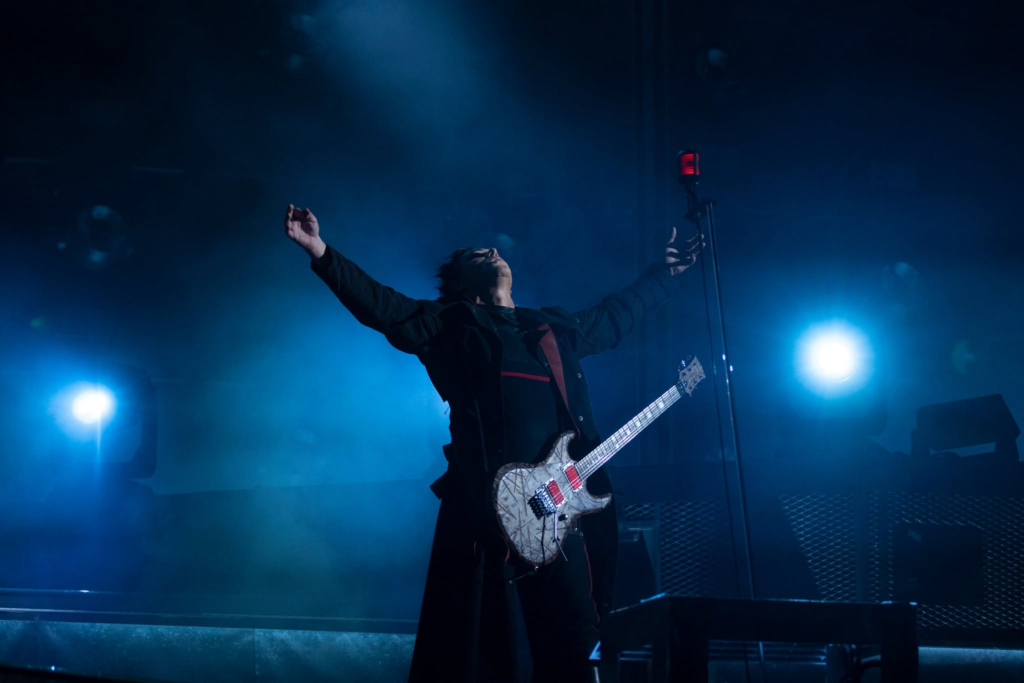
Between December 31, 2018, and January 2, 2019, Rammstein performed two special shows on the beach in Puerto Vallarta. Each night gathered a reduced audience when compared with the band’s usual scale. These were not performances designed to maximize capacity or ordinary stops on an efficient route. They functioned as destination experiences: fans willing to travel, arrange accommodation, and begin a new year by the sea with a group that rarely performed within a format of that kind.
The choice of Puerto Vallarta said something important. Mexico could be a territory capable of receiving massive concerts, but also a place where the band allowed itself to experiment with exceptional moments. Those nights took place shortly before the release of the 2019 untitled album and the stadium tour that would take the show to a new scale. Within the group’s history, the Mexican beach became a transitional space, a kind of threshold between two periods.
For those attending, the experience also possessed a value that would be difficult to replicate. Seeing Rammstein by the sea, in a setting far smaller than a European stadium or major festival, turned the concert into an almost private memory. The band remained the same disciplined machinery, but context changed perception. That ability to adapt to a special format without losing identity explains part of the closeness built with Mexican audiences.
Puerto Vallarta confirmed that the relationship no longer depended solely on ticket sales. Mexico had become a place where Rammstein could position meaningful moments within its own narrative. The band did not return only because demand existed. It returned because the country had acquired symbolic value.
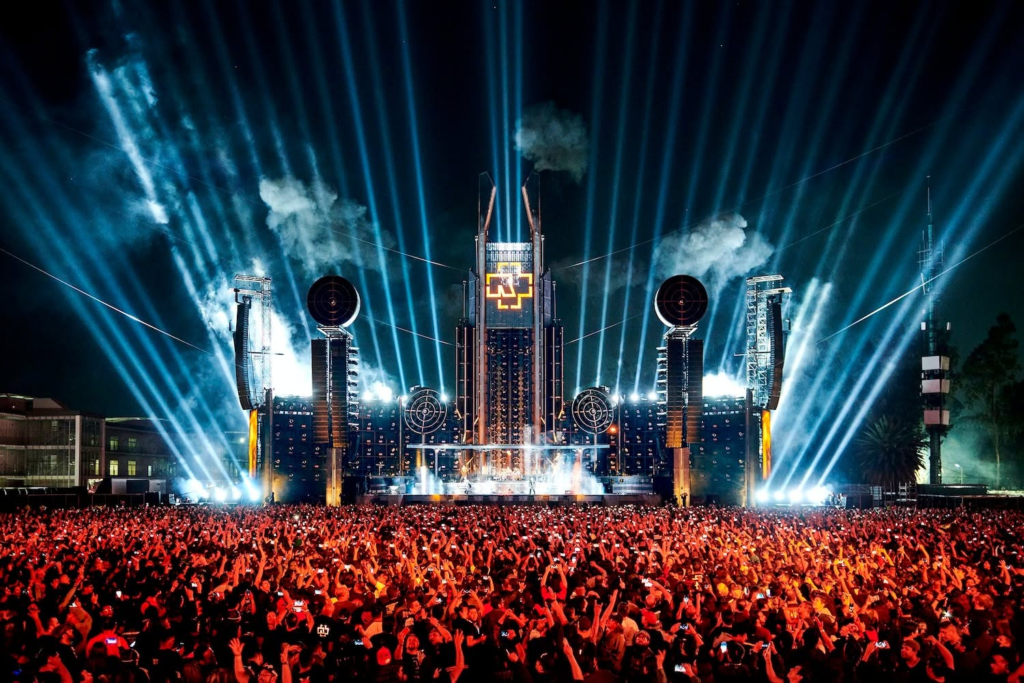
The wait for the Foro Sol concerts was especially long. The original dates had to be postponed because of the pandemic, and for months the possibility of returning to a show of that scale appeared uncertain. When Rammstein finally arrived in Mexico City on October 1, 2, and 4, 2022, the audience was not merely receiving a new tour. It was recovering a collective experience after a period shaped by distance, fear, and the interruption of everyday life.
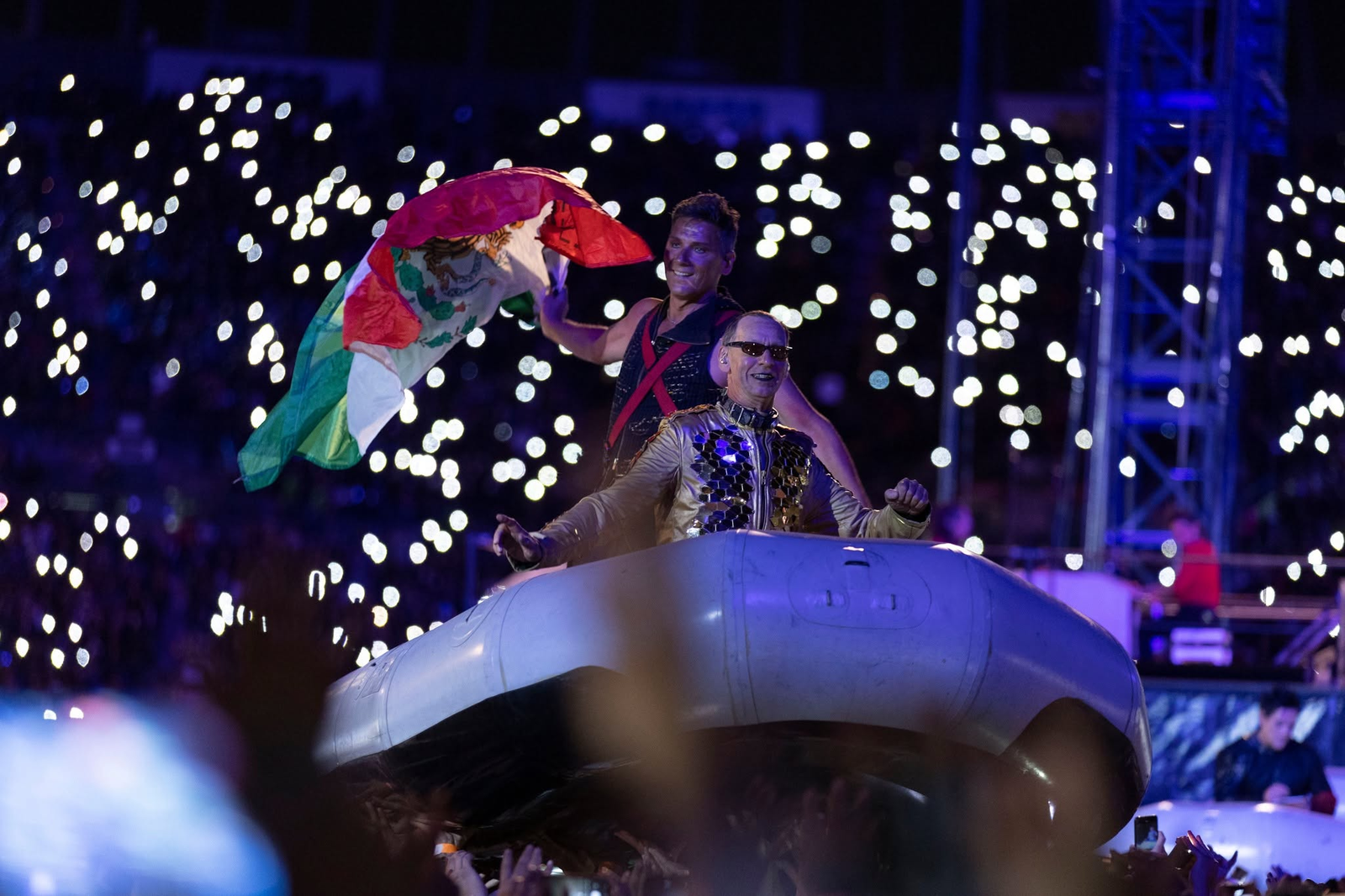
The production was monumental. Metal towers, platforms, lighting, and fire turned the venue into a structure that seemed built to exist for a few hours and disappear afterward without leaving anything behind except smoke, trembling videos, and memories difficult to organize. Yet the real force of those nights did not come solely from the size of the production. It came from the way audiences responded to songs heard for years. “Sonne,” “Du Hast,” “Mein Herz brennt,” “Ich Will,” and “Engel” were not external pieces interpreted by a foreign band. They had been incorporated into the personal memory of thousands of attendees.
The numbers help measure the event, although they should not occupy the center of the story. The three nights gathered 193,990 people and generated more than $12 million in revenue. The figure confirms Mexico’s commercial weight within Rammstein’s international history, but it does not explain why so many fans were willing to return after years of waiting, travel long distances, or share the concert with people from another generation. Foro Sol included attendees who had discovered the band through Sehnsucht, others who had grown up with Mutter, younger fans who arrived through digital platforms, and families capable of sharing an obsession that had begun before some of their members were born.
At the end of one of the nights, all six musicians knelt before the Mexican audience in gratitude. Till Lindemann spoke in Spanish. The image was powerful precisely because Rammstein usually projects a distant, controlled, and almost impenetrable stage presence. Watching the entire band bow before Foro Sol momentarily changed that relationship. There was no need to exaggerate the gesture or turn it into a sentimental declaration the members never made. Seeing it was enough: after more than two decades of visits, Mexico had stopped being an anonymous stop.
Rammstein in Mexico: Recorded for eternity
The three Foro Sol nights did not end when the lights went out. For years, fans discussed a possible audiovisual production recorded in Mexico City. Expectation stopped being merely a rumor when an official German listing appeared under the title Rammstein Live in Mexico City, associated with a home-entertainment production of approximately 148 minutes. At this time, there is no complete announcement with a definitive release date, formats, or additional material, but the existence of the registry confirms that Mexico occupies a place within the band’s audiovisual memory.
Rammstein has used different cities to document stages of its live history. Berlin, New York, and Paris form part of a videography showing how the performance evolved over time. The inclusion of Mexico City does not function only as recognition of a strong market. It also places Mexican audiences inside the official narrative of the stadium tour, a period that gathered approximately six million attendees across 135 concerts over five years.
A live film preserves more than a setlist. It preserves the breathing of a crowd, the size of a venue, the way a city responds, and the particular energy of a night. When the project is formally presented, Mexico will appear not as an interchangeable background, but as part of the work. The former Foro Sol, now transformed into Estadio GNP Seguros, will remain on record as the place where a relationship developed over more than two decades reached a form capable of enduring.
The story possesses a symmetry that is difficult to ignore. In 1999, Rammstein stepped onto the Foro Sol stage as a guest. In 2022, it returned to record its own film in front of a cumulative audience of nearly 194,000 people. The venue stopped being borrowed and became theirs.
What Latin America Changed Within Rammstein
It would be exaggerated to claim that Latin America modified the creative core of Rammstein or determined the direction of its albums. The band was born from a profoundly German history, and its identity remains connected to the members’ experience in the former German Democratic Republic, reunification, and a European tradition of performance, electronics, punk, and industrial music. Mexico, Argentina, Brazil, Chile, and Colombia do not explain the origin of its artistic language.
Yet the region changed the way certain songs function, the way some concerts are remembered, and the place specific cities occupy within the band’s public narrative. “Te Quiero Puta!” acquired a different meaning here. Puerto Vallarta became a space of exception. Mexico City received three stadium nights, a live film, and scenes of closeness that would not carry the same weight in every context. Latin American audiences turned songs into rituals, and the musicians responded through gestures showing growing familiarity.
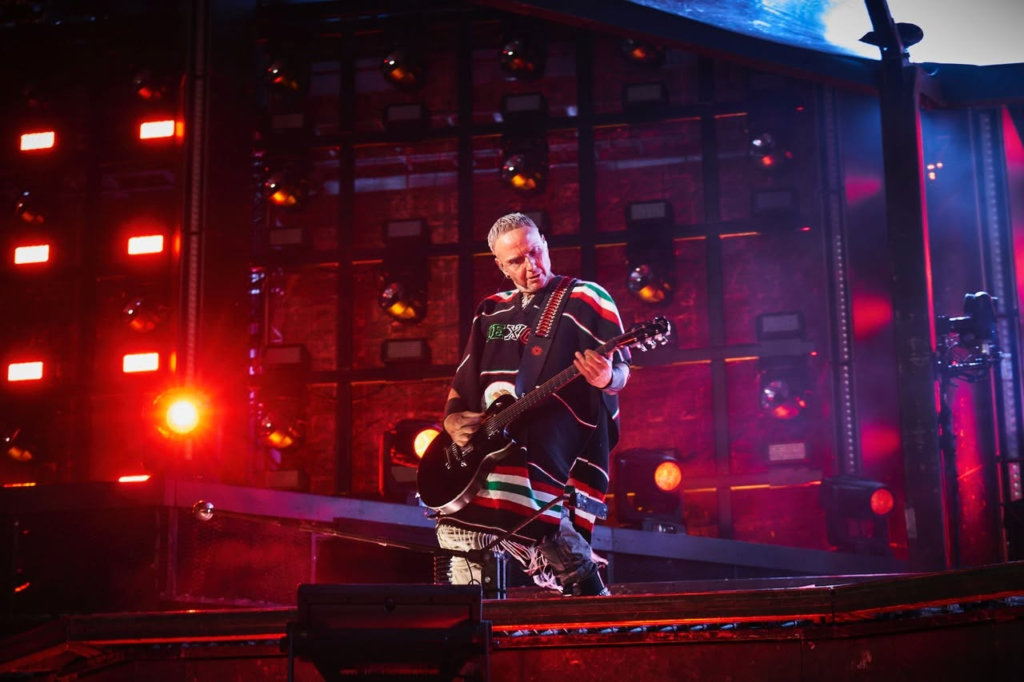
There is also a personal impact that must be described carefully. Nobody outside the band can state what private emotions Till Lindemann, Richard Z. Kruspe, Paul Landers, Oliver Riedel, Christoph Schneider, or Flake Lorenz experience during a visit. Turning them into sentimental characters through assumptions would weaken the article. Yet their public actions allow something real to be observed: a band kneeling before Foro Sol, a guitarist walking into the Zócalo with his instrument, a vocalist temporarily adopting a Mexican plush toy, a stage opened to blind fans, and a meeting with a child who dreamed of knowing them. None of these episodes demonstrates an absolute relationship by itself, but together they construct a coherent picture.
Latin America offered Rammstein a powerful confirmation: its music could cross language, geography, and cultural differences without becoming a neutral product. The region did not demand that the band stop being German in order to make it its own. It embraced the band precisely because its identity remained intact.
For many fans, the band also opened a door toward Germany. Not a tourist-friendly or simplified Germany, but a culture shaped by contradictions, memory, and difficult questions. Songs such as “Deutschland” forced international audiences to approach historical debates rarely placed at the center of mainstream rock. Rammstein never offered comfortable answers. Its language depends precisely on ambiguity and the ability to produce images that remain open to different interpretations.
There is also a generational dimension. Those who discovered Rammstein during the 1990s have come to share its songs with much younger people. Some attended Foro Sol with children, younger siblings, or friends who discovered the band through another stage of its discography. Few heavy music groups manage to move through time without becoming merely nostalgic. Rammstein preserved its history while continuing to grow.
The Numbers as a Consequence, Not an Explanation
The figures remain important because they help measure the phenomenon, but they acquire greater meaning when they appear at the end of the journey rather than as a starting point. Rammstein sold more than 16 million records during the first 22 years of its existence, according to the biography published by Universal Music Germany. Rosenrot reached number one in Mexico after its 2005 release. The world stadium tour developed between 2019 and 2024 gathered approximately six million attendees across 135 concerts. The three Foro Sol nights in October 2022 sold 193,990 tickets and generated more than $12.46 million.
Numbers do not record how many people learned a German phrase through a song, how many friends met while waiting for a concert, how many records were lent until they wore out, or how many fans found within that music a way to move through difficult stages of their lives. Nor can they measure what it means to hear “Sonne” surrounded by tens of thousands of people after waiting for years.
Commercial success matters because it allowed the relationship to grow and production to reach an extraordinary scale. Yet the cultural phenomenon began long before statistics caught the attention of the international industry. It was built while the band still seemed distant and Latin American audiences found ways to bring it closer through translations, copies, videos, conversations, and a loyalty that did not depend on the frequency of visits.
A Story Moving in Both Directions
The history of Rammstein in Mexico and Latin America is not the story of a European band that arrived, conquered a market, and continued on its way. Nor is it a simple narrative about sold-out stadiums and pyrotechnics. It is a relationship built over nearly three decades through absences, returns, songs learned phonetically, shared records, long journeys, concerts anticipated for years, and small gestures that ultimately revealed an unexpected closeness.
Rammstein left a profound mark on the region because it demonstrated that a band could preserve a radically specific identity and still become part of the lives of people who grew up far away from its original context. Its music helped break language barriers, expanded metal’s visual imagination, and raised expectations surrounding international concerts. Latin America responded with equal power: it turned songs into rituals, embraced discomfort without domesticating it, and returned to the band an energy capable of changing the memory of every visit.
Mexico occupies a central place within that history because it gathers a series of moments impossible to separate: the first appearance as KISS guests, the returns, Puerto Vallarta, Foro Sol, the live film, Richard Z. Kruspe playing at the Zócalo, the members kneeling before the audience, Dr. Simi infiltrating German stage machinery, and a community capable of organizing itself to fulfill a child’s dream. None of those scenes explains the relationship alone. Together, they construct something far closer to a shared history.
The machinery arrived from Europe inside trucks, cargo planes, and technical plans calculated with precision. Latin America contributed something that could not be transported in the same way: a form of living music intensely, taking possession of its symbols, and turning each concert into a personal memory. That is why Rammstein’s fire stopped coming as a visitor. After so many years, part of that fire also belongs to this side of the Atlantic.