


Rarely in metal's history has a global crisis functioned so paradoxically as a creative accelerator. The COVID-19 pandemic shuttered stages, cancelled tours, and dismantled the live music economy as a business model — but in parallel, it generated something unexpected: time. Time to record without rushing, to experiment without the pressure of the next show, to let ideas that had been fermenting in rehearsal rooms for years finally take shape in studios. The result was an explosion of pent-up energy that between 2021 and 2025 transformed the global metal landscape in ways we are still processing.
Metal emerged from the pandemic more geographically diverse than at any other point in its history. Bands from India, Japan, Portugal, and Mongolia broke through at European and American festivals with a force that shattered decades of Anglo-centrism in the scene. At the same time, deathcore grew sophisticated enough to brush against the operatic, metalcore learned to coexist with R&B and pop without losing its weight, black metal found in anonymity an inadvertently perfect marketing tool, and the rawest, most uncompromising death metal resurged from the American underground hungrier than ever.
What unites the twelve bands on this list is not a subgenre or a geography, but a moment: all of them found their true audience, their real scale, and their definitive voice in the period that followed lockdown. Some existed before, and the pandemic was the catalyst that transformed potential into measurable impact. Others debuted directly in that context and built massive audiences from scratch, without having played a live show before accumulating tens of millions of streams. All of them, without exception, changed something in the global conversation about what metal can be in the twenty-first century.
Lorna Shore (USA — Symphonic Deathcore)
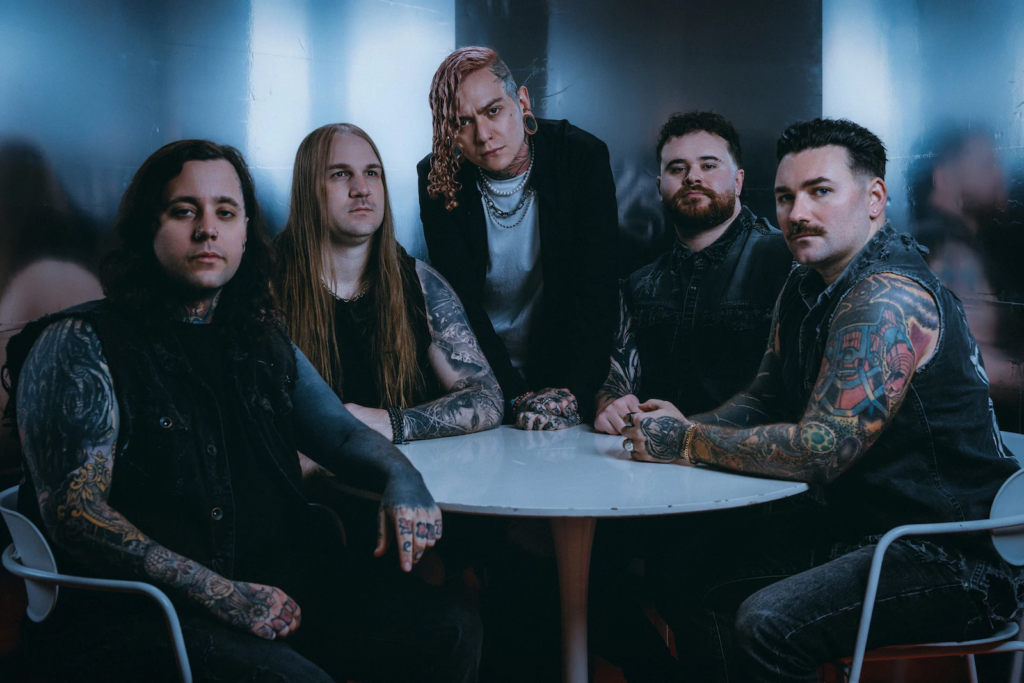
Lorna Shore had existed since 2009, but the pandemic functioned as an involuntary catalyst for their greatest transformation. The forced departure of their previous vocalist opened the door to Will Ramos, who in 2021 delivered one of the most impactful viral debuts in recent metal history with "To the Hellfire" — a single that reached the top 10 of Spotify's Viral 50 in the United States and became the most-streamed deathcore track on the platform at the time. Lorna Shore's catalogue has surpassed 439 million streams on Spotify, with "To the Hellfire" accounting for approximately 76 million plays alone.
Their album Pain Remains (2022) cemented them as the most important band in modern deathcore: it debuted at #2 on Hard Music Albums, #4 on Current Rock Albums, and #150 on the Billboard Top 200, selling 6,000 copies in its first week, 1,400 of which were on vinyl. For a scene that rarely breaks into the mainstream, those numbers are extraordinary. In 2025 they released I Feel the Everblack Festering Within Me, which reached #1 on the UK physical sales chart. Alongside Slaughter to Prevail, they lead the push of extreme deathcore toward a mass audience without having sacrificed a single gram of brutality in the process. Their story is proof that the most extreme metal can also be the most popular.
Spiritbox (Canada — Progressive Metalcore)

Few debuts in recent metal history had the immediate impact of Eternal Blue. The album debuted at #13 on the Billboard 200 in September 2021, catapulting vocalist Courtney LaPlante into one of the most influential figures in modern metalcore. The band built their audience methodically during the pandemic: unable to play live, they bet on internet singles that grew organically until the public found them.
What makes Spiritbox particularly compelling from an editorial standpoint is that they broke the glass ceiling of male-dominated metalcore without making it an explicit political statement — they simply were the most exciting band in the room. Their second full-length album, Tsunami Sea, was released on March 7, 2025 through Pale Chord in partnership with Rise Records, produced by Dan Braunstein and Mike Stringer, and received a score of 85 out of 100 on Metacritic indicating universal acclaim. The band also received their second Grammy nomination for Best Metal Performance for "Cellar Door," closing a four-year arc in which they went from an internet promise to one of the most commanding metal acts on the planet.
Sleep Token (UK — Atmospheric/Experimental Metal)

No band in recent years has generated as much conversation, speculation, and devotion as Sleep Token. Their proposal blends heavy metal with R&B, dark pop, funk, and electronics, all wrapped in the total anonymity of their masked members. Their breakthrough came with a precise strategy: in early 2023, they released four singles in rapid succession while opening for Architects on tour, quadrupling their Spotify monthly listeners in a single month, going from 300,000 to nearly 1.6 million.
The result was Take Me Back to Eden, which debuted at #3 in the UK and #16 on the Billboard 200, and became the most-streamed metal album on Spotify in 2023, surpassing even Metallica's 72 Seasons with 357 million total streams. Their most popular single alone, "The Summoning," surpassed 92 million plays. Their fourth album, Even In Arcadia, achieved even higher commercial positions, confirming that Sleep Token were not an accident but the vanguard of a new relationship between metal and young audiences who don't need genres to be pure to be powerful.
Bloodywood (India — Folk Metal / Nu-Metal)
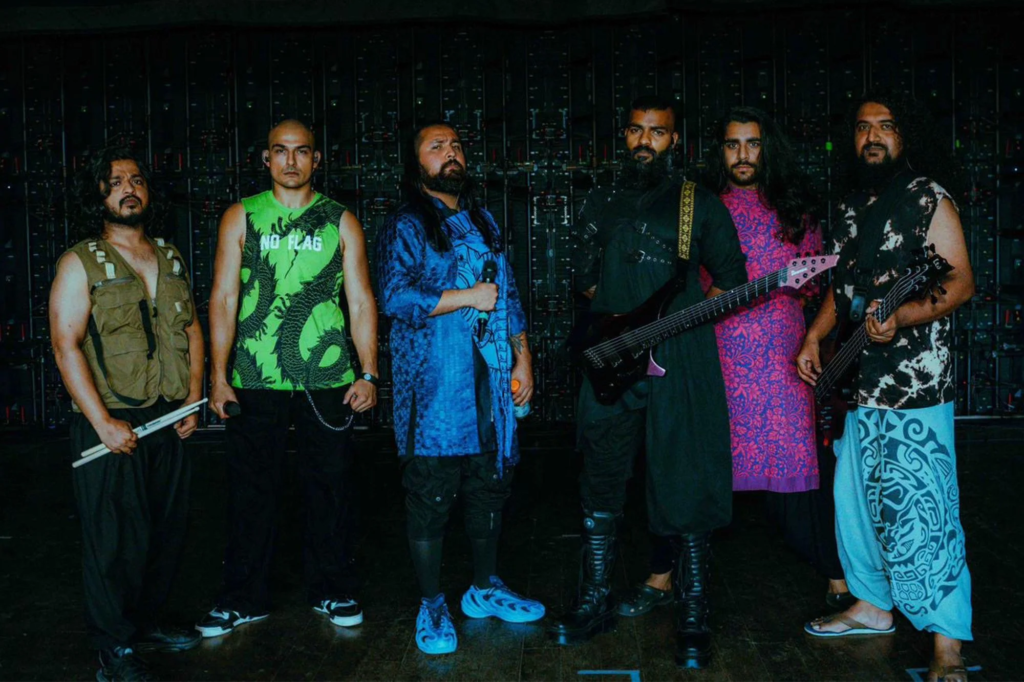
The story of Bloodywood is one of the most improbable and exciting in contemporary metal. A collective from New Delhi that fuses nu-metal and metalcore with traditional Indian instruments — dhol, tumbi — bhangra chants, and lyrics addressing mental health, social injustice, and cultural pride. They began as a YouTube cover project, and the pandemic transformed them: unable to play live, they channeled all their energy into video production that exploded globally across social media.
Their official debut Rakshak (2022) proved that metal can speak with its own voice from any corner of the world without needing approval from any Western cultural centre. Their second album Nu Delhi (2025) found them even more confident, with more polished production and more precise compositions, refining everything that had made them brilliant without losing the chaotic energy that sets them apart. Bloodywood are the most eloquent answer to the question of whether metal can be genuinely global: not as an export, but as the authentic expression of cultures that had something urgent to say.
HANABIE. (Japan — Metalcore / "Harajuku-core")

The band that has most radically challenged the conventions of international metal in recent years comes from Tokyo and sings entirely in Japanese. Formed in 2015 as a cover band in a high school music club, their breakthrough came after the pandemic: in January 2023 they released the single "Pardon Me, I Have to Go Now," whose video accumulated over 7.5 million YouTube views with comments predominantly in English from fans around the world, attracting the attention of international promoters. That same year they debuted on a European tour in August and a US tour in September, opening for Limp Bizkit in November.
They coined the term "Harajuku-core" themselves to describe their sound: a fusion of metalcore with hyperpop, electronics, nu-metal, and otaku culture that vocalist Yukina describes as next-generation metal born from Harajuku's spirit. In July 2023 they signed with Epic Records Japan, a Sony Music subsidiary, and their major-label debut album Reborn Superstar! reached #26 on the Billboard Japan Albums chart. In 2024 they performed on the main stage at Lollapalooza Chicago; their audiences in Europe and America learn their Japanese lyrics by heart; and in 2025 they co-headlined a North American tour alongside Kim Dracula. They are the most decisive proof that the language barrier no longer exists in metal.
Bad Omens (USA — Metalcore / Alternative Rock)

Bad Omens existed before the pandemic, but it was in the post-COVID world that they found their true mass audience. With The Death of Peace of Mind (2022), the song "Just Pretend" went viral on TikTok and transformed them into one of the most broadly attended acts in modern metalcore. What makes Bad Omens editorially interesting is that they represent a new generation of bands that have no fear of pop: their songs have hooks that compete with anything on the alternative rock chart, but underneath lies real weight, dense production, and genuine emotional darkness.
They don't write metalcore songs with pop choruses as a commercial concession — that is authentically their voice. In the post-pandemic world, that combination proved perfect for a young audience that arrived at metal through other routes and needed an entry point that didn't require having grown up with Slipknot or Pantera. Bad Omens are the contact point between the TikTok generation and real-weight metal, and that makes them one of the most strategically important bands on this list.
200 Stab Wounds (USA — Death Metal)

At a moment when death metal seemed trapped between nostalgia and technique for its own sake, 200 Stab Wounds arrived with a brutal, unpretentious proposal from Cleveland, Ohio: old-school death metal as dirty and direct as a kick to the face. Their story is also the story of the resurgence of the American metal underground after the pandemic: the label Maggot Stomp — operating from the world of cassettes and limited pressings — launched them before Metal Blade Records signed them for global reach.
They toured with Cannibal Corpse, released Manic Manual Procedures in 2024, and represent the head of a new American death metal scene that owes nothing to nostalgia: it embraces it with pride but executes it with contemporary urgency. For readers who seek the purest, most uncompromising extreme of this list, 200 Stab Wounds are the answer.
Zeal & Ardor (Switzerland/USA — Black Metal / Blues / Soul)
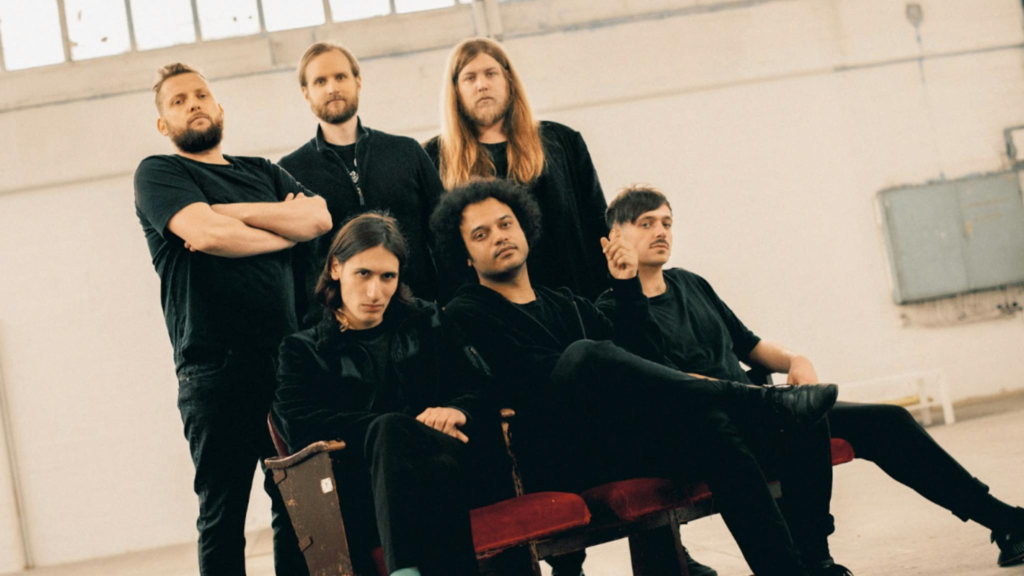
Manuel Gagneux created Zeal & Ardor almost as a conceptual experiment in response to an internet troll who asked him to fuse black metal with "nigger music." The result was one of the most daring and intelligent proposals in modern metal: the fusion of Nordic black metal with Delta blues, Black American spirituals, and gospel, exploring what might have happened if enslaved people in the American South had invoked Satan rather than Christ.
They had existed since 2016, but it was after the pandemic and with their self-titled 2022 album that they reached larger stages and magazine cover coverage, being included alongside Spiritbox, Sleep Token, and Loathe in a landmark Metal Hammer cover as the four most exciting acts in contemporary metal. For a publication like Summa Inferno, Zeal & Ardor are the kind of band that opens conversations beyond music: race, history, cultural identity, and religious subversion compressed into riff form.
Gaerea (Portugal — Atmospheric Black Metal)

Few bands in recent years' underground metal have grown as fast with as little media noise as Gaerea. Their albums Limbo (2021) and Coma (2022) positioned them at Season of Mist as one of the most solid proposals in contemporary European black metal: dense, melodic, desperate, with a production that knows how to use silence as much as chaos. What distinguishes Gaerea is their complete visual and conceptual coherence: each record is a closed universe, each live performance is a ritual.
What distinguishes Gaerea is their complete visual and conceptual coherence: each album is a self-contained universe, each live performance a ritual. They perform masked, their lyrics don't offer answers but rather reopen wounds, and their music doesn't strive for accessibility but rather honesty. They are heirs to the lineage of Batushka and Mgła but with their own identity that transcends any comparison.
Frozen Soul (USA — Death Metal)

Texas is not the first place that comes to mind when thinking of glacial death metal, but Frozen Soul arrived with Crypt of Ice (2021) to change that. Their sound is a love letter to the crushing death metal of Obituary, Bolt Thrower, and Asphyx: slow, heavy as molten lead, without unnecessary technical concessions.
Metal Blade signed them quickly after their debut and their live shows became one of the main attractions of the new American death metal circuit. In the post-pandemic context, their return to the essential resonated with particular force: when the world grew complicated, they bet on the simplest and heaviest thing possible, and the audience responded en masse. They are the ideological counterpart to Lorna Shore on this list: where Lorna Shore pushes deathcore toward the orchestral and the epic, Frozen Soul drags it into the mud and keeps it there, unapologetically.
Heriot (United Kingdom — Metalcore / Industrial / Death Metal)

Heriot are possibly the band on this list with the most cinematic rise. All four members violated UK lockdown restrictions to go rehearse together during the pandemic, risking fines and arrest to record songs that simply could not wait. That urgency can be heard: their debut Devoured by the Mouth of Hell (2024) on Century Media is a record that sounds like it's on the verge of collapsing in on itself — a crushing fusion of metalcore with industrial metal and deathcore that has as much in common with Godflesh as with Converge.
Their initial single "Cleansed Existence" spread across networks with the speed of an object no one could ignore. They are one of the few bands on this list that owe their success to no TikTok algorithm but solely to the devastating power of their recorded and live proposition: the kind of band that turns skeptics into believers the first time you see them on a stage.
Loathe (United Kingdom — Alternative Metal / Post-Metal)
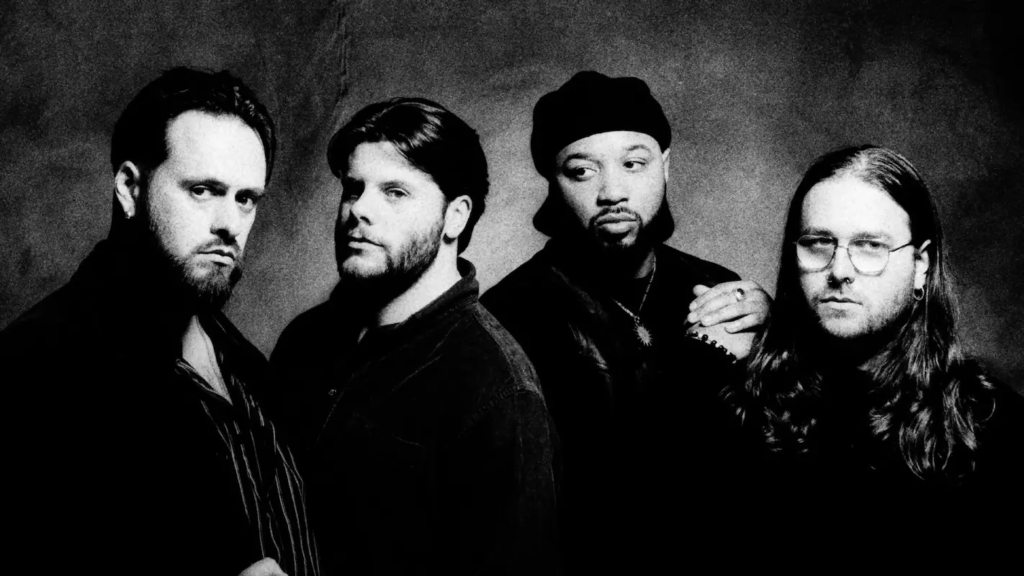
Loathe formed in Liverpool in 2014, but it was I Let It in and It Took Everything (2020), released during the height of the pandemic, that transformed them into an obligatory reference in contemporary alternative metal. Their particular blend of crushing djent with shoegaze, ambient, and almost ethereal textures resonated deeply in a year when the entire world was processing isolation from their bedrooms. Alongside Sleep Token, Spiritbox, and Zeal & Ardor, they were featured on the cover of Metal Hammer in 2022 as one of the four most exciting acts in modern metal.
What makes Loathe uniquely interesting is that their music is genuinely difficult to classify: moments of total brutality follow passages that are almost meditative, and that emotional instability doesn't feel calculated but inevitable. They are the band on this list that rewards attentive listening over rapid consumption — the perfect antidote to algorithmic immediacy, and perhaps that is why their fanbase carries the most intense loyalty of all.