

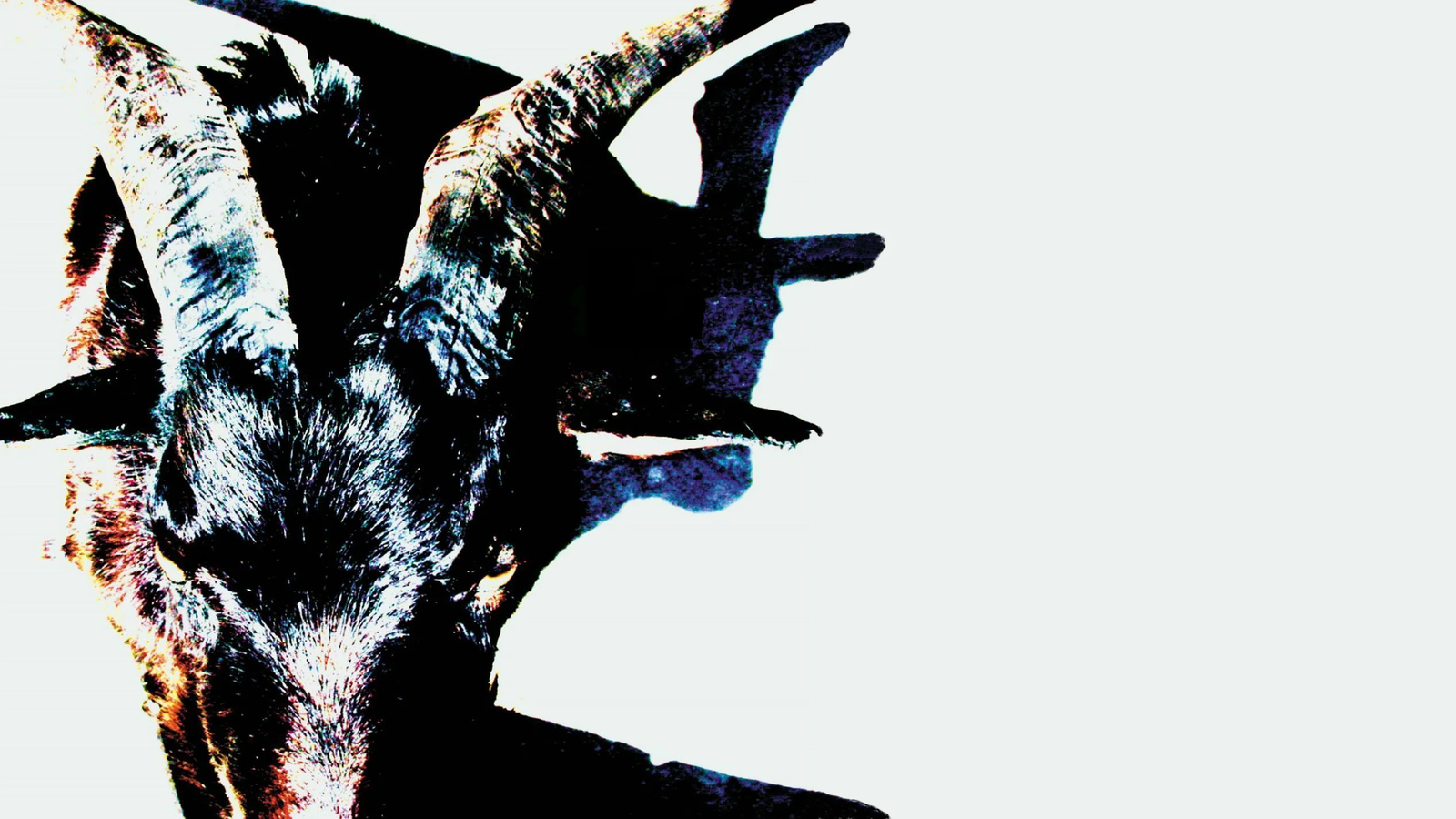
There are records that get made and records that get bled. Iowa, Slipknot's second album, released on August 28, 2001 through Roadrunner Records, belongs with absolute certainty to the second category. Not in a figurative sense, nor as a critical flourish: literally. While Corey Taylor was recording the vocals for the song that closes the album and gives it its name, he was naked inside the vocal booth at Sound City Studios in Los Angeles, cutting his body with the fragments of a broken candle, vomiting on himself, in a state of controlled dissociation that producer Ross Robinson chose not to interrupt because he sensed that what he was capturing was unrepeatable. That image, documented and confirmed by Taylor himself in multiple interviews over the years, summarizes better than any technical analysis what Iowa meant: a record where nine musicians from Des Moines, Iowa, pushed their personal collapse, their collective hatred and their own disintegration to the extreme where art and self-destruction stop being two different things.
To understand why Iowa exists in that way, it is necessary to understand where Slipknot stood when they began making it. The band's self-titled debut, released in 1999, had been an unprecedented phenomenon: a metal record that sounded heavier and more chaotic than almost anything released by a band with a major label deal at the time, and which had nonetheless managed to reach number 37 on the UK Albums Chart while selling millions of copies worldwide. The tour that followed was exhausting and uncontrolled. Nine young musicians, most of them from a mid-sized city in the American Midwest where high-intensity metal was not exactly a viable career path, suddenly found themselves dealing with mass fame, drugs, excess, the pressures of the music business and the internal tensions that that kind of sudden success inevitably generates. In November 2000, when the world tour finally ended, what that band needed was time. What it received was a studio entry date.
Joey Jordison, the drummer, and Paul Gray, the bassist, had begun writing new material only a few weeks after stepping off the stage, holed up at Gray's brother's house while the rest of the members tried to process what had happened in the previous year. By January 17, 2001, the entire band was at Sound City and Sound Image, two studios in Van Nuys, California, known for their analog acoustics and vintage equipment, with Ross Robinson again in the producer's chair. Formal recording sessions began on January 22 and did not end until March 16, just under two months in which everything that could go wrong between nine people who had stopped tolerating each other was condensed. Jordison would summarize it years later in a single sentence: "That's where we got into a war."
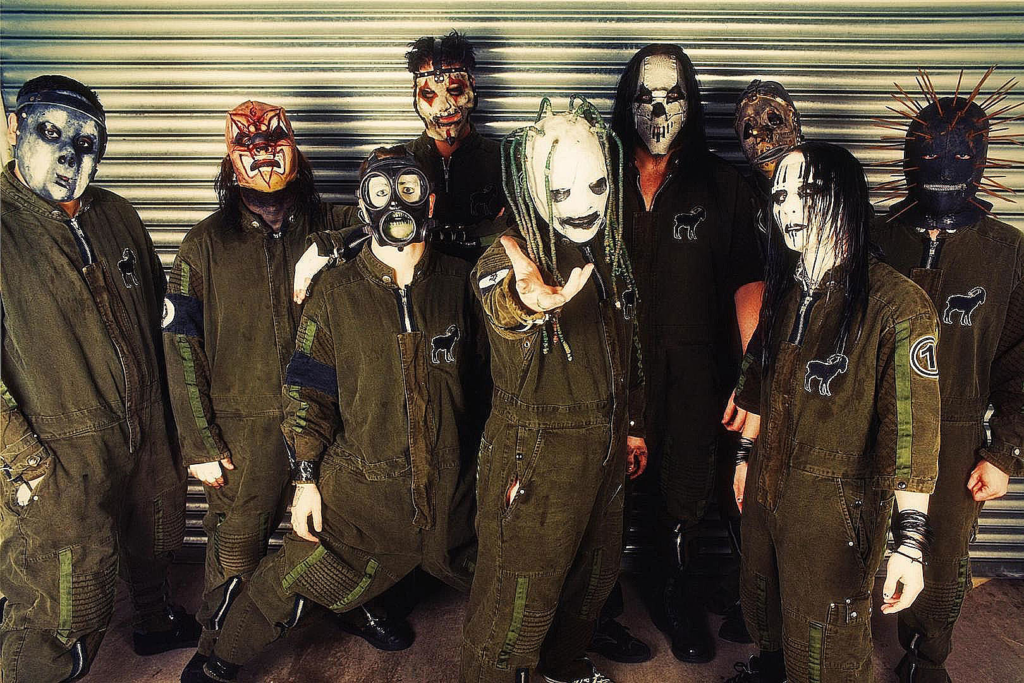
The war, in this case, was not a metaphor. Corey Taylor arrived at the sessions in a state of active alcoholism, by his own account, trapped in a relationship he found damaging and did not want to acknowledge as such. Several members carried their own addictions and their own unresolved emotional baggage. The artistic direction of the record was pushing in a direction that many at the label neither expected nor wanted: after the success of the debut, Roadrunner Records had been anticipating that Slipknot would take a step toward commercial accessibility, toward radio, toward cleaner hooks. The group's response was to go in exactly the opposite direction. Monte Conner, then the label's VP of A&R, would recall it in 2011 with a clarity that mixes respect and astonishment: "Everyone thought they were gonna make the wimp-out record and become mainstream. And they turned around and made a record that was substantially heavier."
Ross Robinson, for his part, went through his own crisis during the sessions. A motocross accident broke his back weeks before recording began, and he produced much of the album from a wheelchair, in constant physical pain that DJ Sid Wilson described in terms that are almost cinematic: you could hear Robinson screaming in pain while he was producing the record. That confluence of sufferings — each musician's individual pain and the producer's own — fed an atmosphere in the studio that Robinson used deliberately. His production method was already known for its intensity, for its ability to extract limit performances, to force the moment when technique disappears and only the raw emotional state remains. With Iowa he pushed it further than ever, recording live when band members hated each other, capturing the chaos before it evaporated, knowing that what he was recording was unrepeatable precisely because no one in that studio was in any condition to repeat it. When the sessions ended, Robinson went home and curled up and cried. "Paul and Joey came over to my house," the producer recalled years later, "and we just basically held each other."
The sonic result of all that human disaster is an album of 66 minutes and 17 seconds that opens with "People = Shit" and closes with the 15-minute title piece, and which in that journey establishes a topography of hatred, despair and musical intensity that few metal records had traced with that coherence. "People = Shit" opens with percussive tribal drumbeats and an aggression that critics of the era compared to the fusion between Morbid Angel's death metal, Sepultura's rhythmic brutality on Roots and the industrial chaos of groups like Neurosis, but packaged in a structure that remains, in its twisted way, a song. "The Heretic Anthem," the album's first advance single, was described by Revolver magazine as a piece that "flirts with full-on death metal in their extremity, both sonic and thematic." "Disasterpiece" pushes the speed and ferocity to a point where the band was closer to extreme thrash than to the nu metal that had catapulted them to fame. "My Plague" and "Left Behind" offered the only moments of relative accessibility in an album that, by design, systematically rejected any concession to radio.
What Iowa redefined in musical terms was not just the level of Slipknot's intensity, but the way in which that intensity could coexist with a surprisingly sophisticated production cohesion. The fact that the record was tracked in analog at a time when Pro Tools already dominated the industry was not a nostalgic decision but a philosophical one: Robinson insisted on preserving the physical texture of the sound, the accidents, the imperfections that in digital recording get eliminated or hidden. Without a click track, without digital tempo corrections, the record captures something that few metal recordings of the era managed: the sensation that nine people are playing in the same room at the same time, each of them at the edge of control. Jim Root, the guitarist who had played a minimal role on the debut because he had arrived late in that recording process, contributed for the first time his full musical vision to Iowa — a vision built on thrash and death metal rather than nu metal — which, together with Mick Thomson's contributions, gave the record a guitar density that pushed the music into far more extreme territory than the general public associated with Slipknot.
The title track deserves its own analysis. Running just over 15 minutes, "Iowa" is one of the most unusual and disturbing pieces that any band with a commercial profile had released up to that point. The backing track was recorded live in only two takes. Taylor's vocals, recorded in the circumstances already described, oscillate between a whisper and a howl in a continuum that gradually degrades and fragments over the course of the track until in the final minutes only the breathing remains, the crying and the sounds of a body in the process of collapse. Shawn "Clown" Crahan, who was present during the vocal recording, described his reaction as one of genuine horror at what he was witnessing. The fact that this material ended up on a record released by a major label and distributed massively is, in retrospect, one of the strangest things that happened to metal in the first years of the 21st century.
Commercially, Iowa was a success that surprised even those who believed in the band. In the United Kingdom, where Slipknot had found a particularly fervent fan base, the album debuted directly at number 1 on the official albums chart, becoming the heaviest metal record to reach that position in the history of the British chart. It did so while simultaneously denying the top spot to The Strokes' debut, Is This It, and to Kingsize by Five, which says something about the particularly singular cultural moment that was autumn 2001 in popular music. In the United States, the album received platinum certification with over one million copies sold. In total, Iowa sold approximately 1.79 million certified copies across nine countries, a figure that is even more remarkable given that the record is, by design and temperament, profoundly hostile toward any attempt at casual consumption.
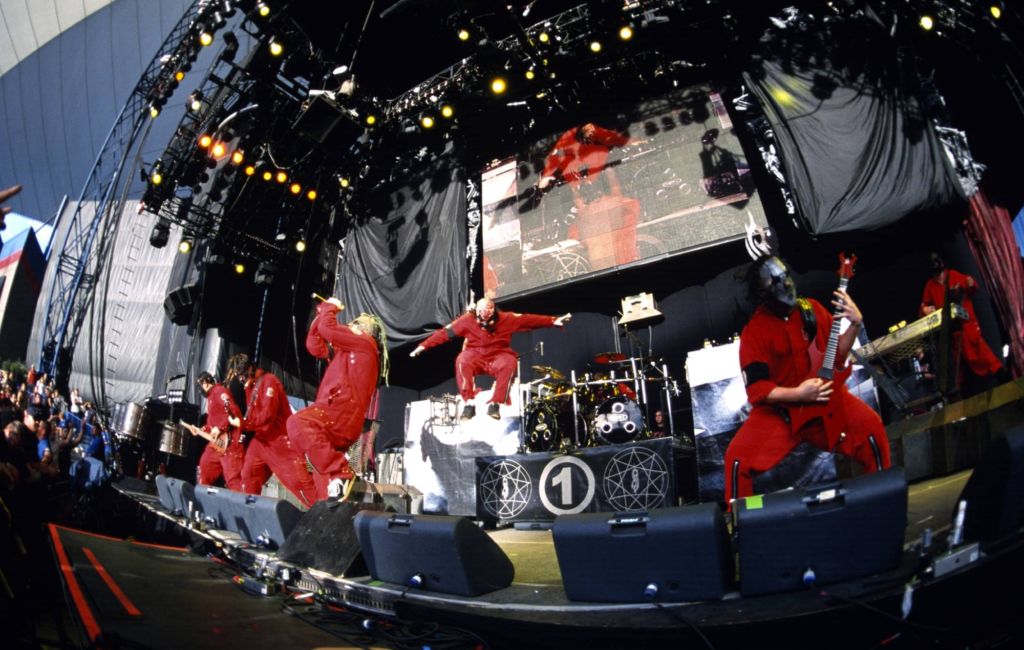
The critical reception of the moment was largely positive, though also revealing of the tensions Iowa generated even among its admirers. Kerrang!, in its original 2001 review, described the album as "a beautifully crafted labour of hate" and recognized it as a significant milestone in the new metal. Publications closer to extreme metal tended to point to the influences of Slayer, Morbid Angel and Sepultura as evidence that the band had taken a genuine step toward metal's major leagues, although some underground critics never forgave Slipknot their access to mass media, their omnipresence on MTV and their appeal to a teenage audience that more orthodox metal considered foreign to the genre. This tension — between extreme legitimacy and popular reach — is one that Iowa places most clearly in evidence: it is a record too brutal for pop-metal followers and too mainstream for death metal purists, which paradoxically places it in a position of singularity that few albums of that era share.
The impact Iowa had on Slipknot's subsequent trajectory as a band is so profound that it is difficult to separate it from the impact it had on metal as a genre. The decision to go toward the most extreme rather than the most accessible, at the moment of greatest commercial pressure, established a precedent of artistic integrity that would define the band's public identity over the following two decades. Every subsequent album, from Vol. 3: The Subliminal Verses in 2004 to The End, So Far in 2022, can be read as a response or reaction to what Iowa proposed: the possibility of being simultaneously brutal and massive, of refusing commercial compromise without surrendering global reach. No other Slipknot record would reach the same levels of compressed intensity as Iowa, something the musicians themselves acknowledge openly. Not for lack of ability or will, but because what was needed to make Iowa was precisely the kind of collective destruction that cannot and should not be repeated.
The death of Paul Gray in May 2010, of an accidental opioid overdose, and Joey Jordison's departure from the band in 2013 transformed Iowa into something more than Slipknot's darkest album: they turned it into a document of a specific lineup, of an irrecoverable moment, of the particular chemistry between two musicians who were the principal architects of that music and who are no longer in the band, one of them because he is no longer in the world. To listen to Iowa today is to listen to nine people at the limit of their strength, without knowing that some of them would never find themselves in the same room again, and that adds an elegiac dimension that the record itself, with its total misanthropy, would probably have rejected.
What Iowa left in metal beyond Slipknot is equally significant. The demonstration that an extreme metal record could reach number 1 on the charts in major markets like the United Kingdom without yielding an iota of brutality opened a possibility that until then had been considered theoretically impossible. It also established, alongside Ross Robinson's work with Korn, At the Drive-In and Glassjaw, a way of understanding the production of extreme metal that prioritized emotional authenticity over technical perfection, that valued accident and texture over digital polish. In that sense, Iowa did not only change the history of Slipknot: it changed the coordinates of what could be expected from a metal band with ambitions of mass reach.
Twenty-four years after its release, the album continues to be heard, cited and debated in a way that few records of its generation can claim. Not because it is perfect, which it is not, but because it is truthful in a way that the listener perceives even without knowing any of the details of its creation. There is something in Iowa that transcends the artifice of the studio, the marketing strategy, the image construction that surrounded Slipknot. There are nine people on the edge, and the edge is so close you can feel it. That is what makes a record last: not the quality of the sound, not the perfection of the mix, but the impossibility of pretending that what you are hearing didn't cost something to those who made it. Iowa cost everything.Compartir