




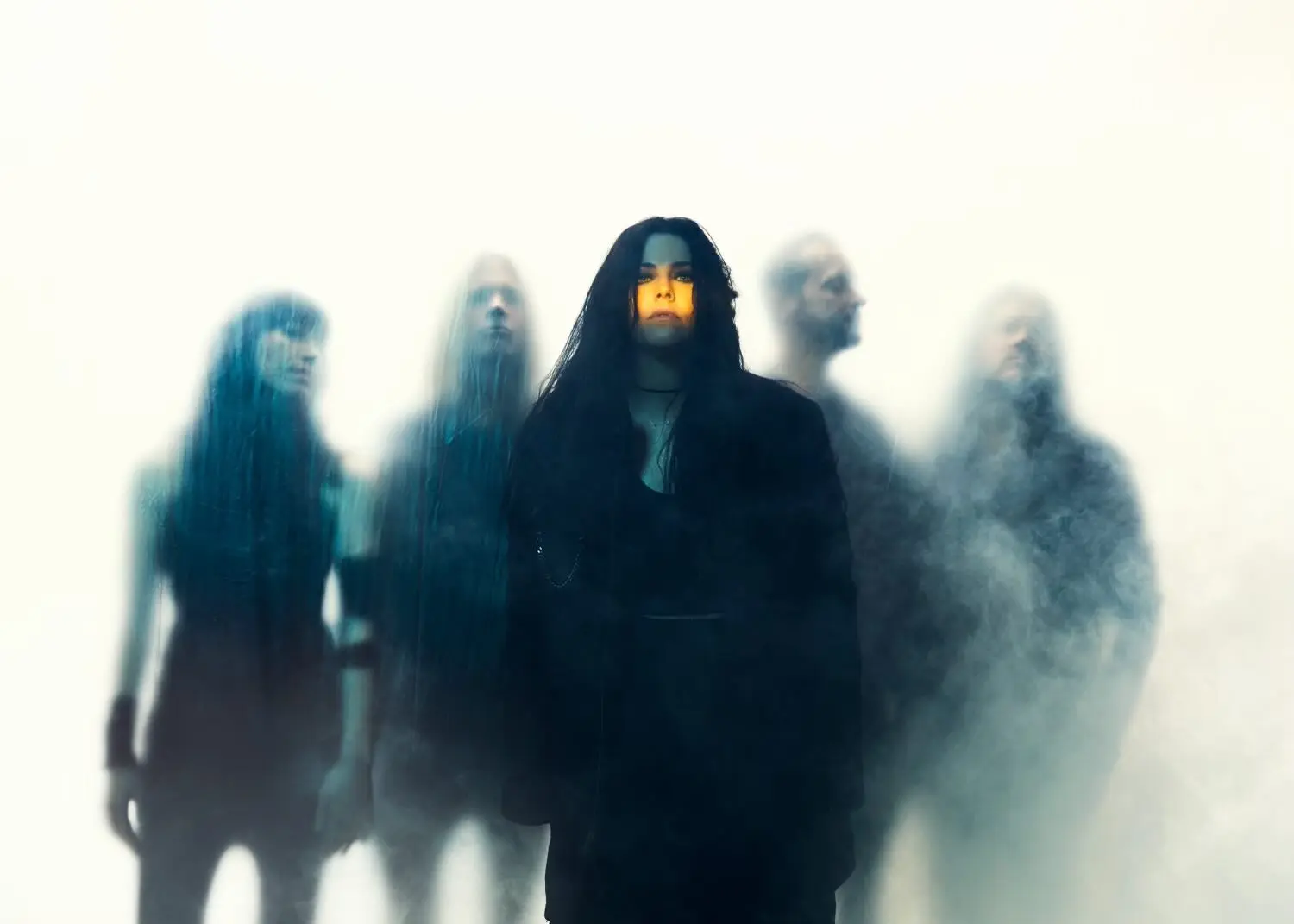
During the early years of the new millennium, commercial rock and metal were going through one of the strangest periods in recent music history. The industry still operated with the gigantic machinery that had dominated the 1990s; MTV continued shaping entire careers, record labels invested millions into music videos, and bands capable of connecting with young audiences could become global phenomena almost overnight. Beneath all that spectacle, however, there was already a growing sense of emotional and creative exhaustion. Nu metal had taken complete control of the cultural conversation surrounding heavy music, blending suburban anger, generational anxiety, and visual excess into something massive and impossible to ignore. Korn, Linkin Park, Limp Bizkit, Slipknot, Papa Roach, and Disturbed represented different faces of the same collective mood: a generation trapped between emotional frustration, media violence, and the slow collapse of the optimism that had defined the previous decade.
In the middle of that landscape, a band from Arkansas emerged sounding as though it belonged somewhere else entirely. Evanescence did not carry the physical aggression dominating much of American heavy music at the time, nor did it attempt to imitate the fantasy-driven theatricality of European symphonic metal or the industrial nihilism spreading through alternative scenes. What Amy Lee and Ben Moody were creating felt intimate, melancholic, and emotionally exposed in a musical environment where sadness usually needed to disguise itself as rage in order to be accepted. Even the heaviest moments on Fallen carried an underlying fragility, as if the songs themselves were holding together only moments before emotional collapse.
The story of Evanescence began years before “Bring Me To Life” exploded across television, radio, and internet forums. Amy Lee and Ben Moody met in Arkansas while still teenagers and began making music together far away from the major cultural centers of the United States. Arkansas was not Seattle, Los Angeles, or New York; there was no massive music industry waiting to transform an alternative project into an overnight sensation. During those early years, Evanescence existed as a deeply independent band built around homemade demos, small EPs, and recordings circulating through local circles. Even then, many of the elements that would later define the group were already present: piano-driven arrangements, atmospheric textures, gothic influences, cinematic sensibilities, and songwriting deeply connected to emotional grief, fractured spirituality, and psychological isolation.

Amy Lee grew up surrounded by classical music, alternative rock, and metal, and that combination shaped much of Evanescence’s emotional identity. The songs were never built exclusively around heavy riffs or radio formulas; there was an obvious desire to create emotional environments where grief and melancholy could slowly breathe. Many of those early compositions sounded as though they were written from an intimate understanding of suffering, shaped in part by the death of Amy’s younger sister during childhood. She never transformed that loss into overt melodrama, but the feeling of suspended grief remained deeply embedded in her songwriting from the very beginning. Songs like “Hello” reflect that inability to fully escape emotional wounds, even while life continues moving forward around them.
When Wind-up Records signed Evanescence and production began on Fallen, the industry still did not fully understand how to market a band like them within the American mainstream. Heavy rock remained deeply male-centered, and many within the label believed a female-fronted band required a visible male presence in order to connect with rock radio audiences. The inclusion of Paul McCoy on “Bring Me To Life” emerged directly from that mindset. Years later, Amy Lee spoke openly about the discomfort surrounding those decisions and the persistent idea that a woman alone could not carry a heavy song with commercial potential. That detail matters because it reveals the cultural tensions surrounding Evanescence from the very beginning.
Even so, nothing inside the music industry seemed prepared for the impact Fallen would have after its release in March 2003. The album exploded almost immediately through a very specific combination of circumstances: the overwhelming MTV rotation of “Bring Me To Life,” its connection to Daredevil, the emotional weight of “My Immortal,” the visual strength of the music videos, and above all, the band’s ability to connect with audiences that normally existed in completely separate worlds. Evanescence reached metal fans, goth listeners, teenagers coming from mainstream pop, alternative rock audiences, and even people with almost no connection to heavy music at all. The band had somehow discovered an emotional language capable of crossing boundaries that usually remained closed.
What happened around Evanescence was never just about sales figures or television exposure. The band arrived at the exact moment when the internet was beginning to function as an emotional refuge for millions of young people growing up isolated, anxious, and emotionally disconnected from the world around them. Before Facebook, Twitter, or Instagram existed, there were personal forums, LiveJournal, MSN Messenger, and eventually MySpace, spaces where sadness, anxiety, and emotional emptiness were being shared far more openly than in everyday life. Evanescence sounded like it belonged inside those spaces.
“My Immortal” became one of the defining songs of that generation precisely because it expressed grief from a restrained and exhausted place. While much of mainstream rock still relied on emotional excess and explosive climaxes, Evanescence created a ballad where emptiness, emotional fatigue, and lingering sadness carried far more weight than spectacle. Amy Lee’s performance never feels triumphant; it sounds drained, vulnerable, and emotionally suspended inside a wound that never fully closes. Millions of listeners found shelter in that song during family losses, breakups, depressive episodes, and moments of profound isolation. Even today, it continues functioning that way for younger audiences discovering the band through entirely different platforms.

The emotional connection between Amy Lee and her audience was also shaped by the way she occupied public space within heavy music. At the time, many women inside the music industry were still reduced to extremely narrow stereotypes: the hypersexualized figure, the alternative aesthetic packaged for pop audiences, or the token exception inside male-dominated scenes. Amy projected something entirely different. Her image revolved around artistic sensitivity, dark theatricality, and an obvious distance from the superficial celebrity culture surrounding much of the early 2000s entertainment industry. Even during Evanescence’s commercial peak, there always seemed to be genuine discomfort with the machinery surrounding the band.
That feeling only deepened the emotional relationship audiences developed with her. For countless young women around the world, Amy Lee represented someone capable of leading a heavy band without sacrificing emotional complexity or artistic identity. Her impact extended beyond simple representation; she helped reshape the emotional vocabulary of mainstream heavy music itself. Evanescence opened space for vulnerability, melancholy, and psychological fragility to exist at the center of commercial rock without needing to transform entirely into aggression.
The visual aesthetic of the band also left a massive imprint on early internet culture. Evanescence’s music videos were filled with rain, gothic architecture, stained glass imagery, abandoned urban spaces, blue-tinted photography, and cinematic melancholy. Those images quickly spread across MySpace profiles, edited photographs, digital signatures, and personal websites filled with references inspired by the band. Evanescence did not simply sound different from the dominant rock scene; it helped define part of the emotional visual identity of an entire online generation.
While the phenomenon continued growing, the internal reality of the band was becoming increasingly unstable. The relationship between Amy Lee and Ben Moody deteriorated rapidly during the Fallen tour cycle due to creative tensions, emotional exhaustion, and personal conflicts. Moody left the band in October 2003 during a European tour, creating enormous uncertainty around Evanescence’s future. From the outside, many people viewed the band as an inseparable creative partnership between both founders, making the split appear potentially devastating. Instead, the moment transformed the artistic identity of the group completely.
From that point forward, Amy Lee gradually assumed far greater creative control over Evanescence. The process was far from easy. In the years that followed, she faced legal disputes with Wind-up Records, constant media pressure, psychological exhaustion, and multiple lineup changes. The overwhelming success of Fallen had turned Evanescence into one of the most visible bands in the world, but it also created immense emotional strain. Many of the emotions present inside the music seemed to bleed directly into the real lives of the people creating it.
When The Open Door arrived in 2006, Evanescence sounded darker, more atmospheric, and emotionally more complicated. Amy Lee expanded the orchestral arrangements, embraced less radio-oriented structures, and built songs filled with anxiety, resentment, emotional fatigue, and the desire for personal autonomy. The album reflected the psychological weight left behind by the global explosion of Fallen. Songs like “Lithium,” “Your Star,” and “Snow White Queen” carried a sense of vulnerability far more mature and exhausted than the dramatic intensity of the band’s early years. Amy no longer sounded surprised by pain; she sounded deeply familiar with it.

That evolution may have reduced part of Evanescence’s immediate commercial reach, but it strengthened the artistic perception surrounding the band enormously. Amy Lee appeared far more interested in building an emotionally honest artistic identity than chasing formulas designed to recreate the success of Fallen. Evanescence slowly became less of a product tied to a specific moment and more of an artistic project obsessed with exploring grief, melancholy, psychological collapse, and emotional survival.
Over time, Evanescence managed to survive brutal transformations within the music industry itself. The band was born during the peak of physical CD sales, achieved worldwide success during the MTV era, survived the collapse of the traditional industry, endured the decline of mainstream rock, and later adapted to streaming platforms and social media ecosystems. Many bands from the same generation became trapped inside nostalgia; Evanescence maintained an active emotional connection with younger audiences who continued finding something painfully current inside the music.

It remains remarkable to see how songs released more than twenty years ago continue circulating massively across TikTok, Spotify, and YouTube. A significant portion of Evanescence’s current audience was not even alive when “Bring Me To Life” dominated television. Yet there is something deeply contemporary about the emotional atmosphere created by the band. Modern generations grew up surrounded by digital anxiety, emotional exhaustion, hyperconnectivity, and mental health struggles that strangely mirror the emotional world Amy Lee began building in the early 2000s.
Evanescence’s legacy within modern rock and metal can also be seen in the emotional transformation many later bands embraced within their own music. After the explosion of Fallen, countless groups incorporated greater atmospheric depth, emotional vulnerability, cinematic structures, and female-led perspectives into scenes historically dominated by masculine aggression. Even if more orthodox sectors of metal rarely acknowledge Evanescence openly, the band’s impact on the emotional vocabulary of modern rock remains impossible to ignore.
Amy Lee ultimately became one of the most singular figures in recent heavy music history because she managed to remain relevant without abandoning the emotional honesty that originally defined Evanescence. For more than twenty years, she faced corporate pressure, media exhaustion, creative conflict, and radical changes inside the music business while maintaining a deeply personal relationship with the art she created. Even at the band’s most theatrical moments, the songs always felt rooted in genuine vulnerability rather than manufactured drama.
That may be why Evanescence continues resonating so intensely after two decades. The music never projected invulnerability. Fear, grief, exhaustion, and emotional fragility always existed at the center of the band’s identity. Amy Lee understood something many artists never fully grasped during the emotionally excessive years of early 2000s rock: the deepest wounds rarely need spectacle in order to leave permanent scars.