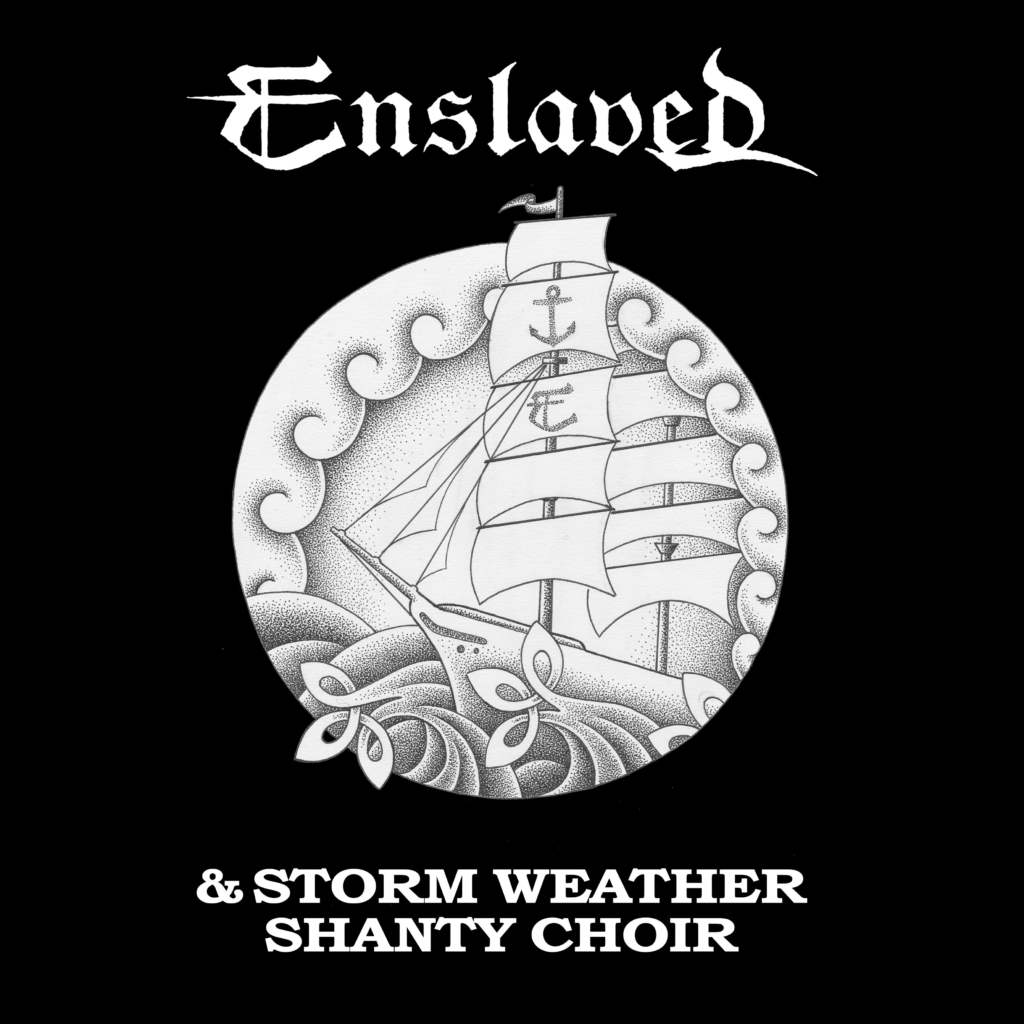





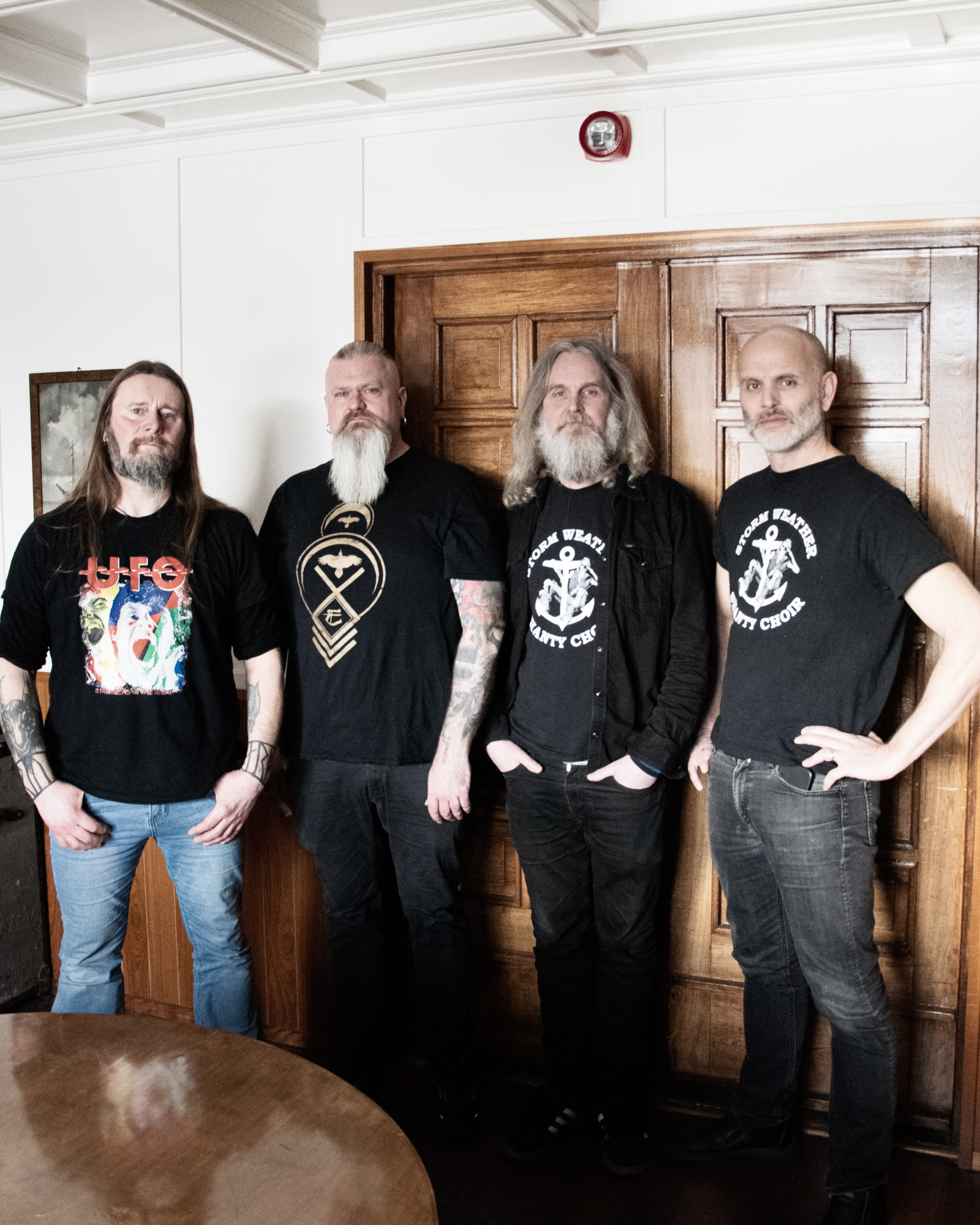
The Norwegian pioneers Enslaved present a unique release in their catalog: two sea shanties titled “Fire Marengo” and “Anna Lovinda”, created in collaboration with the Storm Weather Shanty Choir and recorded aboard the historic vessel Statsraad Lehmkuhl, one of Bergen’s most iconic maritime symbols.
This project draws from deeply rooted coastal traditions. “Fire Marengo” is a traditional maritime work song, while “Anna Lovinda” was written by the late sailor and cultural figure Erik Bye.
The band shared a detailed statement explaining the conceptual background behind the collaboration, linking their origins to Norway’s maritime heritage:
“Enslaved was formed on the western edge of Norway, where mountains sink into the sea and history is carried by wind and tides. Bergen is not merely a coastal city; it is a threshold between land and ocean, between myth and reality. Here, the sea is not scenery — it is memory, labor, departure, and return.
One of the most powerful living symbols of this heritage is the Statsraad Lehmkuhl, the great ship of Bergen that still sails the world’s oceans. Around this vessel lives and breathes the tradition of shanties — songs born from rhythm, rope, salt, and collective effort. From this environment emerged the Storm Weather Shanty Choir.
Our connection with the ship began in 2014. We were invited to compose and perform a special piece on its deck. That night, metal echoed across the harbor — a meeting between ancient wind-powered technology and modern amplified ritual. It did not feel like a contrast, but a continuation.
Since then, a strong friendship has grown, particularly with Haakon Vatle, director of the ship’s foundation and one of the most devoted custodians of this tradition. He often says that sailors were the first ‘metalheads’: people who faced elemental forces daily and responded with song. There is much truth in that. Shanties were not entertainment; they were functional incantations — rhythm as a survival tool.
In November 2025, we joined the choir to perform these pieces. The collaboration did not feel like a fusion, but a recognition: two expressions of the same coastal heritage meeting at a shared point. We recorded the material in early 2026 so that this convergence would not be fleeting, but ongoing.
Because at the center — in the mið — we do not find isolation, but a shared origin. Wind, rhythm, voice. The same pulse that once moved sails now moves amplifiers. The sea remembers. And so do we.”
Recorded in early 2026, this release documents a meeting between tradition and modernity, reinforcing the connection between progressive metal and Northern Europe’s cultural roots.