For decades, Norwegian black metal has been shrouded in one of the darkest stories in extreme music: the burning of Christian churches in the 1990s. For many, the event became a kind of urban legend, exaggerated by the media. However, the fires did occur, and several musicians associated with the black metal scene ended up involved in investigations and facing legal convictions.
Between 1992 and 1996, Norway experienced a wave of arson attacks against churches. It is estimated that around 50 churches were attacked or burned during that period. Some of these attacks were linked to individuals associated with the black metal scene, while others were acts of vandalism or imitations.
The story began to take shape in 1992, when the Norwegian black metal scene was consolidating around bands such as Mayhem, Burzum, Emperor, Darkthrone, and Immortal, many of which shared contacts through the Helvete record store in Oslo, owned by Mayhem guitarist Øystein “Euronymous” Aarseth.
The fire that started the myth: Fantoft Stave Church
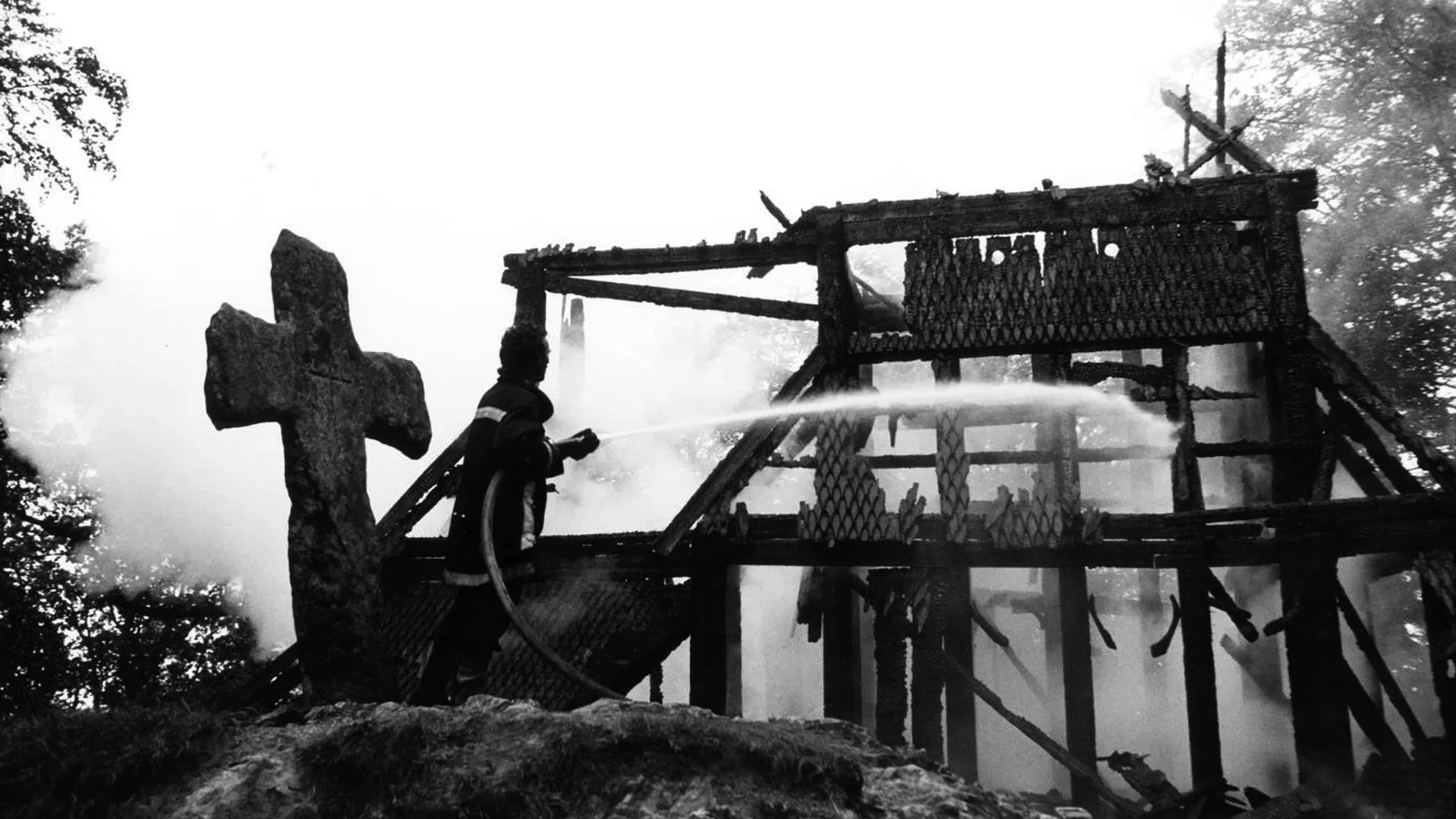
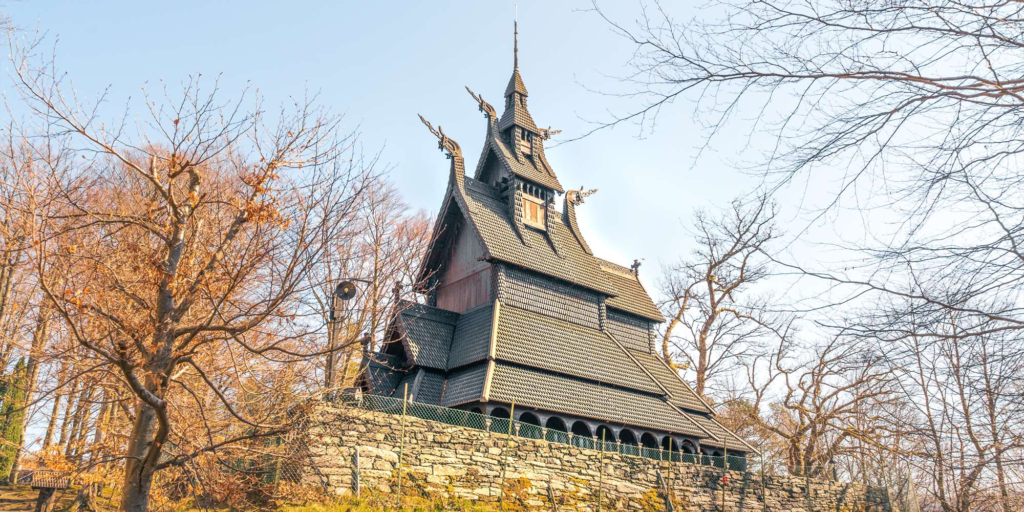
The most famous case of all was the fire at the Fantoft Stavkirke, a medieval wooden church originally built around the year 1170.
The church had been moved to Fantoft, near Bergen, in 1883 and was one of the best-known examples of traditional Norwegian stave churches. On June 6, 1992, the church was set on fire and completely destroyed. The image of its charred remains became one of the most recognizable symbols of Norwegian black metal.
Although Varg Vikernes, the musician behind the Burzum project, was considered a suspect in the case, he was never convicted for the Fantoft fire. Nevertheless, the case became closely associated with his name, especially after a photograph of the destroyed church appeared on the cover of Burzum's EP *Aske*. The church was later rebuilt and reopened in 1997.
The legal proceedings in Norway clearly established that some fires were indeed directly related to members of the black metal scene.
Among the best-known cases are the following.
Storetveit Church – Bergen
Date: May 23, 1992
Type: attempted arson
This was one of the first recorded attacks in the wave of fires. The case was later linked to Varg Vikernes.
Holmenkollen Chapel – Oslo
Fecha: agosto de 1992
The historic Holmenkollen Chapel, built in 1891, was set on fire and completely destroyed. The case implicated Varg Vikernes and Emperor drummer Bård “Faust” Eithun, who was convicted for his involvement. The chapel was rebuilt and reopened in 1996.
Skjold Church – Vindafjord
Fecha: 13 de septiembre de 1992
The burning of this church was one of the most well-known cases in the wave of attacks. Varg Vikernes and Emperor guitarist Tomas "Samoth" Haugen were convicted for this crime.
Old Åsane Church – Bergen
Fecha: 24 de diciembre de 1992
The old church in Åsane was set on fire on Christmas Eve. Varg Vikernes and Jørn Inge Tunsberg, a musician associated with the band Hades (later known as Hades Almighty), were convicted in connection with the case.
On January 20, 1993, the Norwegian newspaper Bergens Tidende published an interview with a black metal musician who appeared with his face hidden and armed with knives.
In the interview, the musician — later identified as Varg Vikernes — claimed that an alleged network of Satanists was responsible for the church fires.
The statements generated enormous media attention and helped solidify the connection between the black metal scene and attacks on churches.
What is myth and what is reality
The church burnings associated with Norwegian black metal are not a myth. The fires did occur, and several musicians connected to the scene were involved in some of the incidents. However, the idea that the entire black metal scene was responsible for the attacks is an oversimplification.
The real phenomenon was more complex: a radical musical subculture, a series of attacks against historic churches, personal rivalries, and enormous media coverage that ended up turning these events into one of the darkest and most controversial stories in metal.
More than thirty years later, the church burnings remain one of the most debated episodes in the history of extreme metal.