



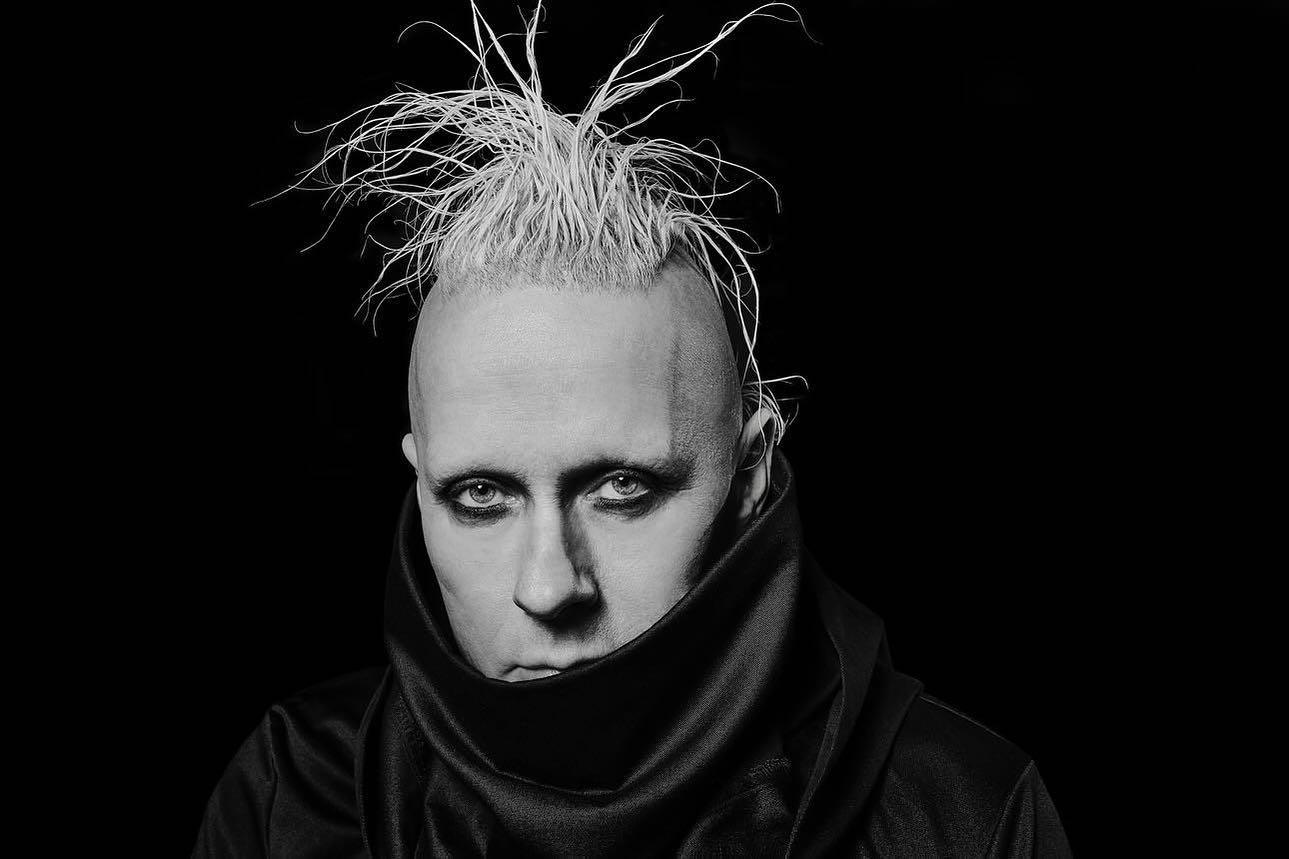
Few figures within industrial metal have influenced the sound of an era so deeply without becoming massive celebrities. Tim Sköld belongs to that type of musician who rarely appears on the cover, yet whose imprint emerges whenever a project needs order, direction, and character. A Swedish multi-instrumentalist, composer, and producer, his career connects key moments of the genre: the end of European glam, the consolidation of industrial in the 1990s, the aesthetic transformation of Marilyn Manson in the 2000s, and the modernization of alternative heavy music in the 21st century.
Born Thim Sköld in Skövde, Sweden, on December 14, 1966, he grew up in a musical environment where hard rock and European electronic music coexisted. Early on he showed interest in sonic structure rather than instrumental virtuosity. That approach —thinking of music as architecture— became his trademark. For Sköld, a song depends not on how many notes are played, but on how rhythm, texture, and space interact.
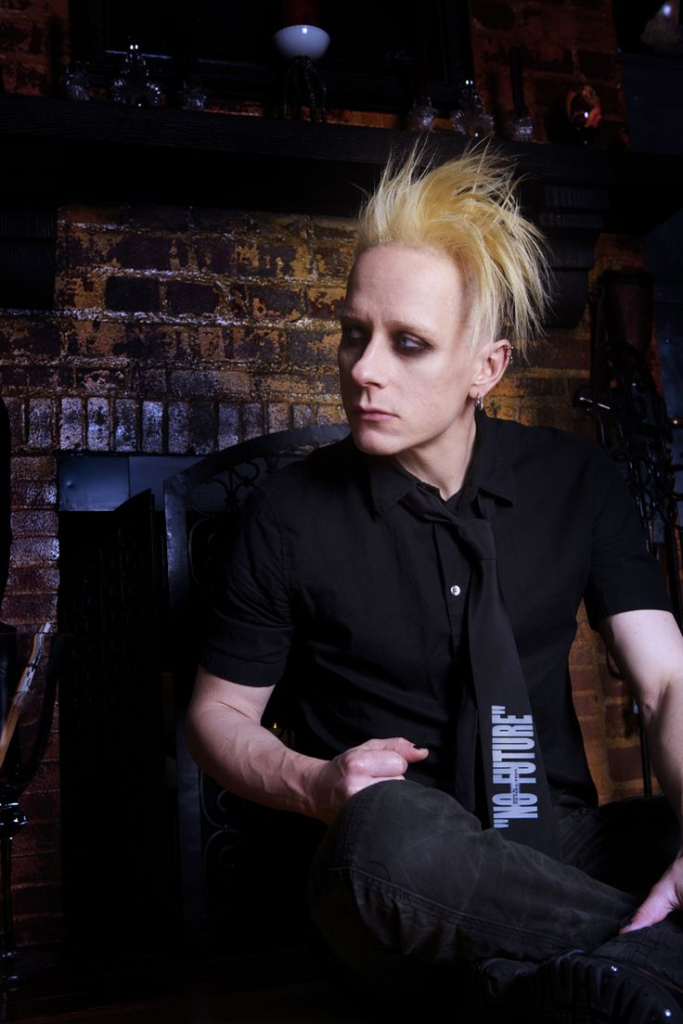
His first relevant chapter came with Shotgun Messiah, a band formed during the Scandinavian glam metal boom. What began as a conventional hard rock group evolved radically. In the early nineties, as glam collapsed against grunge, the project transformed into a cold, mechanical industrial act. The album Violent New Breed presented programmed sequences, compressed guitars, and a futuristic aesthetic unusual for its time. It was not an immediate commercial success, but it would later be considered a precursor of modern European industrial metal.
After the band dissolved, Sköld began his solo path in the mid-1990s. His debut under the name SKOLD presented an austere, controlled sound closer to an electronic laboratory than a traditional band. There his compositional language became clear: repetitive patterns, simple but forceful riffs, and an obsession with sonic clarity. It was industrial, but with an almost minimalist approach.
That approach caught the attention of Sascha Konietzko and led to his integration into KMFDM. In the band he not only played bass and guitar; he actively participated in programming and production. His contribution coincided with an important stage: reorganizing the band’s sound without losing aggression. Sköld helped transform the chaotic density of nineties industrial into something more precise and rhythmic. Groove became central and electronics moved from background to backbone.
His ability to balance machinery and melody explains why his next step was decisive. In the early 2000s he joined Marilyn Manson’s creative environment. He first collaborated in the composition and production of The Golden Age of Grotesque, an album that marked a stylistic transition. The sound became more compact, rhythmic, and stylized. Where chaos once dominated, almost choreographic control appeared. That sonic reorganization clearly reflected Sköld’s mindset: fewer layers, more intention.
After the departure of Twiggy Ramirez, Sköld assumed the live bassist role, but his influence was far greater in the studio. During those years he became Manson’s closest musical collaborator. The band moved from nineties aggression toward a more atmospheric and structured approach —a shift that divided fans but redefined its identity for a new decade.
The peak of that creative partnership came with Eat Me, Drink Me. The album’s music was composed essentially by both of them, and its tone moved away from classic industrial toward dark, slow, melancholic rock. Long guitar lines and simple progressions reflected Sköld’s compositional language. The record sounded less like a band and more like an intimate studio work, mirroring his creative process.
He also influenced live arrangements, adapting older songs into more electronic formats. This modernization generated debate among listeners used to the raw nineties sound, but it established a contemporary post-industrial standard.
After leaving the project toward the end of the decade, he returned to his individual career with clearer artistic identity. Later albums showed a move toward more emotional atmospheres and less aggression. Hypnotic rhythm and sonic precision remained central, confirming his interest was never speed or virtuosity, but sensation.
Parallel to this, he worked as producer and collaborator for various artists within alternative and modern metal circles. His reputation rests on a particular quality: removing rather than adding. Sköld builds songs by eliminating unnecessary elements until each part occupies an exact space. That philosophy made him valuable for bands seeking modernization without losing identity.
Throughout his trajectory, his contribution to industrial music was moving it from analog chaos to digital precision. While the genre in the nineties relied on saturation and noise, Sköld helped define a clearer, rhythm-driven electronic stage. Many later projects would adopt that hybrid of heavy riffs and stable programming as standard.
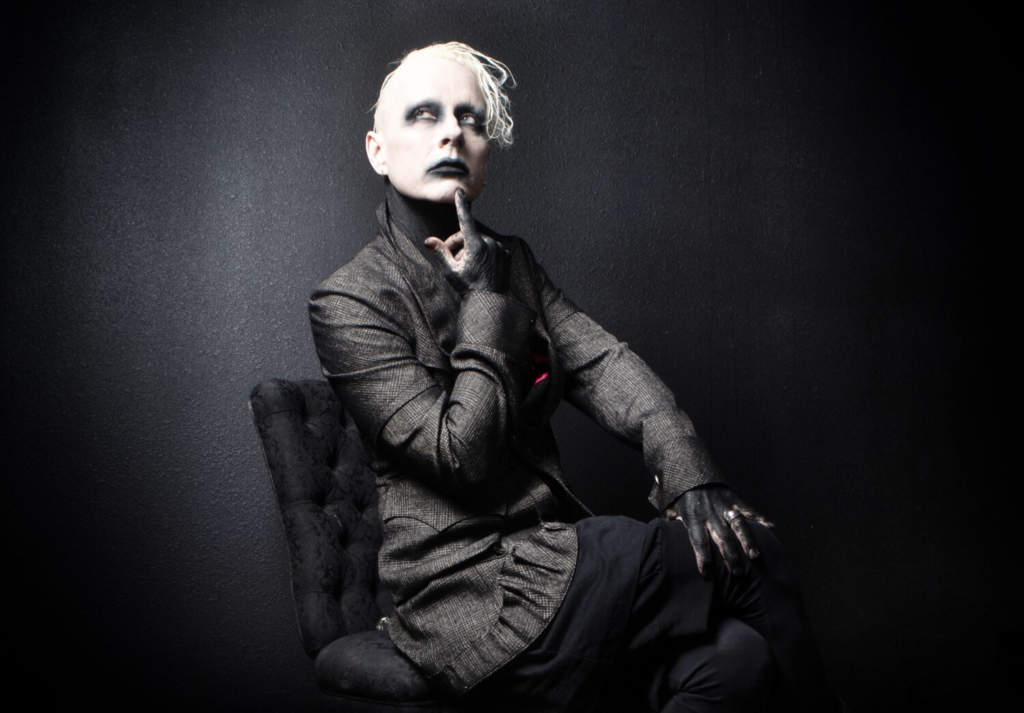
His relationship with Marilyn Manson is often reduced to a supporting musician role, but in reality it was a sonic co-authorship during a crucial period. With KMFDM he acted as an internal reorganizer. In both cases his role was similar: redefine without erasing the essence.
Unlike other figures of the genre, he never developed an extravagant public persona. His public presence is discreet and technical. He prefers the studio to stage protagonism. That relative invisibility explains why his impact is often underestimated outside musician and producer circles.
Today he is recognized as a “production artist,” someone who composes from structure before instrument. His legacy does not depend on a single band or hit, but on a way of understanding heavy music in the digital era.
Ultimately, Tim Sköld is not simply a member of historic lineups. He is the invisible thread connecting several transformations of modern industrial. When the genre needed evolution, his name appeared —not at the front of the spectacle, but behind the console, where sound truly becomes identity.