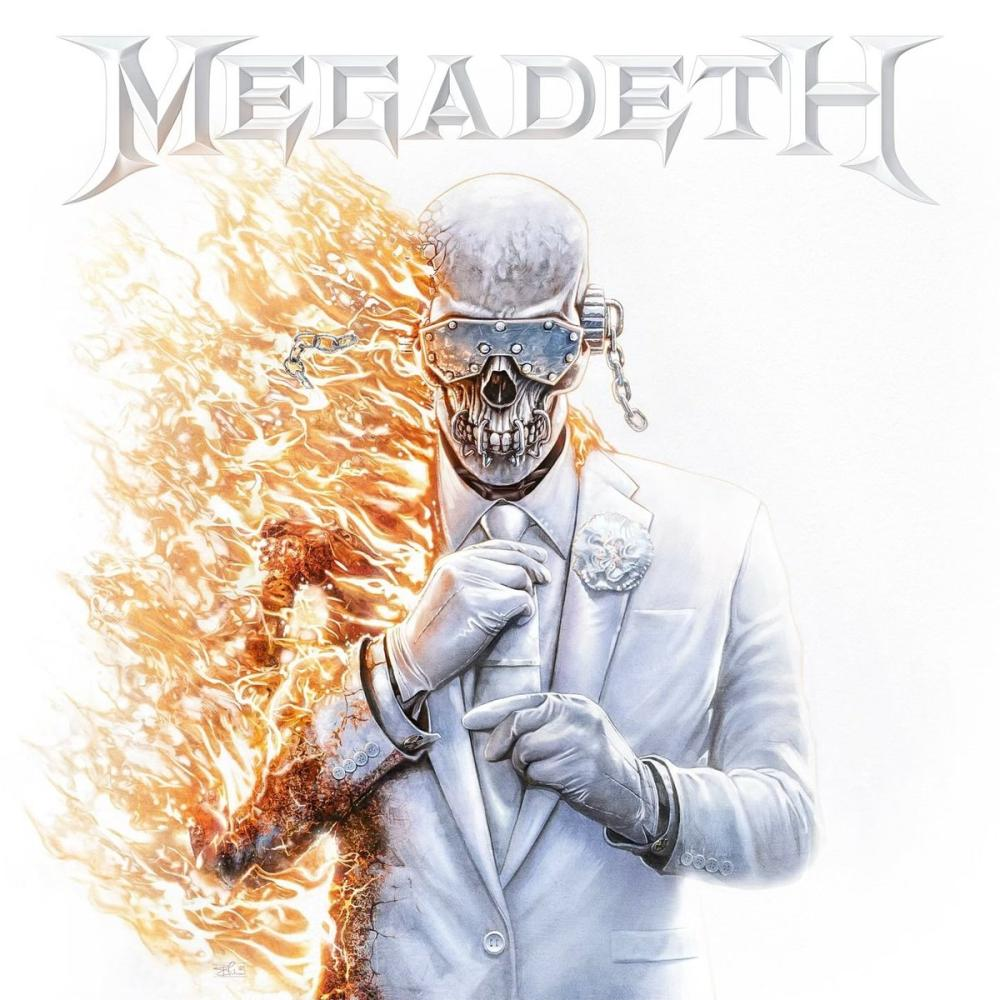




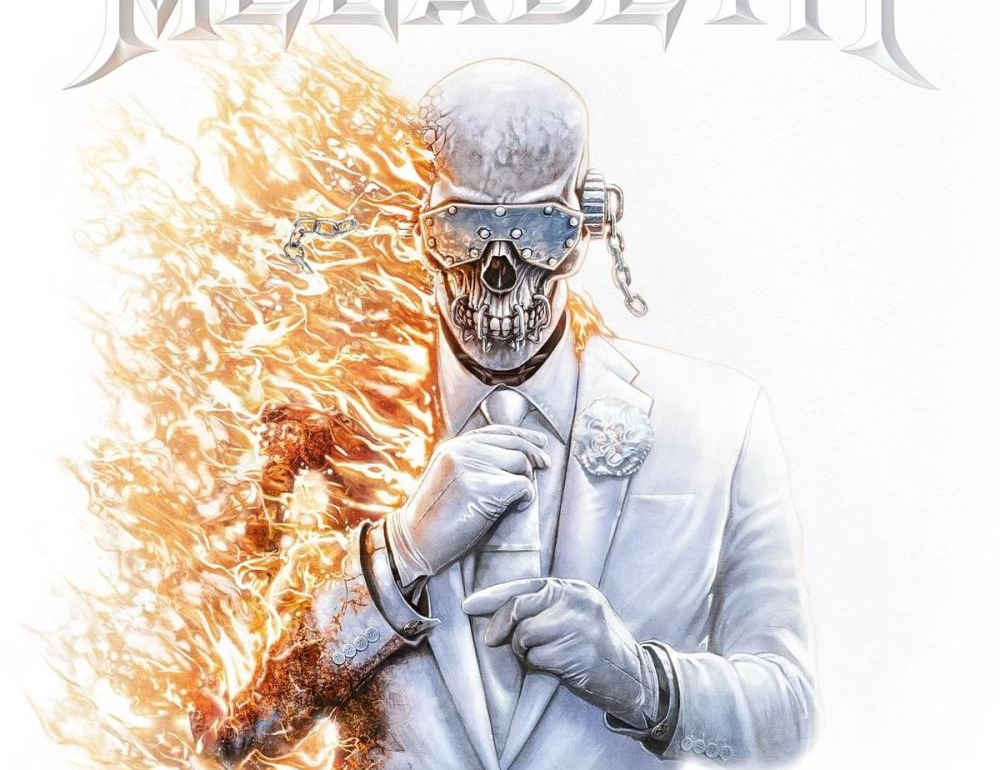
That Megadeth chose to title their 2026 album with their own name is no minor gesture. It doesn’t feel like automatic nostalgia or a simple tribute to the past, but rather a conscious statement: this record represents what the band is today. Megadeth doesn’t try to compete with its classics or prove it can still be faster or fiercer than before; its goal is different—to sound faithful, solid, and fully aware of its legacy.
The album opens with “Tipping Point,” a track that immediately sets the tone. The riff is direct, the tempo firm, and the structure classic and straightforward. It doesn’t surprise, but it does its job as a statement of intent: Megadeth still understands thrash through precision and control. That same logic carries into “I Don’t Care,” a blunt, forward-moving song, and “Hey, God?!”, which adds tension and confrontation both musically and lyrically.
One of the most explicit moments arrives with “Let There Be Shred,” a title that leaves no room for ambiguity. It’s built to put the guitar front and center, with clear solos and an energy that directly appeals to the band’s historical DNA. It may not be the album’s most complex track, but it is one of the most self-aware.

The production throughout the record is clean and modern, favoring clarity over rawness. This is evident on “Puppet Parade,” which stands out thanks to its melodic hook and accessible structure, and “Another Bad Day,” solid yet also representative of the album’s more conservative side. Here lies one of the record’s central dilemmas: many songs work well, but few feel truly essential.
“Made To Kill” brings back some aggression and drive, while “Obey The Call” leans fully into Dave Mustaine’s classic lyrical territory—confrontational, paranoid, and critical. It reinforces the band’s identity, though it may feel repetitive for longtime listeners. “I Am War” follows suit, prioritizing direct impact over development.
The closing track, “The Last Note,” is one of the album’s stronger moments. It avoids forced epic tones or obvious balladry, opting instead for weight and a genuine sense of closure. Then comes the element that adds an extra layer of meaning: Megadeth’s version of “Ride The Lightning” as a bonus track. Far from a throwaway cover, it works as a symbolic epilogue. Hearing Mustaine reinterpret a song he wrote before Megadeth, from this stage of his career, turns the bonus into a dialogue with the band’s very origin.
Taken as a whole, Megadeth (2026) is an honest, well-executed, and clearly conservative record. Its greatest strength is coherence; its biggest limitation is the lack of risk. It doesn’t aim to surprise or break molds, but it never betrays its identity. A record sustained by craftsmanship, clarity, and respect for its own history.